IAFI Gorge-ous Gathering 2025 Explored the Columbia River Gorge
The 2025 Gorge-ous Gathering, the annual membership meeting of the





The 2025 Gorge-ous Gathering, the annual membership meeting of the


The origin story of Hells Canyon, North America’s deepest river

New research reveals industrial waste can turn into rock in
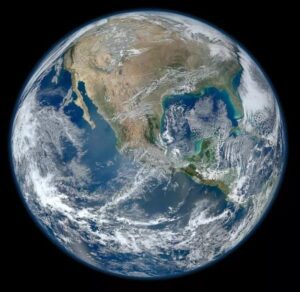
Background The 4.5 billion-year-old Earth is the only known astronomical

Evidence from Earth’s deep past suggests dramatic subduction zones can
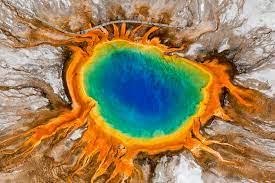
Scientists have discovered a “breathing” magma cap beneath the Yellowstone
Background The 4.5 billion-year-old Earth is the only known astronomical

What would you say about a volunteer who has spent

This year marks the 30th anniversary of the Ice Age
Just a short drive east of Cheney, Washington, lies Fish
We know the story…a world gripped by ice. Some twenty

The Mossback’s Northwest production team met in Thurston County last week to

The Oregon Naturalist Program at Oregon State University is partnering



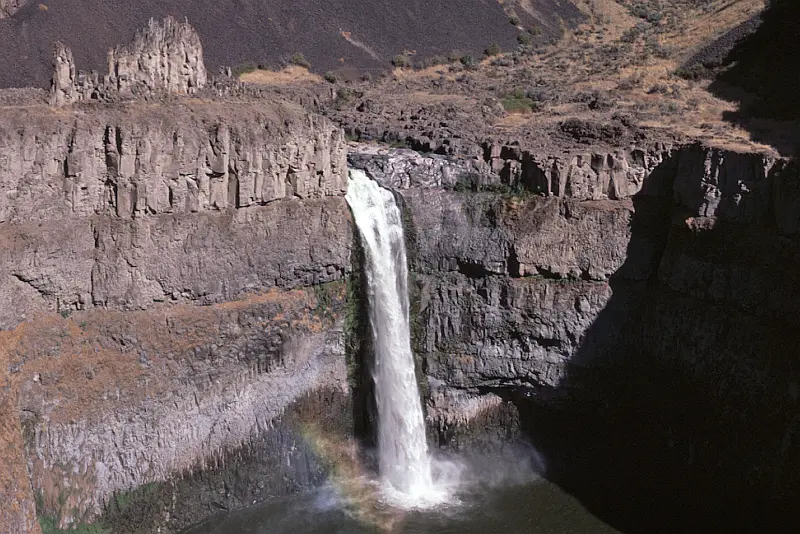
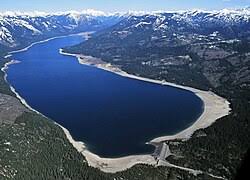
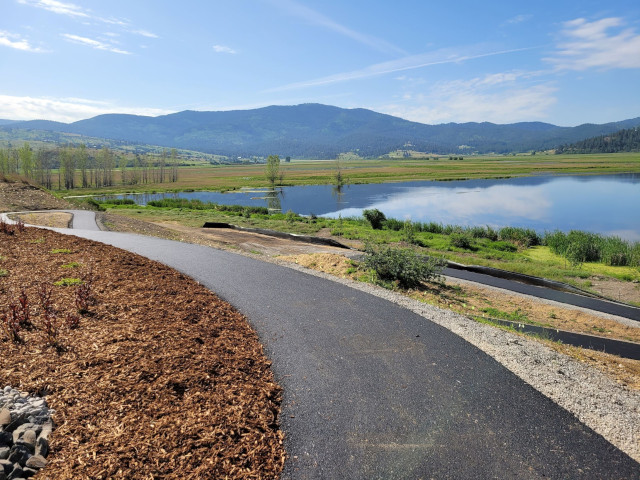


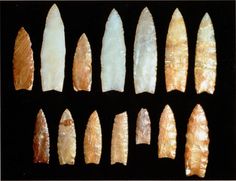
Richard Waitt kindly shared his recent paper published June 2016 in Quaternary Research, titled “Megafloods and Clovis cache at Wenatchee, WA.” “It covers the reach mainly from Chelan Falls to below West Bar, tries to tell the story of sequential megafloods coming to Wenatchee area by different routes at different
This 1/2-hour video begins with the Ice Age Floods impact on the Palouse area, then goes on with a fascinating oral and pictorial history of the area. The video was produced by Mortimore Productions for the Whitman County Library with materials and information provided by a bevy of contributors, including
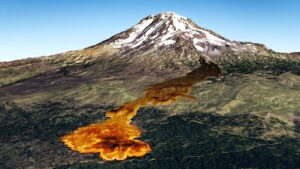
Washington State Geological Survey is collecting, analyzing, and publicly distributing detailed information about our state’s geology using the best available technology – LIDAR – an acronym for Light Detection And Ranging. The main focus of this new push for LIDAR collection is to map landslides, but there are innumerable additional benefits
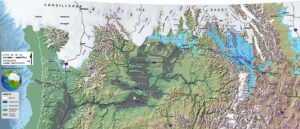
An interesting, 4 minute captioned video from UC Santa Cruz (ingomar200) of a satellite-view computer simulation illustrating flood paths and transient lakes of an Ice Age Flood. The video shows a physics-based computer simulation of the Great Flood from Glacial Lake Missoula about 15,000 years ago. At the time, an ice dam
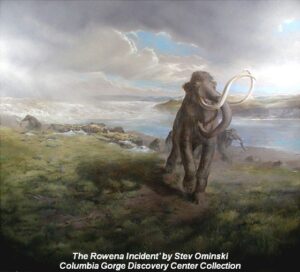
New research reveals the ancient animals survived some 8,000 years later than previously thought Frozen soil samples collected around a decade ago are rewriting our understanding of iconic Ice Age animals like the woolly mammoth. The soil samples were pulled from Canada’s permafrost in the early 2010s, but no work

There’s a Columbian Mammoth hiding out in Coyote Canyon down Kennewick way, and MCBONES Research Center Foundation is working to uncover his/her hiding place. For a small contribution you can tour this hide-and-seek site, or you can volunteer to help uncover the hidden mammoth. Sound interesting? Find out more in
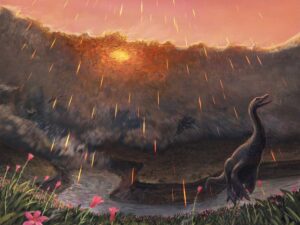
Spring may have been when a roughly seven-mile-wide asteroid struck the Earth, immediately triggering the mass extinction that would wipe out 76 percent of known species. That key piece of timing doesn’t come from dinosaurs, but from the fish that swam in the waters dinosaurs drank from. By studying the

The Washington Geological Survey (formerly the Division of Geology and Earth Resources) has just released an ESRI story map about the Ice Age Floods in Washington. The story map: “tells the story of cataclysmic outburst floods that shaped the landscape of the Pacific Northwest during the last ice age. With