Glacial erratics of the Puget Lowland
Strewn among the forests of the Puget Lowland are an





Strewn among the forests of the Puget Lowland are an
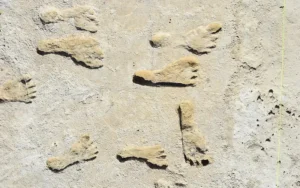
The first people to arrive in the Western Hemisphere were
For much of the 20th century, a sprawling complex in
Two tiny pterosaur fossils, each smaller than a mouse, have
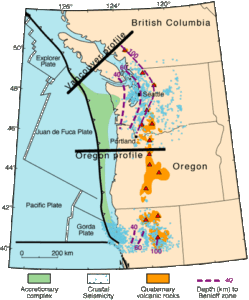
A new study finds a 1954 earthquake that rattled Northern

In the course of writing her weekly “100 Years” column

DNR’s Daniel Coe collaborating with Joel Gombiner has produced a

The Cheney-Spokane Chapter of the Ice Age Floods Institute is

NOVA|PBS is sharing a short 5:16 min) video, THE NEXT

Recent discoveries in Greenland are reshaping our understanding of massive

It’s not every day you meet someone whose passion for

Washington state is famous for its dramatic landscapes, many carved

The 2025 Gorge-ous Gathering, the annual membership meeting of the


The origin story of Hells Canyon, North America’s deepest river

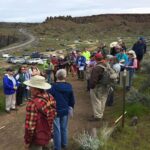
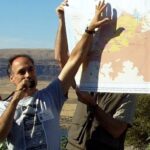


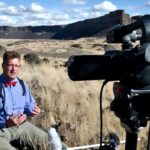
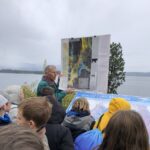

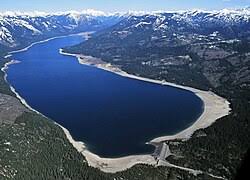



This feature-filled video by Tom Foster and Nick Zentner explores the evidence for Glacial Lake Missoula, and provides a treasure trove of places to visit and sights to see when you plan your field trip to the area.
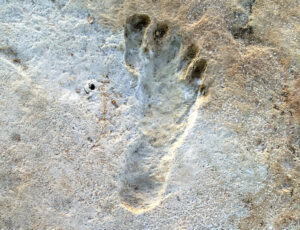
Articles in Science Alert and the New York Times report on a well documented age for many sets of human footprints as old as 23,000 years in the ancient lake shore sands of White Sands, New Mexico. “The footprints were first discovered in 2009 by David Bustos, the park’s resource
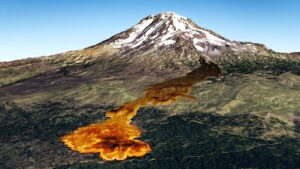
Washington State Geological Survey is collecting, analyzing, and publicly distributing detailed information about our state’s geology using the best available technology – LIDAR – an acronym for Light Detection And Ranging. The main focus of this new push for LIDAR collection is to map landslides, but there are innumerable additional benefits

Bluefish Caves directly challenged mainstream scientific thinking. Evidence had long suggested that humans first reached the Americas around 13,000 years ago, when Asian hunters crossed a now submerged landmass known as Beringia, which joined Siberia to Alaska and Yukon during the last ice age. From there, the migrants seemed to
In August, Scott David, a postdoctoral researcher and Karin Lehnigk, a 2nd year PhD candidate from the University of Massachusetts visited the scablands for a week to do field studies. Karin was in search of granite erratics. Samples of these were taken to be processed for Beryllium-10 exposure dating, a
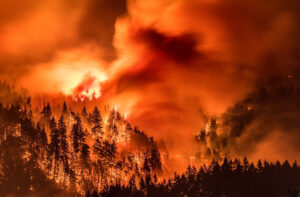
I’ve found there is huge public interest and concern about the catastrophic effects of the Eagle Creek Fire on the Columbia River Gorge. Pictures of ridgeline after ridgeline enveloped in bright orange fire, trees bursting into towering flames, and the choking smoke that filled valleys throughout the Pacific Northwest are

Have you ever thought about the how the weight of the ice-age Cordilleran ice sheet might affect the underlying Earth’s crust. There is strong evidence that the crust was depressed hundreds of feet beneath the ice, and since the crust is relatively thin and rigid over a plastic aesthenosphere, that
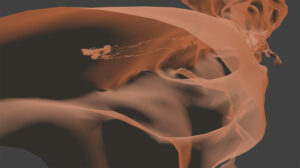
With all deference to the book and movie “The Martian”, wouldn’t you, as part of an interplanetary expedition, prefer to be protected from the radiation, micro-meteorites and extreme temperature fluctuations of the Moon or Martian surface? Though some of the hazards depicted in “The Martian” are way over-dramatized (the thin