
Lyle Cherry Orchard Trail Geology Recording

The Lyle Cherry Orchard Trail is a moderately strenuous trail being developed in the Columbia Gorge by Friends of the Columbia Gorge. They envisioned having a number of interpretive stations along the trail to inform and educate trail users. A station could focus on a single topic, such as the geology, plants, animals, indigenous and cultural history of the area. But they found that the cost of interpretive signs would be prohibitive, would be expensive to maintain and might not last long. So they started brainstorming for better ways to realize thier vision. The came up with a plan to place trailside posts, resembling basalt columns, with a QR code the user could scan with their smartphone that would connect to an informative recording about that location. Friends hopes to have the trail work and information stations finished by 2024. Then everyone will be able to experience the beauty along the Lyle Cherry Orchard Trail with a deeper understanding of their surrounding through the recordings. Renee Tkach, a Friends coordinator of the project, contacted Lloyd DeKay, president of the IAFI Columbia Gorge Chapter, about doing a recording for the first station about the geology of the area. They took a very windy hike together on the still somewhat challenging trail to the first station, where they talked about the focus of a recording and took a number of photos to document the views. At home Lloyd developed a script that everyone reviewed and agreed upon. Then began a few frustrating hours of recording and editing to produce a 4:30 minute recording. Since the original plan was for a 3:00-3:30 minute recording, Friends will now review the recording and decide if it’s OK or needs to be shorter and where to cut back. This method may also be an easier, economical and useful way to provide information at other floods sites throughout the region. Significant advantages include the relatively low cost and long life of the information station, and ability to provide both video and audio clips for a number of features on a webpage linked to the QR code, and the ability to modify and update the presentations as new or updated information becomes available.
Outburst Floods GSA Penrose Conference Visits West Bar

The 2023 GSA Outburst Floods Penrose Conference made a field trip stop on Tuesday afternoon, June 6, at Ken Lacy’s (IAFI Wenatchee Valley Erratics Chapter member) home, for a spectacular overview of the West Bar Current Megaripples that can be seen well from that vantage point. The 75 conference attendees were all at the conference by invitation only. They were accompanied by organizers Jim O’Connor, Isaac Larsen, Joel Gobiner, Vic Baker, Richard Waitt, Jerome Lesemann. The purpose of the conference was to review the current outburst floods fieldwork being done, encompassing the range of science conducted both on Earth and elsewhere in the solar system. The timing of the conference coincided with the 100th anniversary of J Harlen Bretz’s first publication on the Channeled Scabland, and took place at Camp Delany, which occupies a spectacular flood-carved setting at the foot of Dry Falls in Grand Coulee, Washington. The conference was meant to review past and present work, as well as help chart the future science on outburst floods through presentations, discussions, and multiple field trips. Everyone who shared Ken’s hospitality were in particularly good humor, as considerable amounts of cookies, popsicles, and bottled water were consumed. There were many comments about how well the meeting was going and how lots of new insights were being discussed. These kind of comments suggest that the meeting was being extremely well received. Ken was also pleased to talk to Justin Radford, along with his USGS Research Geologist… nice to see them in attendance.
Sea levels from the Maximum of the Last Ice Age to the Present Day

The Wenatchee Valley Erratics’ next program will be on Tuesday, June 13 at 7:00 PM at the Wenatchee Valley Museum and Cultural Center, 127 South Mission St., Wenatchee. Erratics’ member Kirk Laird will talk about “Sea levels from the Maximum of the Last Ice Age to the Present Day.” His presentation will focus on information directly available from NOAA’s Tides and Currents Office, and from NOAA’s Office of Satellite Altimetry. The 400 foot change in sea level over the last 22,000 years is directly attributable to the melting of continental and montane glaciers. With degrees in both Geology and in Oceanography, Kirk has observed earth science issues his entire life. And for the last 25 years, he has paid very close attention to the status of the oceans, in particular. This is a hybrid meeting. You can attend in-person at the Museum. Or you can participate via a Zoom link: https://us02web.zoom.us/j/84520197937 Please sign in at 7:00 PM, June 13! The program is free and open to the public.
Some Ice-Age 1st Peoples in Americas Came From China

The first wave of humans into the Americas during the last ice age may have hailed partly from northern China, according to a DNA study of ancient and modern Indigenous people. The ancient groups may have also migrated to Japan, potentially helping explain similarities in Stone Age artifacts in the Americas, China and Japan, according to the study, published Tuesday (May 9) in the journal Cell Reports. There are two leading models as to how people first migrated to the Americas. The older idea suggests that ancient Siberians made this journey when the Bering Land Bridge — the landmass that once connected Asia with North America — was relatively free of ice. More recent evidence argues that multiple waves of humans journeyed to the Americas from various parts of Eurasia, perhaps on watercraft along the Pacific coasts of Asia, the Bering Land Bridge and North America. To shed light on the origins of Indigenous Americans, scientists examined DNA from mitochondria, the powerhouses of the cell. Mitochondria possess their own genes, which are passed down from the mother. The new findings suggest that the ancestors and closest relatives entered the Americas through at least two migrations. Both diasporas apparently occurred when the land bridge from Asia to the Americas was obstructed by ice, so the researchers suggest that ice age people may have traveled via the Pacific coast instead. The first migration likely happened between 19,500 and 26,000 years ago, during the Last Glacial Maximum, the coldest part of the last ice age, the researchers said. Back then, ice sheets covered much of the planet, and living in northern China would have likely proven difficult for humans. The scientists estimated the second event apparently occurred between 19,000 and 11,500 years ago, when the ice sheets began melting. Prior work suggested this climate shift likely helped support the rapid growth seen in human populations during this era, which may have helped drive their spread into other regions. In all, the new study “matches well with what we know about the archaeological record of Japan, and lends weight to current models of how humans came to populate the Americas,” Loren Davis, an archaeologist at Oregon State University in Corvallis who did not take part in this research, told Live Science in an email. This discovery may help explain some archeological similarities that prior work controversially suggested at times existed between Stone Age peoples in China, Japan and the Americas. Specifically, researchers had argued the three regions possessed similarities in how they crafted “stemmed projectile points” for arrowheads and spears. However, while the new study is exciting, it’s just “another piece of the puzzle,” on how and when ice age humans first populated the Americas, Davis said. For instance, the researchers stressed that while these new findings suggest this single northern Chinese lineage may have contributed to Indigenous American ancestry, “it does not represent the whole history of all Native Americans,” Li said. “Investigating other lineages showing genetic connections between Asia and the Americas will help obtain the whole picture of the history of Native Americans.” For more details read the whole article by Charles Q. Choi at Live Science
How do we know how old Earth is?
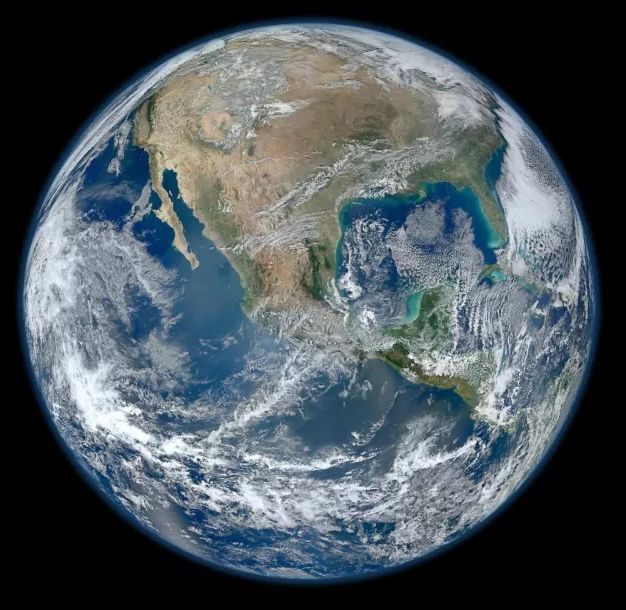
By measuring radioactive elements in rocks from Earth and other parts of the solar system, scientists can develop a timeline of our planet’s early years. Earth is roughly 4.54 billion years old. In that time, it has seen continents form and disappear, ice caps expand and retreat, and life evolve from single-celled organisms into blue whales. But how do we know Earth’s age? We start by looking inside it. “When you’re an Earth scientist who looks at a rock, it’s not just a rock; it’s like that rock has a story that you can try to decipher,” said Becky Flowers, a geologist at the University of Colorado Boulder. When minerals form out of magma or lava, they often contain traces of radioactive material, such as uranium. Over time, those radioactive elements decay, meaning they spew radiation, eventually transforming them into new, more stable elements that remain trapped inside the mineral. Take radioactive uranium-238, a common form of uranium. Its atoms will release energy until they eventually turn into lead. That process occurs at a fixed rate known as a half-life, which corresponds to the amount of time it takes for half of the atoms to decay. The half-life of uranium-238 is more than 4 billion years, meaning it takes more than 4 billion years for half of the uranium-238 in a sample to become lead. This makes it perfect for dating objects that are very, very old. By knowing these half-lives, we can calculate how old a rock is based on the ratio of the “parent” radioactive element and the “daughter” stable element — a method called radiometric dating. The mineral zircon is commonly used for radiometric dating because it contains a relatively large amount of uranium, Flowers said. Uranium-lead dating is just one type of radiometric dating. Other types use different elements; for example, radiocarbon dating, one of the most common methods, uses a radioactive isotope of carbon that has a half-life of thousands of years and is useful for dating organic matter. Using these methods, geologists have found minerals on Earth that date as far back as 4.4 billion years, meaning the planet has been around at least that long. But if scientists say Earth is more than 4.5 billion years old, where did those extra 100 million years or so come from? Earth, as mentioned, has changed a lot over billions of years, especially through processes such as plate tectonics, which shift the crust, birthing new land out of magma and subducting old land back underground. As a result, rocks from the very beginning of the planet’s history are hard to find; they’ve long since eroded or melted back into raw material. But scientists can use radiometric dating to determine the age of rocks from other parts of the solar system, too. Some meteorites contain materials that are more than 4.56 billion years old, and rocks from the moon and Mars have also been dated to around 4.5 billion years ago. Those dates are pretty close to the time scientists think the solar system started to take shape out of the cloud of gas and dust surrounding the newborn sun. And by knowing all of these relative ages, we can start to piece together a timeline of how Earth, the moon, Mars and all of the other little rocks floating around in nearby space started to form. Yet the transition from primordial dust cloud to planet Earth didn’t happen all at once but rather over millions of years, Rebecca Fischer, an Earth and planetary scientist at Harvard University, told Live Science. That means our understanding of Earth’s age will always be less about a specific year when the planet formed and more about a general sense of the era when our home planet started to take shape. By Ethan Freedman (lifes-little-mysteries ) reprinted from LiveScience.com
Ice Age Floods National Geologic Trail – April 2023 Update

Spring is coming and the trail is starting to wake from its long winter break. Our National Park Service Interpretive Rangers are already out and about with our Mobile Visitor Center. Our team has made lots of contacts at various trade show events around Spokane, WA, and Washington State Parks joined NPS at the Othello Sandhill Crane Festival. Our thanks to Ranger’s Abby, Emilee and David for sharing the Missoula Floods story with over 500 visitors to the Scablands. From April 27th through May 25th the Mobile VC will be traveling to sites around Lake Roosevelt NRA on Thursdays. You can find the Ice Age Floods NGT and Lake Roosevelt NRA Mobile Visitor Center’s schedule and locations on our Ice Age Floods NGT calendar. Our Junior Ranger Program test is showing success and has already run out of booklets! Tualatin Library, one of the National Trail’s official partners, has been promoting and sharing our Junior Ranger activity booklet “Megaflood Adventure”. Young explorers can turn in completed booklets for Ice Age Floods NGT Junior Park Ranger badges. National Pak Service is exploring this program and hopes to bring more Junior Rangers into the Missoula Floods community. Out on the Trail: Now is a great time to explore the Willamette Valley searching for signs of great Missoula Floods and watching the valley spring to life. You might explore Erratic Rock State Natural Site near McMinnville, Oregon. There you will find ~90-ton chunk of Precambrian argillite sitting ~150 feet off the valley floor and some 500 miles from where this sort of rock originates. How did that happen? You can use the Trail’s NPS App to find out how and to explore more amazing landscapes changed by the Missoula Floods. Some of them are perhaps in your part of the world! I am looking forward to joining Institute members at the IAFI Rock-Out Jubilee in just a couple of months. I’ll see you there or out on Ice Age Floods National Geologic Trail this summer. Have fun and safe travels.
White Bluffs at Hanford Reach

Appearing much different than the nearly ubiquitous Columbia River basalt cliffs and boulders of central Washington, the White Bluffs area features a series of 50-170 m tall buff-colored bluffs and badlands underlain by those basalts. These are outcropping layers of the Ringold Formation comprising most of a 600-ft high escarpment exposed along the north and east banks of the Columbia River in south-central Washington. These ancient river and lakebed sediments were laid down by the Columbia and Snake River systems 8.5 to 3.4 million years ago. However, a section of the White Bluffs are a much younger stack of slackwater rhythmite deposits that filled a paleochannel eroded into the Ringold Formation, These late Ice Age rhythmites are only 17,550-12,500 years old. They were laid down as each of the 40 or more Ice Age Floods backed up behind the narrow constriction at Wallula Gap, submerging the entire White Bluffs area under temporary Lake Lewis. Up to about a dozen rhythmites, composed mostly of sand from as many floods, occur within the channel fill. At the top of most rhythmites is a layer of wind-blown sand suggesting a period of dryness separated each flood. Sediment thicknesses and sedimentary structures in each of the beds give a sense of the tremendous sediment load and the relatively calm conditions of the ponded flood waters. Learn more from Nick Zentner’s 2-Minute Geology video – The White Bluffs at Hanford Reach The White Bluffs are located along the east side of the Columbia River, across from the former towns of Hanford and Whitebluffs, on the Hanford Reach National Monument where the atomic age was born. The bluffs have been exposed by the Columbia River down cutting and moving laterally against the deep silts and sands and old soil horizons that make up the bluffs. These towering white bluffs, massive sand dunes, and the last free flowing nontidal section of the Columbia River all help make the Hanford Reach one of the most dramatic natural areas in the state. Take a Hike on the White Bluffs Rhythmites Trail, Lat, Long: 46.642855, -119.403263
Lake Lenore Caves – Lower Grand Coulee
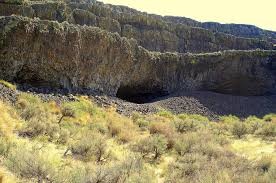
Tucked into the Lenore Canyon are the Lake Lenore Caves. Along with much of the eastern half of the state, Lenore Canyon was formed during the Missoula floods at the end of the last Ice Age, over 13,000 years ago. The glacial flood waters crashed down the canyon, carving through the basalt that makes up the sheer rock walls, creating coulees, ridges, cliffs, plateaus, rock slides, caves and a series of lakes. The caves themselves are shallow, created during the Great Missoula flood as water pulled chunks of basalt from the walls of the coulee. Post-flood weathering created talus slopes that furnished easy access and temporary overnight camps and storage for at least 5,000 years for hunters and gatherers from villages located elsewhere in the Grand Coulee and along the Columbia River and its tributaries. It is still used today for certain Native American religious ceremonies. It is easy to see why the caves were chosen as a cozy place to stay, as the depth provided plenty of shelter from the elements, while not going so deep that light couldn’t reach the back corners. It is often quite warm and breezy outside, but in the caves it is cool and calm. A well-marked 1.2-mile out-and-back trail leads from the parking area to some of the caves. It is generally considered an easy route that takes an average of 31 min to complete. This is a popular trail for hiking and walking, but you can still enjoy some solitude during quieter times of day. The best times to visit this trail are March through November. Dogs are welcome, but must be on a leash. The coulee walls in this area are made up of Grande Ronde Basalt flows overlain by the Frenchman Springs and Roza members of the Wanapum Basalt. The lower (colonnade) and upper (entablature) cooling units of individual flows are visible in the coulee walls. Flow unit contacts are sometimes complex to interpret. Some flows pinch out against older flows, some are perhaps due to flows covering an irregular topographic surface on the underlying flow, some may be filling of shallow valleys, and some multiple layers may be pulses of lava from the fluid interior pushing out over the partially formed entablature of a previous lava pulse.
How did humans first reach the Americas?
During the last ice age, which route was taken by the first humans to reach the Americas, and did they travel by foot, boat or both? Humans first arrived in North America at least 15,500 years ago. Exactly how they got there, however, constitutes one of the longest-standing debates in archaeology. For decades, scientists assumed that people first arrived in the Americas by walking south from the now-flooded land bridge in the Bering Strait that once connected Russia to Alaska when sea levels were lower during the last ice age. But recent evidence suggests that these people were not the first to set foot on the continent. According to the now-dominant “coastal route theory,” that distinction belongs to humans who boated down the Pacific coast several millennia earlier. A 2023 study(opens in new tab), for instance, found that coastal conditions were favorable during two time windows: from 24,500 to 22,000 years ago, and from 16,400 to 14,800 years ago. And while the science is far from settled, the evidence increasingly points to the first Americans arriving by sea or land along the coast. “The pendulum is swinging in support of the coastal corridor being the route taken by the first Americans,” Michael Waters(opens in new tab), director of the Center for the Study of the First Americans at Texas A&M University, told Live Science in an email. “But we still need the smoking gun: an early site along the coast.” Until 20 years ago, the best available archaeological evidence(opens in new tab) suggested that humans first arrived in North America about 13,000 years ago. The rise of the Clovis people — whose 13,400-year-old remains were discovered in Clovis, New Mexico, in the early 1900s — coincided perfectly with the formation of an ice-free corridor along the Rocky Mountains. Scientists assumed that these humans crossed the Bering Land Bridge into what is now Alaska, and then turned south to march onward to New Mexico through that convenient corridor. This remains the prevailing theory as to how the Clovis people made it to the Americas. “It seems very likely that people did arrive from northeast Asia via the ice free corridor once this route was open and viable,” Todd Braje, chair of anthropology at San Diego State University, told Live Science in an email. But recent excavations suggest that the Clovis were not the first Americans. A 2011 paper in the journal Science presented evidence of tools crafted by humans in Texas from up to 15,500 years ago, and a 2021 paper in Science described 23,000-year-old footprints in New Mexico. (However, the footprint date is disputed by a 2022 study in the journal Quaternary Research, which posits that the plant seeds the original team used to radiocarbon-date the footprint layer are problematic.) These “pre-Clovis people” would have had to migrate to America long before the ice-free corridor opened up. “The earliest the inland corridor was open is 14,300 years ago,” Waters said. “It is impossible to have people in Texas and Idaho at 16,000 years ago, and Florida at 14,600 years ago, come through the corridor. They must have come a different way.” How the pre-Clovis people got to America without an inland corridor to take them south from the Bering Strait remains an open question. “With the breaking of the Clovis barrier in the 1990s, we know people were in the Americas prior to at least 14,000 years ago, but when people first arrived and by what route or routes remains unknown,” Braje said. “There are now lively debates on the topic but the bottom line is that no one knows definitely.” The prevailing theory is that the pre-Clovis people arrived by watercraft. “The route taken by the initial migrants was almost certainly along the coast,” said Matthew Des Lauriers(opens in new tab), director of the Applied Archaeology Program at California State University, San Bernardino. Des Lauriers described the pre-Clovis as sophisticated maritime hunter-gatherers, who would have cast off south from the Bering Land Bridge and subsisted on fish and game as they voyaged down the Pacific coast. Ultimately, Des Lauriers said, these intrepid seafarers parted ways. Some pre-Clovis people followed rivers inland, while others continued south as far as Chile. “The ocean would always have provided resources for skilled fishermen and hunters,” Des Lauriers told Live Science in an email. “The most likely scenario is one of coastal fisher-hunter-gatherers moving along the North Pacific Coast.” Recent work from geologists has lent support to the theory that the Clovis people arrived via an inland corridor, while the pre-Clovis people took a coastal route. Beryllium-10 dating of glacial boulders(opens in new tab) along the ice-free corridor suggests that the corridor opened about 13,800 years ago. And studies suggest that a strip of unglaciated land should have existed along the Pacific coast of Alaska and British Columbia 16,000 years ago — prime real estate for a coastal corridor. As the field of ancient genetics has blossomed, multiple studies(opens in new tab) have provided additional evidence that the first Americans arrived between 15,000 and 17,000 years ago. “It is gratifying to see the archaeological and genetic evidence converging to tell the same story,” Waters said. “Finally, we have a much better understanding of the chronology of the opening of the two corridors, and the evidence now supports a coastal migration route.” Nonetheless, physical evidence for both corridors is still lacking. Significant archaeological, genetic and geologic legwork will be necessary before we can firmly point to the lives and times of the first Americans and begin to describe, with confidence, how they arrived in America. “There are very few sites along the Pacific Coast that are pre-Clovis in age, and much work needs to be accomplished to find potential early coastal sites,” Braje said. “We have no definitive answers about when and how people first arrived in the Americas.” Reproduced from an article by Joshua A. Krisch, published in Live Science More on archaeological research into early human migration into the Americas: The Fertile Shore
Ice Age Flood Pathways in the North-Central Washington Area
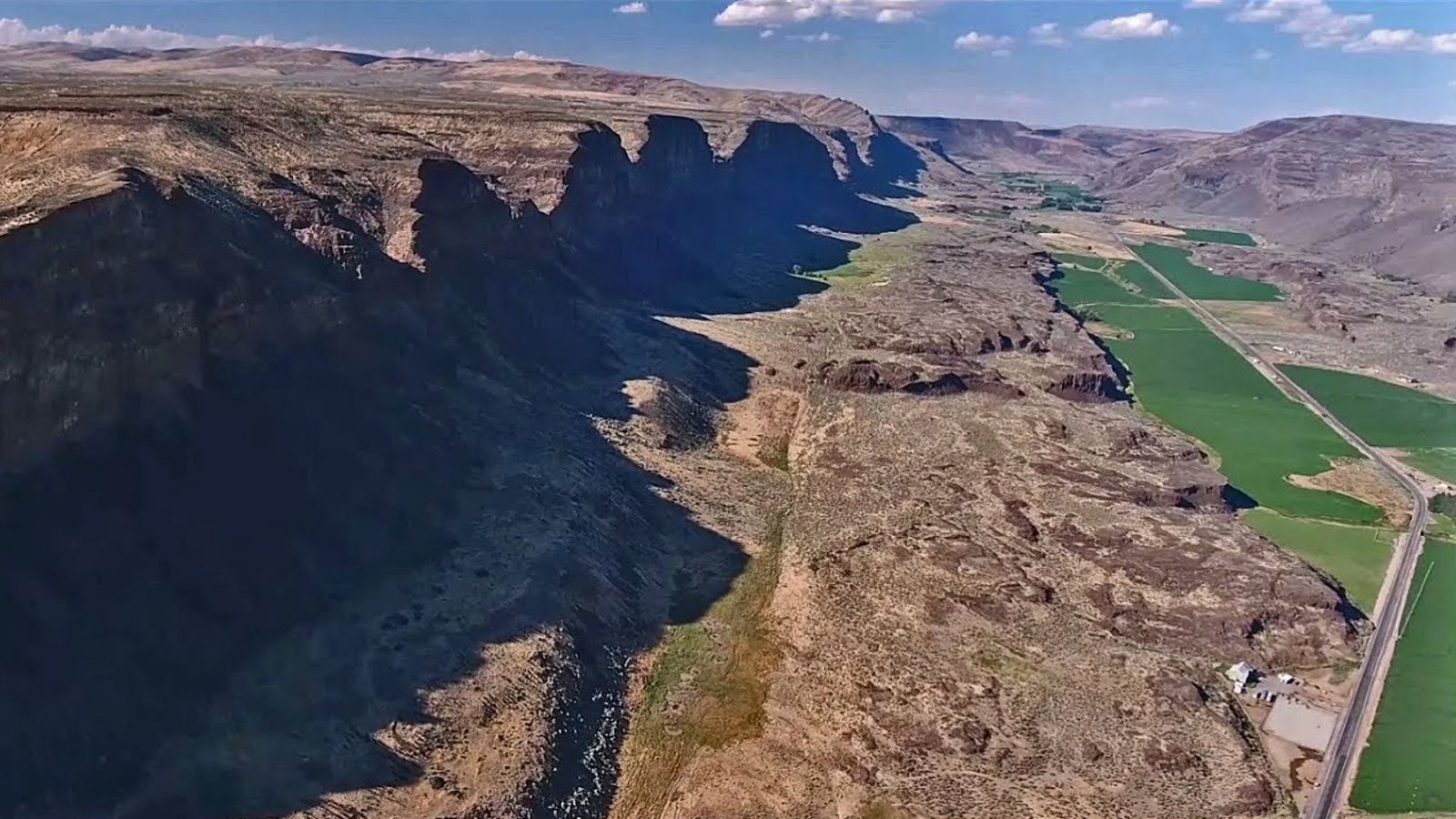
Timing, Topography and Type (“Rock Type” that is) Most of north-central Washington State is covered by lava flows associated with the Miocene Columbia River Basalts. The source of these lava flows came from a series of large fissure eruptions in northeastern Oregon, southeastern Washington and west-central Idaho (similar to the eruptions currently occurring today in Hawaii). These massive outpourings of lava eventually forced the course of the Columbia River to the north and west into what we call today the “big bend”. The nature in which the basalts cooled and cracked, and the structural folding and faulting of the basalts during and after emplacement (Yakima Fold Belt), allowed the Ice Age floodwaters to sculpt large Coulees (Grand and Moses Coulees) and the channeled scabland of eastern Washington. During the Pleistocene (Ice Age) over a period of about two million years, climatic conditions allowed the formation of principally two large continental ice sheets in North America. East of the Rocky Mountains was the Laurentide and to the west of the Rockies was the Cordilleran. Three principal large glacial “lobes” flowed south from the Cordilleran Ice Sheet in Canada into the Pacific Northwest. Those ice lobes are known today as the Puget, Okanogan and Purcell Trench Lobes. The Purcell Trench and Okanogan Lobes played a vital role in controlling ice age flooding and timing of flooding in north-central Washington. During the most recent ice age advance (about 20-12 thousand years ago) the Purcell Trench Lobe was first to arrive blocking predominantly all the drainages in northwest Montana forming a large glacial lake known as Glacial Lake Missoula (GLM). Periodically the ice dam holding back GLM would break allowing Ice Age floodwaters to catastrophically escape. The initial flooding from GLM flowed principally in two directions; to the southwest down the Cheney-Palouse scabland tract, and to the west/northwest into the preexisting Columbia River drainage. During the initial flood/floods the Okanogan Lobe of the Cordilleran had not advanced far enough (south) down the Okanogan River valley to block floodwaters flowing down the Columbia River around the big bend and eventually reaching the Wenatchee area where maximum floodwater depth was almost 1,000 feet deep. Advance of the Okanogan Lobe into the Columbia River valley (Bridgeport/Brewster, WA area) prevented floodwater from flowing the natural course into the Columbia valley north of Wenatchee, deflecting floodwaters into the existing Moses Coulee drainage and possibly down the beginning of Grand Coulee. Floodwaters flowing down Moses Coulee formed a large bar across the Columbia River valley south of Wenatchee, Washington, forming a large temporary lake in the Wenatchee valley until water became deep enough to erode down through the bar and empty the lake. Evidence in the Moses Coulee bar deposit reflects four distinct “basalt” dominated flood beds indicating four separate flooding episodes. Note that about the same time as the Okanogan Ice Lobe advanced into the Columbia valley another glacial lake started forming behind this ice dam, known today as Glacial Lake Columbia (GLC). As GLC filled, flooding continued down Moses Coulee and became more prominent down the beginning of Grand Coulee. Eventually the Okanogan Lobe advanced up onto the Waterville Plateau and blocked the upper portion of Moses Coulee thus ice-age floodwaters could no longer flow down Moses Coulee. With the blocking of Moses Coulee, GLC filled and flowed down the Grand Coulee drainage. During this time, when the Okanogan Lobe blocked the Columbia River drainage around the big bend, natural flow of the Columbia River was down the Grand Coulee drainage. Flood waters flowing down the Grand Coulee went over two separate folds in the basalt. An extension of the Beezley Hills anticline allowed a southern waterfall or “cataract” to form near Soap Lake, Washington. Another fold in the basalt, the Coulee Monocline, located just a few miles north of Coulee City, Washington, was the starting site of the upper falls or cataract. These two cataracts were simultaneously being eroded and “prograded upstream” with each subsequent Missoula Flood down the Grand Coulee drainage. During this time when GLC was at its maximum depth and flowing naturally down Grand Coulee, floods out of GLM would overtop lower divides and flow into the Telford and Wilson Creek floodways eventually meeting up with floodwaters down Crab Creek. As the Purcell Trench Lobe waned and flooding episodes became smaller and more frequent, these smaller flooding events were still able to overtop the lower divides along the south side of the Columbia River drainage due to the high water level in GLC. Eventually the upper cataract in Grand Coulee “breached” the existing Columbia River valley drainage near Grand Coulee, Washington. This breaching lowered the northern opening into Grand Coulee close to 500 feet lower than other divides to the east, making it the predominate flood pathway for the remainder of smaller and more frequent GLM floods. These later smaller GLM floods were not large enough in volume to overtop previous divide drainages to the east of Grand Coulee. The terminus of the lower Grand Coulee is marked by “Dry Falls” cataract. Eventually the Purcell Trench Lobe retreated north (melted back). With no ice dam blocking the drainages in northwest Montana, GLM could no longer exist. The Okanogan Lobe still blocked the Columbia River drainage west of Grand Coulee and GLC existed for about another 300 years after the last GLM flood based on glacial lake sediment (glacial varves) evidence. Eventually the Okanogan Lobe melted enough that one last catastrophic ice age flooding event from the emptying of GLC occurred down the Columbia River valley into the Wenatchee, Washington area and south along the preexisting Columbia River. It is believed that West Bar south of Trinidad, Washington, was formed from the demise of GLC. A small bar adjacent to West Bar may be evidence for one last small flood, after the demise of GLC, down the Columbia River drainage. The existing topography, the timing and position of the Purcell Trench and Okanogan Lobes, and the unique nature in which the basalt eroded