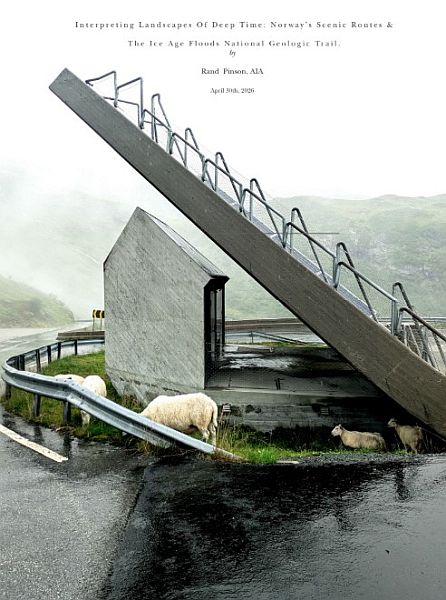
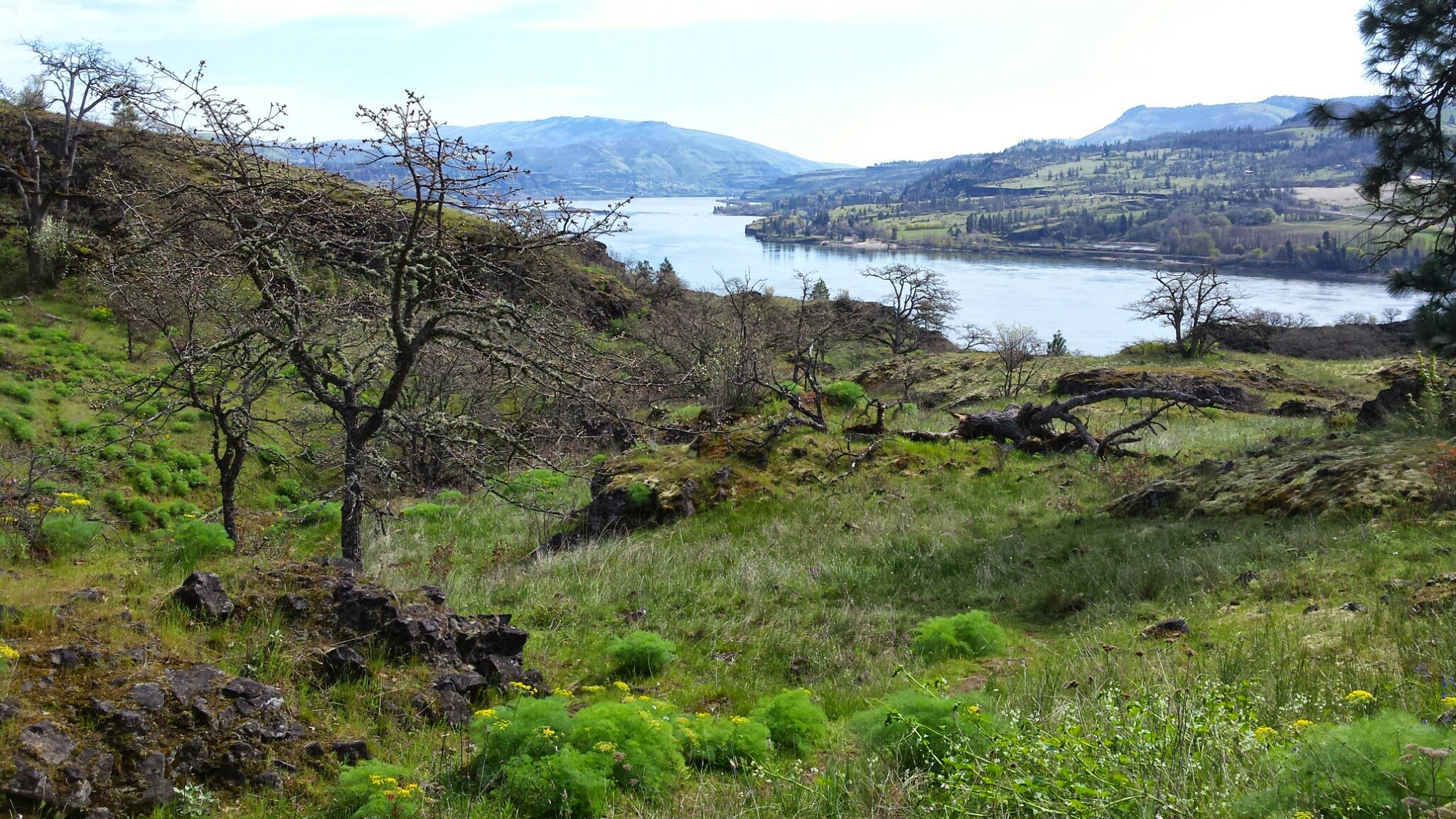
Interpreting Landscapes Of Deep Time: Norway’s Scenic Routes & The Ice Age Floods National Geologic Trail For the past several years, architect Rand Pinson has been researching and exploring the Ice Age Floods National Geologic Trail. That work led to a fellowship with the Architecture Foundation of Oregon and a trip to Norway to study its celebrated Scenic Routes program and National Parks, where world-class architecture supported through infrastructure has transformed how people experience remote landscapes. While there he met with local architects and learn from their experiences designing rest stops, bridges, parking areas and lookouts for Norway's "Scenic Routes" system of carefully selected roads that prioritize nature, innovative architecture, and art. He sees, "Norway’s scenic route system as a compelling model. It’s a great way to integrate architecture and design into scenic settings." He says, "I’m interested in the idea of storytelling in architecture, and this project presents an opportunity to shape a larger narrative that impacts the area." IAF Norway Collage "One of the key challenges of the Ice Age Floods National Geologic Trail," he noted, "is its lack of visibility and cohesive infrastructure. The exciting part of this project is finding the interesting ways history, ecology and architecture intersect,” he shared. “How can we take advantage of the site’s natural beauty, promote it and expand its potential? The National Geologic Trail already features remarkable elements, such as Maya Lin’s land art pieces that integrate seamlessly into nature. What it needs is a unifying vision to tie everything together. My goal is to contribute to growing tourism for this interesting and beautiful national park.” He is using his Norway explorations along with travels along the Ice Age Floods National Geologic Trail and experiences derived from OSU's Gorge Naturalist Program to compile research, develop documentation, drawings and models with the hope of one day bringing those ideas to life for our Trail. In this presentation, Rand shares his discoveries for the potential of the Ice Age Floods trail. Drawing on the intersections of geology, history, and design, he will present a vision for how thoughtful architecture and interpretation could bring this extraordinary landscape the public presence it deserves. This FREE presentation is sponsored by the Columbia River Gorge Chapter of the Ice Age Floods Institute. The presentation begins at 7:00 PM, Thursday, April 30, in the Sprint/Baker Gallery Room of the White Salmon Valley Community Library, 77 NE Wauna Ave, White Salmon, WA 98672. Rand Pinson Rand Pinson, AIA, is a partner and architect at Pine Bureau, a narrative-driven architecture practice. Rand has extensive experience across the US landscape and is an alumnus of the world-renowned Auburn University Rural Studio in Hale County, Alabama. His professional work includes design-build projects at the Epicenter, a nonprofit community design center he helped found in Utah; Lake Flato Architects in Texas; and Waec hter Architecture in Portland, Oregon, focusing on residential, environmental, and hospitality projects. His work has won numerous AIA awards and has been featured in international publications and exhibitions, including the Museum of Modern Art in New York and the Venice Biennale. Rand was named the 2025 Van Evera Bailey Fellow by the Architecture Foundation of Oregon. Rand is a member of the Ice Age Floods Institute, a Master Naturalist, and a geology enthusiast. He is drawn to an architectural narrative that resonates in memory, is responsive to the land and environment, and is grounded to its time and place.