
Grand Coulee Dam Story
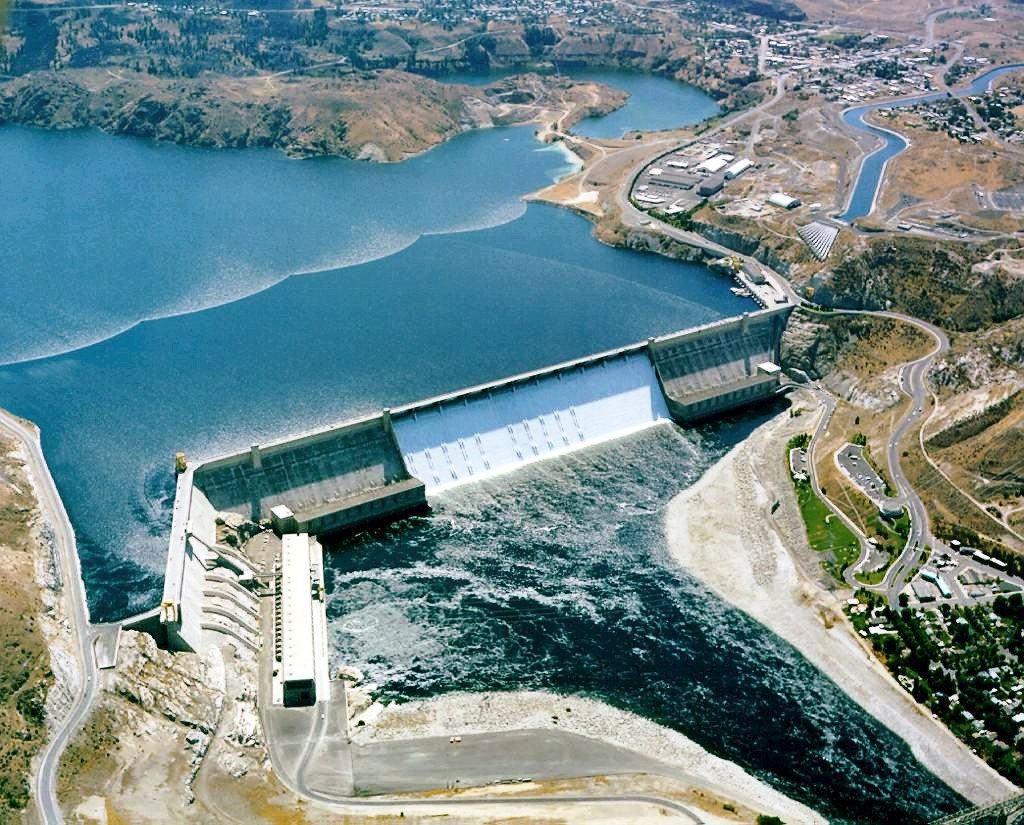
1918 story in the Wenatchee World that Bill Dietrich (former Columbian reporter and later with The Seattle Times) says in his wonderful 1995 book Northwest Passage — The Great Columbia River , “is probably the single most famous newspaper article in Pacific Northwest history. . . It is generally credited for launching the long debate about Grand Coulee Dam.” Students, fans and the mildly curious about any or all of: Grand Coulee Dam, The Columbia River, the massive Columbia Basin irrigation project, Eastern Washington in general, Washington state history, will find this article interesting.
Oral/Pictorial Video History of the Palouse Area
This 1/2-hour video begins with the Ice Age Floods impact on the Palouse area, then goes on with a fascinating oral and pictorial history of the area. The video was produced by Mortimore Productions for the Whitman County Library with materials and information provided by a bevy of contributors, including several IAFI members. This is a must view if you’re planning to travel to the Palouse Falls Chapter. In this stunning video you’ll learn about the Floods impact, early settlers, mule trains, sheep herders, and so much more that will make the event ever more personal and relevant. Whitman County Library – Ice Age v06 from Mortimore Productions on Vimeo.
Why pay dues to IAFI????
Membership in IAFI did not grow last year, and more than a couple of local program participants I know do not belong. They may have personal reasons for this decision, but I decided to look at the cost/benefit for myself (disclaimer – I am not a board member). Most of the revenue of the Ice Age Floods Institute is from dues – dues that it shares 50-50 with member chapters, leaving it with a very modest $13,000 to spend. The rest of the budget is made up from a few donations (under $1000), income from sales from the store ($1500), field trips ($800), and income that is offset by expenses (such as brochures). This is not a large budget to work with. Some of the budget goes to contracted staff services, some is paid out for costs related to board meetings, and the rest goes to operating costs such as insurance and banking services. Some vital services – such as the website – are largely provided by volunteer effort. So what is the benefit of paying dues? While you do get a break on anything purchased from the IAFI bookstore, and on the cost of some field trips, many of the benefits of joining a mission driven organization are more intangible. The benefits include the continued existence of an organization to accomplish goals that you feel are important, helping you, the member, direct your volunteer activities in a way that promotes those goals; by providing a mechanism to receive grants and donations to carry out these activities; and by guiding others in a way that gets things done that couldn’t be finished by a few people working alone. The achievements of the organization as a whole are impressive – look at the “year in review” in the January 2019 Newsletter. The list includes lectures and field trips open to the public, brochures and educational materials, visits to classrooms and community organizations, the website, the newsletter, and partnerships and collaboration with related organizations. These activities are carried out primarily by local chapters and members on a volunteer basis – so a volunteer might feel his/her time is enough of a contribution, and actual membership and dues are not needed. While valuable – even critical – these activities should achieve more when carried out in a framework provided by the central organization. So when deciding whether to send in that annual check, you need to evaluate not what monetary benefits you might receive but whether your goals align with those of the central organization and whether the central organization is effective in achieving those goals. If so, get out your checkbook/credit card/cash and give generously. If not, let your board members know what should be changed to gain your support. Sherry McLaughlin – Glacial Lake Missoula Chapter
Tualatin Ice Age Foundation Established
A Tualatin, Oregon Ice Age Foundation has been established to provide educational and economic opportunities for area residents, students, businesses and visitors. Local interest in ancient ice-age animals started in the 1970s when a Portland State University college student dug up half of a mastodon skeleton in Tualatin, which now is on display at the Tualatin Library along with several other ancient animal bones from such as mammoths, giant sloth, and bison. In 2018 a Foundation board was created to guide the foundation and raise funds for the center. The board includes Portland State University Geology Professor Emeritus Scott Burns as President; Yvonne Addington, Tualatin Historical Society; Linda Moholt, Executive Director of Tualatin Chamber of Commerce; Paul Hennon, retired Tualatin Parks Director; Jerianne Thompson, Tualatin Librarian; and Rick and Sylvia Thompson of the Ice Age Floods Institute, Lower Columbia chapter. Prior to the Foundation being established, an Ice Age Heritage Tourism Plan, funded by Washington County Visitor’s Association, which contained recommendations for further development by an international consultant, Bill Baker, owner of Total Destination Management. Baker recommended a new Ice Age Interpretive Center to house more of the collections and educate residents and visitors. According to Baker, “the Tualatin area was front and center for one of the greatest natural events of the last ice advance: a series of colossal floods that roared down the Columbia Gorge and pooled in the Tualatin and Willamette Valleys between 18,000 and 15,000 years ago. The entire Tualatin area landscape was shaped by those floods.” Baker saw important economic development, jobs and educational opportunities and recommended a new Tualatin Ice Age Foundation to implement opportunities and raise funds for a Tualatin Ice Age Interpretive Center. Portland State University, the University of Oregon and the Ice Age Floods Institute, Lower Columbia chapter have, for several years, been assisting the Tualatin Historical Society in seeking the prehistory of Tualatin. The National Park Service has identified Tualatin as a key Ice Age Floods National Geologic Trail hub. The City has continued their efforts to display their ice age prehistory by the development of the Tualatin River Greeway Trail and Fred Bruning, chief executive for Center Cal shopping centers, donating to the public, a $220,000 bronze statue of the Tualatin Mastodon. To date, many ancient animal bones and huge multi-ton erratics carried here by roaring floods have been found. Private donations of bones continue to be offered as we seek funding for this unusual historical project of building our interpretive center. Tualatin invites you to come see the displays and exhibits we already have at the library, Tualatin Heritage Center, in our parks and walkways and in the future in our Ice Age Interpretitive Center. For more information on Tualatin’s ice age history go to: https://tualatinchamber.com/visitor/ice-age/.
Ice Age Discovered – Stev Ominski
For Mountain residents the discovery of Stev Ominski’s art could be attributed to his Siamese cats, Lewis and Clark. Except the true discovery of Ominski’s work has gone far beyond. The Rhododendron resident’s recent work titled “Age’s End” depicts the classic view up the Columbia River Gorge during a Missoula Ice Age flood which occurred some 20,000 years ago. This work – 24 inches high, 48 inches wide, rendered by acrylic on canvas – attracted the attention of the Oregon Historical Society (OHS). “The collections manager (from OHS), Nicole Yasuhara, contacted me out of the blue and asked if they might use “Age’s End” to represent the Ice Age floods in Oregon for their new permanent exhibit Experience Oregon (which is) now open,” Ominski told The Mountain Times. “Of course, I was both pleased and honored to have been selected by OHS. They purchased a digital file and some limited use rights.” The recent discovery element didn’t end there. Shortly after that recognition Ominski was contacted by a graphic designer (Steve Johnston) who was working with a group at the State Capitol installing an exhibit on the roof of the dome and they thought Ominski’s depiction of the Ice Age floodwaters slamming into Beacon Rock would fit in nicely with the exhibit. “The Inundation of Beacon Rock” in the Columbia River Gorge is now a part of the east-facing interpretive panel on the capitol’s dome roof. “I’ve been working on this suite of Ice Age floods imagery for over 25 years with the help and input from my friends and colleagues in the geologic community,” he said. The result has been that these works have been exhibited in selected natural history museums and venues as well as used in lectures by educators and newspapers and magazines and field guides, before the recent local discoveries. “It’s been an ongoing career commitment,” Ominski added. Also appearing on Page 1 – “The Rowena Incident” – features Ominski feigning a pending mammoth trampling. The mammoth size is in stride with the subject matter, as the piece is 9.5 feet by 10 feet and is part of a permanent collection at The Discovery Center in The Dalles. The “Incident” is an acrylic on canvas with the selfie photo shot on a tripod with timer. “I’m 12 years older now,” Ominski said of the enormous canvas. “But I look much the same … with a bit longer, grayer hair in my beard – the shaggy badger look.” Ominski, 67, is primarily self-taught, and began his professional career in the fine arts in 1970 working initially on landscapes and subjects from the natural world. His studio is open to free tours in Timberline Rim. Make your own discovery of Ominski’s art by contacting him at stev@stevominski.com. By Larry Berteau/MT, Reprinted from The Mountain Times
“Gorge-ous Night Out” in Olympia
For the past four years and more, Gorge people and businesses have provided Oregon and Washington legislators and staff a casual “Gorge-ous Night Out” evening event to remind them and raise their awareness of the Columbia River Gorge. The intent of these matching events in both Salem and Olympia is not to lobby the legislators for anything in particular, but to remind them that we’re here, we’re vibrant, and we’re an economic and cultural force for both states. The IAFI Columbia River Gorge Chapter has been part of most of these events, educating the legislators about the Ice Age Floods story, and citing the economic role that Floods tourism can and does play in both local and state economies. It is somewhat surprising how few of the legislators have even visited some of the spectacular Floods sites throughout the region. So we premiered for them some of the new chapter tourism brochures we plan to release soon, and encouraged them to “get out on the road” for an awe inspiring look at the landscape and people they represent. We even agreed to requests for guided tours of Gorge geology from a couple of legislators and their staff. What better way to entertain and educate them while building a relationship that we can count on when we do need to ask them for their support.
“Hiding in Plain Sight”
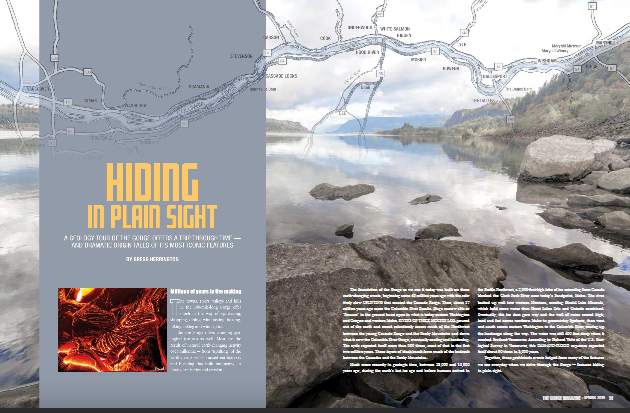
Millions of people who visit and pass through the Gorge each year don’t realize the scope of the cataclysmic stories behind the stunning and tranquil beauty they are surrounded by. The Spring 2019 edition of The Gorge Magazine (page 50) attempts to address that premise with a feature article about the geology of the Columbia River Gorge titled “Hiding in Plain Sight“. The author, Gregg Harrington, who is not a geologist, used a private tour with Lloyd DeKay, president of the Columbia River Gorge Chapter, as well as other local geologists as a basis for much of the article. The article touches on 40 million years of Gorge geology, including the Ice Age Floods, and highlights some of the more interesting geological features of this popular tourist destination. Hopefully, articles like this, along with IAFI field trips, lectures and website, will help many recognize and realize some of the tumultuous story that lies behind the enchanting scenery, and make them “never see the Gorge in the same way again”. The magazine is available online and begins at page 50. We had hoped for an Ice Age Floods Institute website mention, but a planned “For more information” section was not included in the article. Still, the article covers a lot of interesting geology of an extremely popular destination, and an article like this is a significant contribution to our efforts to inform and educate the public about the Ice Age Floods.
Ice Age Floods’ Eye Candy
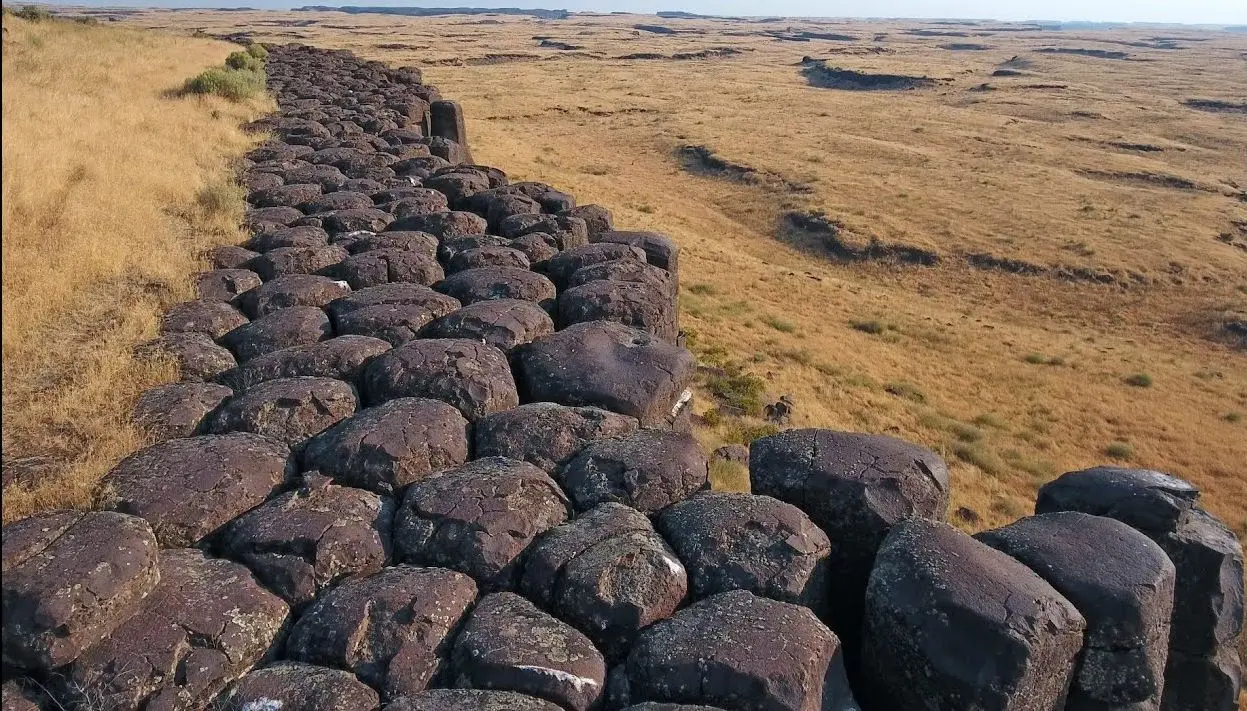
Check out Bruce Bjornstad’s Ice Age Floodscapes YouTube channel. A growing library of surreal aerial video and pics of other-worldly megaflood features.These drone videos and images that can only be achieved and appreiciated from close range in the air give a unique perspective on large landscape features, such as: Gardena Cliffs Rhythmites, Streamlined Palouse Hills, Quincy Lakes Erratic, Moses Coulee, Castle Lake Cataract, Frenchman Coulee, Martin Falls Cataract, Reach Ice Age Floods’ Tours – 2017, Scabland Coulees, Williams Lake Cataract, The Great Blade, Lake Sacajawea Flood Bar, West Bar Giant Current Ripples, Devils Canyon Coulee, Missoula Flood Rhythmites, Ice-Rafted Erratics and Bergmounds, Wallula Gap, Dry Falls, Deep Lake Potholes, and Drumheller Channels
My Hill
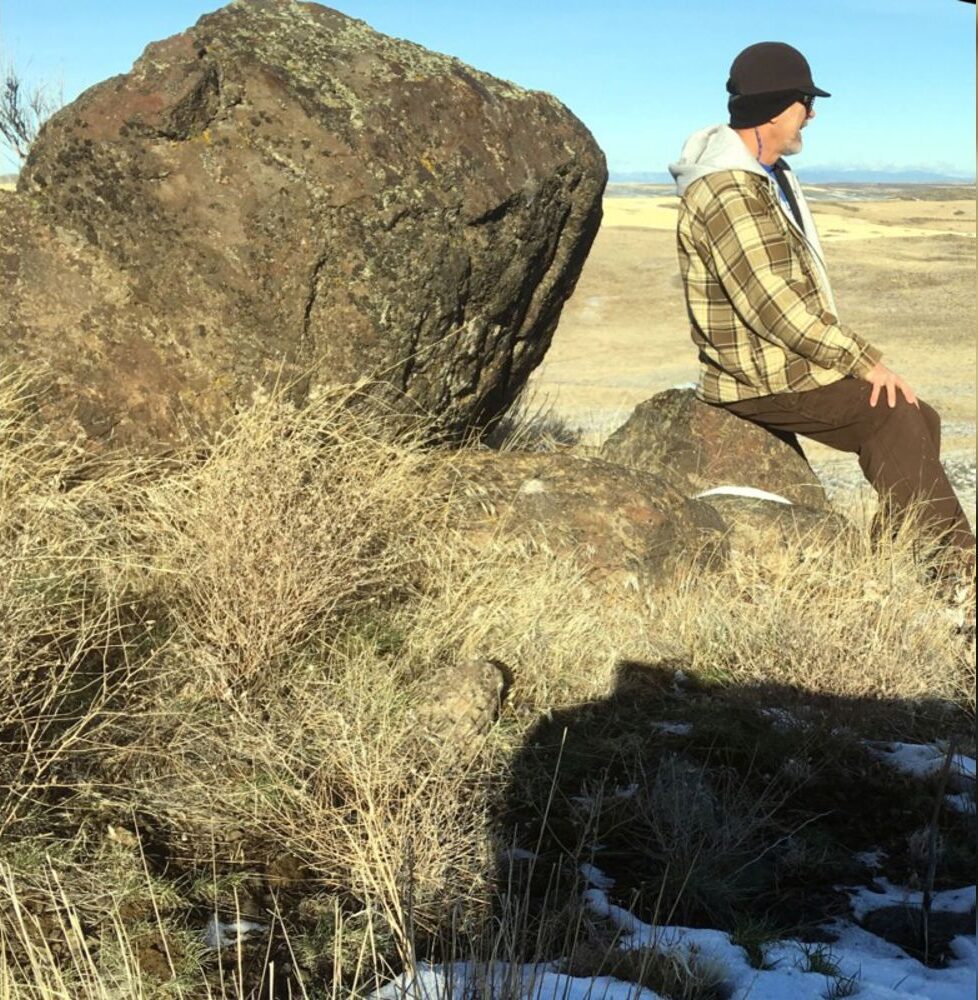
As a city kid in the ‘60s my family occasionally visited my grandparents in the farm country of Washington State’s Waterville plateau. My grandfather and two uncles were wheat farmers near the small town of Withrow, the future site of which had been partly hedged in by the Okanagan lobe of the Cordilleran Ice Sheet many thousands of years ago. Sometimes my father and I would join my uncles on the dusty 15-minute drive “out in the hills” to the sagebrush-surrounded corral, well house and large cement watering trough that served the cattle herd pastured there. Overlooking the corral was a tall hill I would sometimes climb while the trough was refilling. Warned to beware of rattlesnakes, a tiring five- or ten-minute ascent would get me to the top. Astride a large boulder, I would survey the corral far below, the sound of the pump engine distantly laboring. Around me was a panorama of other hills, about whose origins it had never occurred to me to wonder. “My hill” was steep enough that even oblong rocks I tossed down its flank would often bounce and roll clear to the bottom. On occasion, this would elicit salty, muffled hollering from Dad to cease and desist. I’m a half-century older, now, but I wish I had then understood the remarkable history of my hill. How would it have felt at that young age to know that a vast ice sheet had blanketed this terrain some 12,000 years earlier and that the hill I stood on had been its progeny? That, as that glacier began to melt, streams and rivulets had formed on its immense surface? That small sinkholes and other weaknesses in the rotting ice had allowed those waters to sculpt caverns inside the glacier? That those waters carried copious quantities of sediment and rock debris captured as the glacier eroded its way hundreds of miles southward? That my hill, like an embryo within an icy womb, had begun to grow inside one of those expanding interior caverns, ultimately to be deposited on solid ground as a kame, a lasting testament to the retreating glacier? Would I have deduced that the glacier had been at least as thick upon the land as my kame was high above the corral below me? That the erratic boulder on which I sat had been deposited on that kame like a cherry atop a geological sundae? I formed an early affection for the Withrow country because of the many relatives who, not so long ago, had peopled that farmland. It’s strange to contemplate that they are mostly gone from this land now, making it seem somewhat alien to me for their absence. And yet that hill remains, a mute sentinel having witnessed the glacier that birthed it, the quiet passage of the millennia, grandpa’s construction of that watering trough in 1948, and the naive delight of a young city kid climbing its flanks in the 1960s. Dan Jordan – IAFI Wenatchee Erratics Chapter
New – Lower Columbia Chapter Brochure
The Lower Columbia Chapter of IAFI recently produced the third IAFI chapter-specific “Our Cataclysmic Floodscapes” brochure, a guide to several of the key Ice Age Floods sites in the Portland Basin. This multi-panel brochure includes brief descriptions and map locations for five key sites, The Story of the Great Floods, Interesting Flood Facts, information about the Lower Columbia Chapter, and more. Expanded out the brochure measures 18″x23″, but it is folded to a rack card size for distribution to visitor centers. Click here to view a PDF of the brochure, and for more information about where a brochure can be obtained please contact Rick Thompson, President of the Lower Columbia Chapter (Rick@GigaFlood.com).