
Exploring Horsethief Butte, a rocky adventure millions of years in the making
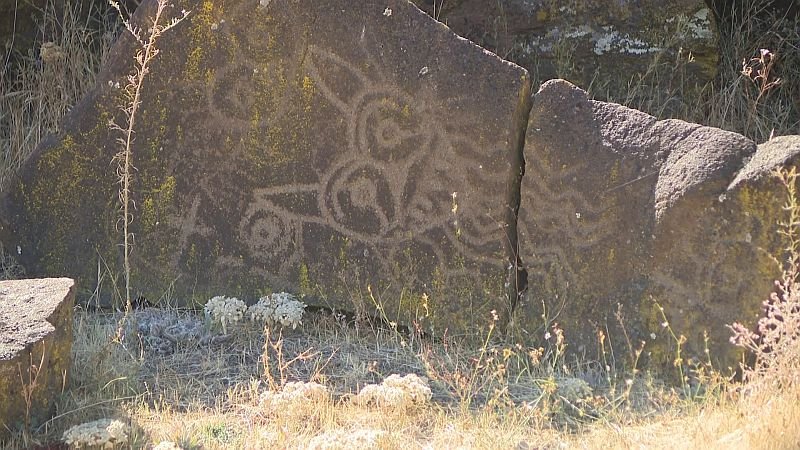
Author: Jon Goodwin for KGW8 Horsethief Butte, part of Columbia Hills Historical State Park, is a rocky labyrinth of towering basalt formations, winding trails and unexpected views. It’s a place where the landscape tells a story millions of years in the making. The butte was formed by ancient lava flows and later shaped by the massive Ice Age floods that swept through the Columbia River Gorge. Today, its unusual rock formations make it a popular destination for hikers, photographers and rock climbers. As I was arriving, I crossed paths with Susan Sieglein, visiting from Annapolis, Maryland. She was just finishing her exploration of the butte. “I love geology. I love the rock formations,” she said. And there’s certainly no shortage of those here. “You get little glimpses of Mount Hood and the Columbia River, as you go around different turns,” Sieglein said. “It’s like a labyrinth inside.” The trails around Horsethief Butte are relatively short, but they offer plenty of opportunities to explore. Visitors can wind between imposing rock walls, navigate narrow passages and scramble over rocks for a different perspective of the surrounding landscape. A closer look at some of those rocks reveals another piece of the area’s geological history. Vesicular basalt, commonly found throughout the Gorge, is dotted with small holes created by gas bubbles trapped in molten lava as it cooled and hardened. Millions of years later, those bubbles remain preserved in solid stone. It’s a small reminder of the Gorge’s more turbulent times. While Horsethief Butte’s geology is impressive, the surrounding landscape also holds deep cultural significance. For generations, Indigenous communities gathered along this stretch of the Columbia River to fish, trade and build connections. The river was an important center of life and commerce for Native peoples long before modern highways crossed the region. Nearby, at the Horsethief Lake section of Columbia Hills Historical State Park, visitors can see preserved examples of Indigenous rock art. The Temani Pesh-Wa display features petroglyphs and pictographs that were removed from their original locations in the 1950s, before rising waters behind The Dalles Dam submerged those sites. The rock art was eventually placed on public display in 2003, preserving an important connection to the people who lived along the Columbia River. Visitors can explore the relocated rock art display on their own during daylight hours from April through October. The park also offers guided tours to Tsagaglalal, commonly known as “She Who Watches,” one of the region’s most significant Indigenous rock images. Those tours are available by advance reservation on Fridays and Saturdays at 9 a.m. from April through October. Access to the site is restricted to guided tours to help protect the culturally significant artwork. Back at the butte, the experience is a little more hands-on. Although the hiking distances are short, the terrain can be uneven, with loose rocks and sections that require careful footing. “Wear shoes that have a good grip. Take a walking stick if you can,” Sieglein advised. “Be careful on the loose rocks, but it’s nothing too crazy.” The scenery here is a dramatic departure from the evergreen forests and lush landscapes farther west in the Gorge. Instead, visitors are surrounded by open skies, dry hillsides and rugged basalt cliffs. It’s a different kind of Pacific Northwest beauty, and one that Sieglein says shouldn’t be overlooked. For her, the appeal goes beyond the geology or the views. “It renews your soul. It really does,” she said. Sometimes, a change of scenery is all you need. Reprinted, with respect, from KGW8
Reading Stories Written in the Rocks
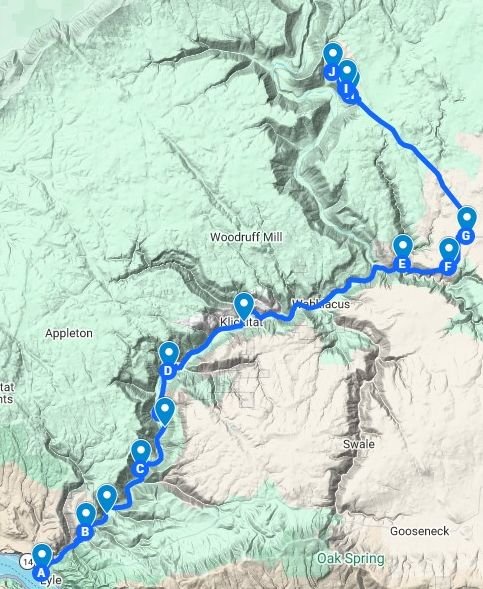
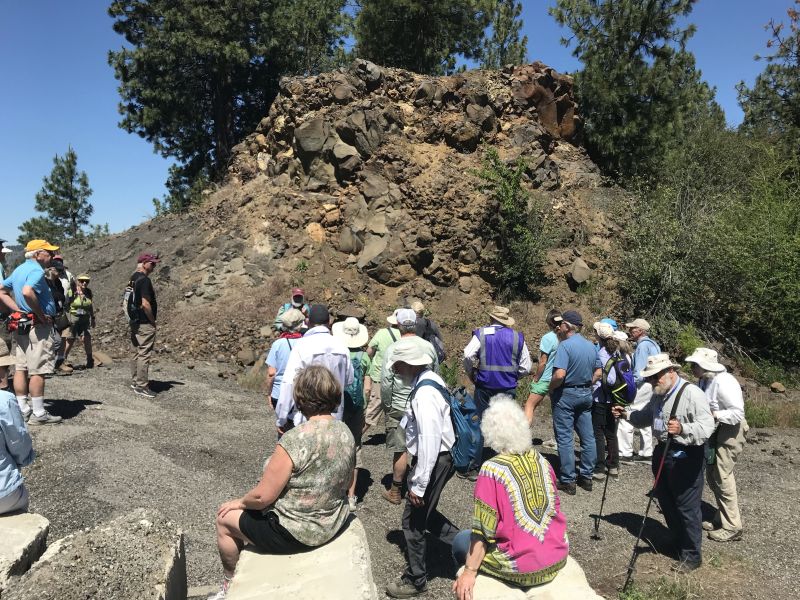
Every geologist has a secret superpower: the ability to look at a cliffside or a pile of river rocks and read the ancient stories locked inside. But an even greater superpower is translating those stories into a tale so vivid that anyone can picture the world as it once was. On a recent field trip up the Klickitat River Canyon, we stopped in front of a roadside outcrop that holds a chapter of a truly cataclysmic story. Where the Ice Age Floods Ran Backward – Imagine a wall of water hundreds of feet high, thick with mud and carrying boulder-sized rocks, roaring down the Columbia River Gorge. As this massive torrent surged toward the Pacific, the deluge was so vast that it couldn’t fit within the main river channel. Instead, water violently backed up into every side canyon it passed—including the Klickitat River Canyon. Looking closely at this roadside cliff, you can see the clear evidence of this chaos: Layer 1: The Surge. A massive 6- to 10-foot-thick layer of jumbled mud and rounded boulders—debris carried by Ice Age Floods that slammed into the canyon as they surged up from the mainstem of the Columbia River. Layer 2: The Settling. A smooth, 1- to 2-foot layer of fine mud on top, settling out as the flood temporarily crested, possibly for days, as the flood waters continued to rampage through the Columbia Gorge, before the flood waters slowly drained back into the main Columbia River channel. Layer 3: The Repeat Performance. A second matching set of thick boulders and fine silt directly above the first—proof that this monstrous event happened more than once. Right at the top sits a third layer of mixed angular and rounded rock that could also mark a third flood that carried some much more local debris, or perhaps it marks a volcanic mudflow (a lahar) that raged down-canyon from nearby Mt. Adams sometime after the previous floods subsided. Unlocking the Flood Depth – How deep were these apocalyptic floods? The rocks hold some clues: 315 Feet Deep in the Canyon: The roadside outcrop described above sits at an elevation of ~330 feet—over 300 feet above the current bed of the Columbia River at the mouth of the Klickitat. To deposit these large boulders, the rampaging floodwaters had to run up the canyon to that elevation, at least 315 feet above the base of the main Columbia River at the Klickitat mouth. Over 600 Vertical Feet and 8.7 Miles Further Upriver: 8.7 miles further up the Klickitat, we spotted similar flood deposits sitting at an elevation of 630 feet, implying that that main flood flowing through the Columbia was at least 615 feet deep. A Record of an 800+Foot Deep Flood: Immediately across the Columbia River at Rowena Crest, a visible “trimline” scoured into the landscape suggests the absolute largest floods crested there at 840 feet in elevation—implying an astounding flood depth of roughly 825 feet. Because the narrow walls of the Klickitat Canyon created friction and drag against the invading water, the back-flooding in the side canyons like the Klickitat likely couldn’t reach the full height of the main river’s crest. But even considering that drag, standing next to these roadcuts and looking up, it is humbling to realize that thousands of years ago, you would have been standing hundreds of feet beneath a churning flood of mud-saturated water and transported rocks, some of them possibly from as far away as western Canada. Article by Lloyd DeKay (editing assist by Gemini )
Celebrating the Life and Legacy of Dr. Gary Ford (1943 – 2026)

Members and the Board of Directors of the Ice Age Floods Institute (IAFI) remember fondly our long-time leader, mentor, and friend, Dr. Gary Ford, and deeply mourn his passing. Gary left us peacefully at his home on June 4, 2026 after living a full life of service, curiosity, and dedication. Born in Illinois on May 20, 1943, Gary lived it with an infectious curiosity in a journey defined by service and a profound connection to the earth. After serving in the United States Air Force, he channeled his love for the environment into a Ph.D. in Soil Conservation at Montana State University. He went on to spend a meaningful career protecting America’s most iconic landscapes as a park ranger in Yellowstone National Park and later with the U.S. Forest Service. When Gary “retired,” he brought his leadership and wealth of knowledge to the Ice Age Floods Institute, first as President of the Cheney-Spokane Chapter (2009–2012), then taking the helm as Institute President from 2012 to 2026. Gary tirelessly shared and fully believed that the grand, cataclysmic geological history of the Pacific Northwest belonged to everyone. As a leader, Gary was defined by his extraordinary openness, thoughtfulness, and exceptional people management skills. He possessed a rare ability to harness a diverse Board of Directors, skillfully guiding a wide range of perspectives and building bridges toward a unified, shared vision. He was always eager to welcome new members, champion fresh ideas, support grassroots chapters, and spark a shared sense of wonder in anyone who would listen. His leadership wasn’t rigid or about titles; it was about fostering an open, collaborative community united by curiosity. Gary’s quiet strength, warmth, and gentle spirit left an indelible mark on his family, colleagues, and the landscape he spent his life protecting. Beyond his geological pursuits, Gary was a devoted family man who loved sharing adventures, laughter, and a good story. He is survived by his beloved wife, Barbara Ford; his daughter and son-in-law, Flavia and Matt Hildebrant; his grandsons, Aspen and Dylan Bergland; his sister, Luann Ford; and his cousin, Anna Belle Alshire. He famously passed his love of Star Wars down to his grandsons and was always ready with a perfectly timed Yoda quote to put life into perspective: “Luminous beings are we, not this crude matter.” In keeping with Gary’s wishes, no formal celebration of life will be held. Instead, his family will scatter his ashes in a place that held a special, enduring meaning to him.
Krystyna Wolniakowski – Volunteer Extraordinaire for Columbia River Gorge Chapter

It’s not every day you meet someone whose passion for conservation spans from local community efforts to international environmental policy. Krystyna Wolniakowski is one of those remarkable individuals, and the Columbia River Gorge Chapter is incredibly fortunate to have her as a dedicated volunteer. A Local Champion Krystyna is always ready to lend a hand, whether it’s a big project or a small task. She was a vital part of the team, alongside IAFI Membership Manager Lorrie DeKay and IAFI Store Manager Patty Hurd, that brought our “Gorge-ous Gathering” IAFI Membership Meeting to life last May. Beyond specific events, Krystyna is a trusted advisor, offering invaluable insights and feedback on many of the IAFI and Gorge Chapter initiatives. Her dedication to our local efforts is truly inspiring. A Lifetime of Impact Krystyna’s impressive background in environmental conservation and public service is evident in everything she does. As the Executive Director of the Columbia River Gorge Commission, she plays a crucial role in safeguarding the breathtaking scenic, natural, recreational, and cultural resources of the Columbia River Gorge National Scenic Area. Her commitment to environmental stewardship extends far beyond the Gorge. She currently chairs the Klamath River Foundation, leading a successful multi-year project to remove dams on the Klamath River in southern Oregon—a monumental undertaking for river restoration. Krystyna is also a key member of the Romania Foundation, dedicated to developing sustainable tourism in Romania, and she contributes to the One Fly Foundation, which supports river restoration and fisheries health. Global Reach Krystyna’s career highlights showcase over 35 years of dedicated work in nature and landscape protection across the globe. Before her current role, she headed the Western Regional Office of the National Fish & Wildlife Foundation (NFWF) in Portland, overseeing conservation grant programs across seven northwestern U.S. states. From 1991 to 2000, she served as Director for Central and Eastern Europe at the German Marshall Fund of the U.S. There, she developed crucial environmental, economic, and democratic programs in numerous countries after the fall of the Berlin Wall. A standout achievement was her initiation of the Environmental Partnership for Central Europe (EPCE) program in 1990. This pioneering non-governmental grant program provided vital support to pro-ecological civil society organizations in Central Europe, including the Partnership for Environment Foundation in Poland. Krystyna Wolniakowski’s tireless efforts, both locally and internationally, exemplify a profound commitment to protecting our planet’s natural treasures. We are incredibly grateful for her contributions to the Columbia River Gorge Chapter and her enduring legacy in conservation.
Volunteers Help Shape the IAFI!

We’re reaching out to ask for your help. As we work toward our mission of promoting public awareness and education about the Ice Age Floods, our chapters have been facing a significant challenge: a shortage of active member volunteers willing to step into leadership roles or assist with essential chapter functions. Many of our current leaders are in their 70s and 80s, and the demands of their roles are becoming challenging. While our dedicated leaders works to maintain our organization’s momentum, we need support to ensure our continued growth and success. Your involvement will be crucial in helping to: Organize events: Assist with planning field trips, chapter functions, and speaker series. Provide administrative support: Help with recordkeeping, website updates, and newsletter contributions. Engage with the community: Connect with local schools and media outlets to spread awareness about our mission. Contribute fresh perspectives: Share your ideas and expertise to help us adapt to a changing world. Here are some ways you can get involved: Volunteer for events: Help plan and execute field trips, workshops, and conferences. Join a committee: Contribute to our leadership team and help make important decisions. Share your expertise: Offer your skills in areas like marketing, communications, or technology. By becoming more involved, you can: Strengthen your chapter: Contribute your time and skills to make your local chapter more vibrant and effective. Share your knowledge: Bring new ideas and contemporary skills to our organization. Support the organization: Help IAFI achieve its goals and become the foremost provider of Ice Age Floods information. No matter your level of experience or commitment, we welcome your participation. Whether you can volunteer a few hours a month or are interested in taking on a leadership role, your involvement will make a significant difference. The involvement of many will lighten the load on the few, and also bring a much-needed infusion of energy and fresh perspectives. We believe that by working together, we can strengthen our organization and better serve our mission of promoting public awareness and education about the Ice Age Floods. Your participation is essential. To get involved, please contact your local chapter through the IAFI.org website
Unearthing the Secrets of Spokane Valley: A Recap of the IAFI June Jamboree
This year’s IAFI June Jamboree delved into the fascinating geological history of Spokane Valley, contrasting it with the iconic Grand Coulee and Dry Falls, explored during last year’s Jubilee. Challenging the Landscape: Unlike the open spaces of Dry Falls, Spokane Valley presented a unique challenge – showcasing evidence of Ice Age Floods within an urban environment. Our chapter tackled this brilliantly, organizing hikes and car caravans departing from convenient public parks and commercial areas. Evening Explorations: The program’s highlights included captivating lectures. Professor Emeritus Dean Kiefer shed light on J Harlen Bretz’s Spokane associates, while renowned naturalist Jack Nesbit brought the story of the first Columbian Mammoth discovered near Latah Creek in the 1800s to life. Celebrating Success: The Jamboree culminated in a relaxed gathering at Mirabeau Meadows. Registrants, leaders, and participants exchanged insights and experiences, with a resounding appreciation for the chapter’s efforts. Comparisons were drawn, highlighting how our Spokane Valley exploration continued the excellence of the Puget Lobe’s outing at Dry Falls last year. A Delicious Finale: The grand finale was a catered Longhorn Barbecue overflowing with delicious food. Everyone left satisfied, with many even taking home doggie bags to savor the flavors afterward. Check out more images from the event in this Google Photo Album. Meet the Masterminds: Linda & Mike McCollum: This dynamic professor emerita and a research geologist duo co-led tours and car caravans, sharing their latest research on the Spokane area’s Ice Age Floods, and shaping the Jamboree’s theme. Michael Hamilton: A gifted geologist, Michael led hikes and the bus trip, encouraging questions and offering honest answers. Don Chadbourne & Chris Sheeran: Don, the chapter treasurer, managed logistics with expertise, while Chris, our media and registration guru, ensured a smooth experience. Melanie Bell Gibbs: A past president and national board member, Melanie oversaw participant check-in and badge distribution. Dick Jensen: Dick handled bus transportation and provided crucial support throughout the Jamboree. Jim Fox: The chapter vice president secured speakers and offered his assistance wherever needed. We also owe a great deal to the participant volunteers who proved invaluable in assisting us in all our efforts. Through the combined efforts of many the IAFI June Jamboree was a resounding success, fostering exploration, education, and a deeper appreciation for the Spokane Valley’s unique geological heritage. Being present with so much information and conversation among such extensive expertise was to witness the scientific process in action. Meeting people from other chapters was particularly nice, putting faces with names we know. We all learned a lot.
Scabland – The Movie, A Google Earth Odyssey

“Scabland” – the Movie, A Google Earth Odyssey “Scabland” is a media complement to CWU Professor Nick Zentner’s 2023-2024 A-Z YouTube geology series that re-treads the ice age floods and the work of Professor J Harlen Bretz and others. In this short animation, viewers virtually fly to a selection of locations visited by geologist Dr J Harlen Bretz, with quotes from his original field notes, geolocated in Google Earth and animated with Google Earth Studio. To see more of these locations, visit https://www.geology.cwu.edu/facstaff/nick/gBRETZ/ This video was done as an experiment/prototype by the authors, Glenn Cruickshank and Eric Larson, to showcase Google Earth, virtual special effects techniques, some of the spectacular landforms caused by the floods, the impacts of ice and water during the Last Glacial Maximum and the field locations of J Harlen Bretz. Eric Larson in Billings MT runs Shashin Studio, a VFX video production company (contact@shashin.studio). Google Earth Glenn is a retired photojournalist and consultant in Liberty Lake WA. Credits: Glenn Cruickshank Eric Larson Two Steps From Hell Made with Google Earth and Google Earth Studio. Thanks to The Families of J Harlen Bretz and Thomas Large, Nick Zentner, Glenn Cruickshank, Bruce Bjornstad, The Ice Age Floods Institute, and many others.
Lyle Cherry Orchard Interpretive Panels Installed

Last week, Friends of the Columbia Gorge completed installation on their first-ever interpretive trail signs at the Lyle Cherry Orchard Preserve! They’ll be sharing MUCH more on this story in spring 2024 (including guided outings!), but if you’re intrepid enough to hike this trail during the winter, check out the brand new signage with QR-code links to learn more about the preserve and the Gorge. Stay tuned for more in the coming months. And check out the Ice Age Floods geology recording.
Let Your Feet, and Your Imagination Roam at Rowena Crest and Tom McCall Preserve

Scenic Rowena Crest and the Tom McCall Preserve area provide an incredibly scenic place to let your feet, and your imagination wander as you look out on a major chokepoint along the Ice Age Floods path. The wildflower displays are amazing during the Spring, but several compelling flood-related features are visible from the vantage of the Rowena Crest Viewpoint any time of year. Rowena Crest lies nearly 700 feet above the Columbia River at the upstream end of the Rowena Plateau, a miles-long plateau that the river flows along. Just upriver from the plateau is the narrow section of the Gorge known as the Rowena Gap The drive to the viewpoint on old Hwy 30 from either east or west is a spectacular ride through a wonderous section of the Columbia River Gorge. A roundabout parking area at the viewpoint, with a safety wall above a sheer cliff, provides a great observation point eastward toward Rowena Gap. At Rowena Crest it’s easy to imagine what it might have been like to witness the approach of those massive floods. There is not yet scientific evidence that humans were in the area to bear witness to the Ice Age Floods, but there is solid evidence of humans in the Americas by that time. And there is growing concensus that if they came in during a glacial maximum, they would have come in by a coastal route that offered plentiful food and shelter for their journey. The mouth of the Columbia River would have been the first major waterway path inland that might have led them to settle in the area of the Floods. Your village might have been situated across the Columbia at the mouth of the Klickitat River where the town of Lyle now sits. If you were foraging, or just relaxing, atop Rowena Crest on a late summer day, you might have felt the ground begin to temble as if there were a small earthquake, but the trembling would have slowly increased for a few hours. Eventually you would have heard a low roaring sound that also grew over an hour or more before you could see turbulent brown muddy water begin flooding across the broad basin to the east. Then the roaring flood of water, only a few feet deep at first, would have entered the narrows, now called Rowena Gap, and sped on, crashing against the promontory you’re standing on and being diverted toward your village which was quickly washed away by the muddy torrent. But the muddy flood waters would have kept rising, unlike the Spring floods you’re used to on the Columbia, becoming a hundred feet deep, then two hundred as the levels just kept rising. Soon a huge whirlpool formed in the flood waters near the base of the promontory and a giant eddy formed where your village had been as flood waters flowed backward up the Klickitat River even as the bulk of the water continued downstream on the main stem of the Columbia. As the flood waters reached 400 and 500 feet deep and kept coming, suddenly to your right and left, huge blocks of the promontory broke off and slumped down into the rampaging flood waters. Now, even more fearful, you would have begun running south toward higher ground, climbing higher and higher as the still rising flood waters poured across the plateau and plunged into the small creek valley to the west, tearing away at the valley walls and massively widening that little valley. Eventually the flood waters stopped chasing you upward as you climbed higher, 200 then 300 feet above the now submerged promontory. Now, as you turned and looked out across that expanse of muddy water you could see massive white blocks of ice being carried along on the flood waters, similar but inconceivably larger than the ice blocks carried on the river during the Spring floods. But the flood waters didn’t begin to recede that day, nor the next, as they might in the Spring floods. In fact it was almost half a lunar cycle before they began to slowly recede, exposing a mud coated Columbia River valley that was now noticeably wider, with layers of shear vertical rock walls extending over 1000 feet above the normal river level below. As you began the recovery from the floods devastation, your family returned from from their hunting and gathering in the high mountain meadows, and you have an incredible story to pass along to them and your ancestors. This story is easy to imagine as you look out to the east from Rowena Crest. The onrushing Ice Age Floods waters easily flowed over the low relief of the broad Dalles Basin to the east, but the major Rowena Gap created a chokepoint in the path of the floods as they made their way through the Columbia River Gorge. This “hydraulic dam” forced the flood waters to build to over 1000 feet deep in this area, flowing hundreds of feet deep over Rowena Crest while forming a temporary lake in The Dalles basin. It is estimated that many of the 40-100 Ice Age Floods may have taken up to a month to completely flush through the system to the Pacific Ocean, but the duration of the flood waters at any point along the path probably lasted less than a couple of weeks. But this was more than enough to create several major floods features visible from this vantage point. At Columbia River level below and east of the promontory is a round Kolk pond that was created by giant whirlpools in the flood waters as they were deflected around the Rowena Crest promontory. Other similar Kolk features can also be seen on the Dallesport area to the east, and along the hiking path atop Rowena Crest where they are marked by surrounding groves of oak trees. Across the Columbia, the floods deposited a huge eddy gravel bar that the entire town of Lyle, Washington is built upon. The Klickitat River was backed
Mima/Desert/Biscuit Mounds – An (Possible) Explanation

If you’ve visited the Rowena Crest Viewpoint at Tom McCall Preserve, west of The Dalles in the Columbia River Gorge, you may have noticed the many dome-shaped earthen mounds that cover the Rowena Plateau. These mounds are broadly circular and are surrounded by collections of basalt rock fragments. If you’ve visited the spring wildflower mecca of Catherine Creek on the Washington side of the Gorge, you may have also wondered at what caused the stripes of black rock extending down the slopes above the area. Tens of thousands of similar soil mounds cover large areas of the high desert lands of north-central Oregon, often in swarms that number in the hundreds. These mounds can be round or elongated, can range from a dozen feet to more than 60 feet in diameter atop the rocky Columbia River Basalt bedrock, and are typically surrounded and separated from each other by rings or stripes of basalt rock fragments. The mounds also appear similar to those at Mima Mounds Natural Area Preserve near Olympia, WA. There have been many suggested causes for the creation of these mounds, from burial mounds, to Pleistocene pocket gophers, to plants or glacial sun cups trapping wind-blown sediment, to sorting by earthquake vibrations, to turbulence at the base of ice-age floods flowing over the landscape. Research by two Oregon graduate students, Clark Nelson of Oregon State University and John Baine Pyrch of Portland State University, independently came up with what may be the most likely explanation for the origins of these enigmatic features. Their theses suggest desert mounds and their rock rings formed through a process of natural sorting, where fine soil material is pushed up into mounds and associated rocks are pushed out to the edges to form rings through countless cycles of wetting/drying and freeze/thaw during the wetter and colder period of the late Pleistocene. Clark Nelson cut a trench through a mound that exposed layers of soil and volcanic ash whose lack of mixing discounts the pocket gopher theory. Nelson also found that slope angle less than or greater than 10 degrees determined whether the features would form rounded mounds vs. elongated stripes. Pyrch showed the strips to be distinct from common talus slopes, because no obvious source of rock exists at the head of the talus stripe. He also observed that rocks within these stripes are sorted, unlike talus slopes, suggesting the same ice age freeze-thaw origins as soil mounds and rock rings. You can read more detailed articles about these enigmatic features in these articles: Mystery of the Desert Mounds Great Pyramids of the Gophers: Mima Mound Mystery Solved Similar processes are also thought to be responsible for the “patterned ground” found in periglacial environs. However these various types of features may have formed, we can be certain how the few mounds in the center of the parking circle at Rowena Crest Viewpoint came to be. They were man-made during the construction of the viewpoint and made to look like the mounds that cover the Rowena Plateau. At least one origin has a definitive answer.