Geology of the Tri-Cities Field Trip
The Lake Lewis Chapter of the Ice Age Floods Institute is sponsoring an informal (carpool) field trip focus on the geology in and around Richland, Washington
The Lake Lewis Chapter of the Ice Age Floods Institute is sponsoring an informal (carpool) field trip focus on the geology in and around Richland, Washington
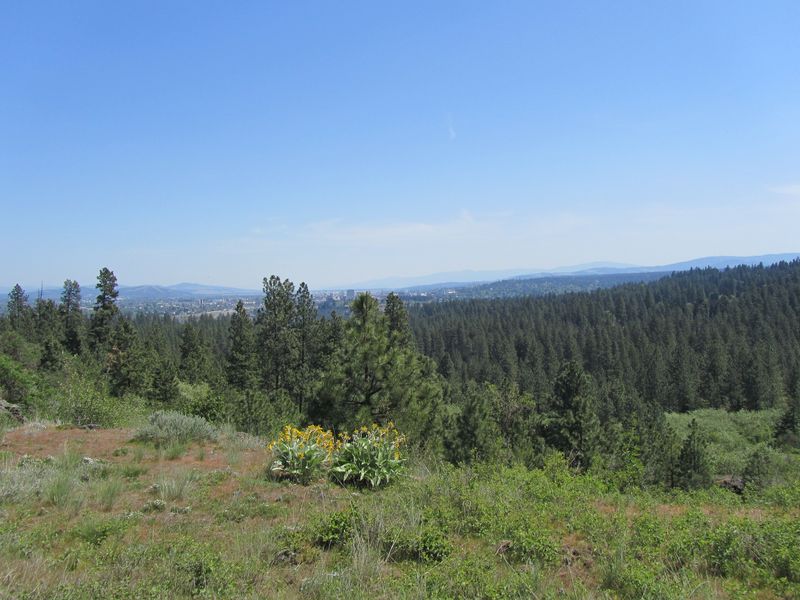
The 3-mile hike will be led by IAFICS board member geologist Michael Hamilton. It will take place along Rimrock Drive, which has spectacular views of Spokane and the Spokane Valley. The Glacial Outburst Flood Story will include a lot of "arm-waving," pointing out flood features both along the trail and with views to the east. The geology discussion will include details of another kind of flood that hit the Spokane area 14 million years ago. The hike will then cut to the west along one of the park's trails to find mysterious Mima mounds, and then loop back to the parking area.

Field Trip Leader: Karl Lillquist, Emeritus Professor, Geography Department, CWU What’s so cool about lower Crab Creek? Crab Creek is a perennial stream with headwaters not far from Spokane! It flows over 160 miles through semiarid eastern and central Washington to join the Columbia River just south of Beverly. Lower Crab Creek lies in a broad coulee adjacent to the towering faulted and folded Saddle Mountains. Ice Age floods from two directions scoured the coulee walls. More recent rockfall and landslide deposits veneer the coulee walls, and sand dunes and salt flats blanket the coulee floor. Native Americans have long frequented the river and shrub steppe environments of the area. In the past 150 years, the landscape has been altered by the coming of the railroad and by large scale irrigation. Currently, the area is a mecca for outdoor-minded folks included hunters, fishers, nature lovers, cyclists, and off road vehicle enthusiasts. Over the day, we will explore: 1) the tectonic origins of Crab Creek “Coulee” and the Saddle Mountains; 2) impacts of Ice Age flooding on the area; 3) formation of prominent rockfall and landslides from the Saddle Mountains; and 4) how geology, weather and climate, and human activity have shaped sand dunes and salt flats in the area. The trip will conclude around 3pm giving participants plenty of time to get back to Ellensburg for Nick Zentner’s lecture. What’s the plan for the day? 10:00am Stop 1—Beverly—geology and geography overview; Ice Age floods 11:00 Depart 11:15 Stop 2—Beverly Sand Dunes—weather, dunes, ORV’s, salt flats & Crab Creek 12:00 pm Depart 12:15 Stop 3—Smyrna Ice Cave—faulting, talus, cold air drainage & human uses of talus 1:00 Depart 1:15 Stop 4—West of Smyrna—landslides 2:00 Depart 2:15 Stop 5—Red Rock Coulee—Ice Age floods 3:00 Depart Where to meet and park? We will meet on the east end of the Chicago, Milwaukee, St. Paul & Pacific railroad bridge in Beverly at 10:00am. The bridge and the old railroad right of way are now part of the Palouse to Cascades Trail. This trail forms the northern boundary of the town of Beverly and is our first stop. Beverly is located about 10 miles south of Vantage along the Columbia River. To get there from WA 243, take a left and head east on Lower Crab Creek Road for just under 0.2 mi. Turn left onto Seattle Street and drive north for ~0.2 mi to a trailhead just south of the Palouse to Cascade Trail. Park here or along Seattle Street, 1st Avenue SW, or Main Street. Make sure to pull off the streets as far as possible and don’t block resident’s driveways. What are the trip logistics and costs? All Ellensburg IAFI field trips are free of charge and involve participants driving their own vehicles to the various stops. Most trips involve several short walks or hikes. We may cross barbed wire fences, and walk over uneven terrain and through dryland vegetation. There are limited restrooms scattered along our route. There’s no need to reserve a place on the field trip—just show up! We provide a free digital copy of the field guide for you to download or print out (see “Field Guides” near the bottom of my CWU website => https://www.cwu.edu/academics/geography/_documents/karl-lillquist.php). I will post the Lower Crab Creek field guide on my website on about Monday 6 April. Due to budget constraints, hardcopies of the field guide will now only be available by prior request and subsequent donation (suggested $15). If you want a full color, hardcopy of the ~40 page field guide, email me at lillquis@cwu.edu to let me know how many copies you would like. I will place my order for hardcopies by 8:00am Monday 6 April so if you want a hardcopy, please get your request in before that day. Pick up your copy and make your donation to IAFI at Stop 1 on the field trip. Hope you can join us!
It’s less than a month away! The members of the Lakeside Gem & Mineral Club invite all to our 29th Annual Gem and Mineral show April 18-19. Join us at the Benton County Fairgrounds Building #2 in Kennewick. The enlarged show features 19 dealers, 36 member displays, demonstrations, kid activities, door prizes, silent auctions, geode cracking, and much more. Come see precious gemstones, minerals, jewelry, fossils, meteorites, special exhibits, local collections, and of course, ROCKS! Adults $5.00; children under 14 are free. It’s a fun family event. We hope to see you there!
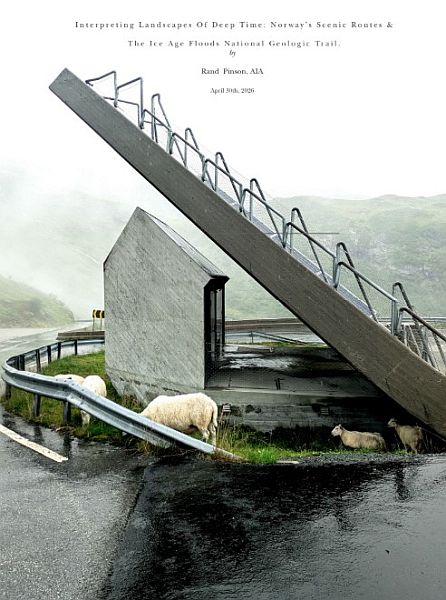
Interpreting Landscapes Of Deep Time: Norway’s Scenic Routes & The Ice Age Floods National Geologic Trail For the past several years, architect Rand Pinson has been researching and exploring the Ice Age Floods National Geologic Trail. That work led to a fellowship with the Architecture Foundation of Oregon and a trip to Norway to study its celebrated Scenic Routes program and National Parks, where world-class architecture supported through infrastructure has transformed how people experience remote landscapes. While there he met with local architects and learn from their experiences designing rest stops, bridges, parking areas and lookouts for Norway's "Scenic Routes" system of carefully selected roads that prioritize nature, innovative architecture, and art. He sees, "Norway’s scenic route system as a compelling model. It’s a great way to integrate architecture and design into scenic settings." He says, "I’m interested in the idea of storytelling in architecture, and this project presents an opportunity to shape a larger narrative that impacts the area." IAF Norway Collage "One of the key challenges of the Ice Age Floods National Geologic Trail," he noted, "is its lack of visibility and cohesive infrastructure. The exciting part of this project is finding the interesting ways history, ecology and architecture intersect,” he shared. “How can we take advantage of the site’s natural beauty, promote it and expand its potential? The National Geologic Trail already features remarkable elements, such as Maya Lin’s land art pieces that integrate seamlessly into nature. What it needs is a unifying vision to tie everything together. My goal is to contribute to growing tourism for this interesting and beautiful national park.” He is using his Norway explorations along with travels along the Ice Age Floods National Geologic Trail and experiences derived from OSU's Gorge Naturalist Program to compile research, develop documentation, drawings and models with the hope of one day bringing those ideas to life for our Trail. In this presentation, Rand shares his discoveries for the potential of the Ice Age Floods trail. Drawing on the intersections of geology, history, and design, he will present a vision for how thoughtful architecture and interpretation could bring this extraordinary landscape the public presence it deserves. This FREE presentation is sponsored by the Columbia River Gorge Chapter of the Ice Age Floods Institute. The presentation begins at 7:00 PM, Thursday, April 30, in the Sprint/Baker Gallery Room of the White Salmon Valley Community Library, 77 NE Wauna Ave, White Salmon, WA 98672. Rand Pinson Rand Pinson, AIA, is a partner and architect at Pine Bureau, a narrative-driven architecture practice. Rand has extensive experience across the US landscape and is an alumnus of the world-renowned Auburn University Rural Studio in Hale County, Alabama. His professional work includes design-build projects at the Epicenter, a nonprofit community design center he helped found in Utah; Lake Flato Architects in Texas; and Waec hter Architecture in Portland, Oregon, focusing on residential, environmental, and hospitality projects. His work has won numerous AIA awards and has been featured in international publications and exhibitions, including the Museum of Modern Art in New York and the Venice Biennale. Rand was named the 2025 Van Evera Bailey Fellow by the Architecture Foundation of Oregon. Rand is a member of the Ice Age Floods Institute, a Master Naturalist, and a geology enthusiast. He is drawn to an architectural narrative that resonates in memory, is responsive to the land and environment, and is grounded to its time and place.
Join us for a FIELD TRIP INTO MOSES COULEE, DOUGLAS COUNTY, WA SPONSORED BY THE LOWER GRAND COULEE CHAPTER- IAFI Geologists Dr. Joel Gombiner and Mark Amara will lead an exploration into the most enigmatic of the major coulees in the area of the Ice Age Floods. Questions and theories have arisen for years about how Moses Coulee was formed. It's long been assumed it was cut by huge floods in the same way the other major coulees are thought to have been formed. But for much of the series of Missoula Floods the Moses Coulee area was blocked by the Okanogan Lobe of the Cordilleran Ice Sheet. Bretz postulated there were two major episodes of coulee formation, the first much older one occurring before the last, late Pleistocene major ice advance. Other theories postulate that it was cut by break-out floods coming from beneath the ice sheet that could have occurred during the latest major ice advance. We'll investigate 5 stops on this journey of Ice Age Floods geologic features starting from Jameson Lake near the head end of Moses Coulee and moving south down into central Moses Coulee. This field trip explores the glacial and flood features in Moses Coulee and involves short hikes at nearly every stop. Date: SUNDAY MAY 3, 2026 Start time: 10:00 am Meeting Place / Driving Directions: Meet at the Jameson Lake WDFW Boat Launch and Rest Area at 441 South Jameson Lake Road, Waterville, WA 98858 at this map link: https://maps.app.goo.gl/kJdwZefZArVUpHQXA Bring: lunch, drinks, snacks, appropriate clothing and footwear, camera, etc. Bathrooms are available at the first stop only. There is NO cost for the trip though Registration and a Discover Pass are required. Due to limited car parking at several sites registration is limited to 30 people Contact Vicki Rivers to register in advance by one of the following methods: Text: 509.781.1701 or email: suezb@hotmail.com
Western Washington has been a location of intense geologic action for millions of years, and it still is. This talk shows how geologists use the physics of Earth's gravity and magnetic fields to map deeply-buried rocks which tell the story of ancient mountains now long-gone. The talk will also show how the subsurface architecture left behind continues to influence the geologic and earthquake activity of today.
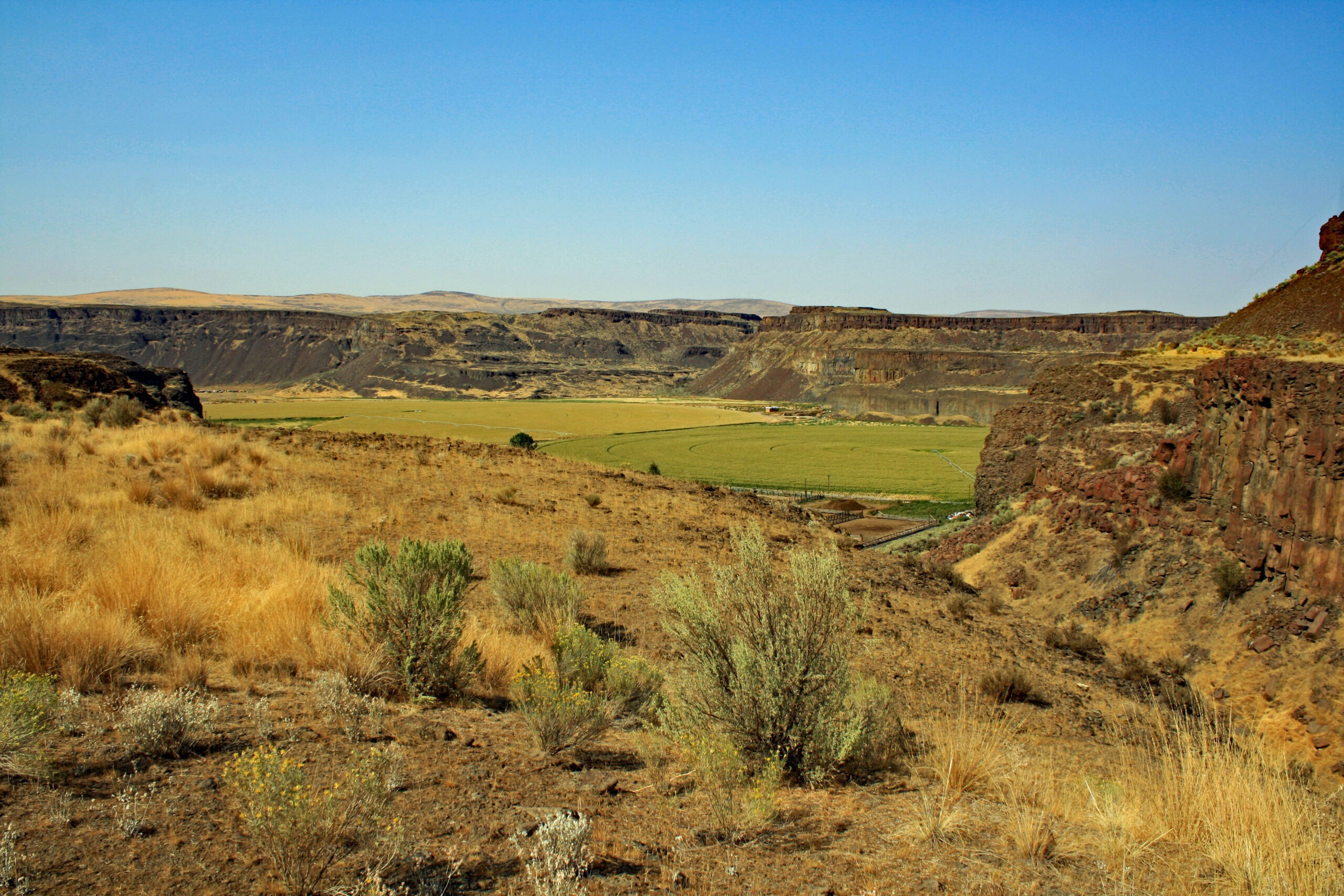
Giant Pothole near Washtucna, WA Over 100 years ago, scientists discovered the unique landscape of the Channeled Scablands of Washington. By studying clues in Montana, Idaho, Washington, and Oregon, two of them pieced together the evidence that led to their conclusion which was scoffed at by many of their colleagues. After more than 20 years of field study and overwhelming evidence, most of the scientific community finally agreed with them. See how today, new detectives are in the field with new technologies to unravel more of the mysteries of the Channeled Scablands. Lloyd Stoess, President of the Palouse Fall Chapter of the IAFI, will show pictures and explain the evidence of the enormous Missoula Floods that carved our landscape. This will also be available on Zoom: Join Zoom Meeting https://us06web.zoom.us/j/89175830218 Join instructions https://us06web.zoom.us/meetings/89175830218/invitations?signature=A-eaOzzCh1jy5rfktTN7oAoucFkSE0aKCWq9f_DNyAs
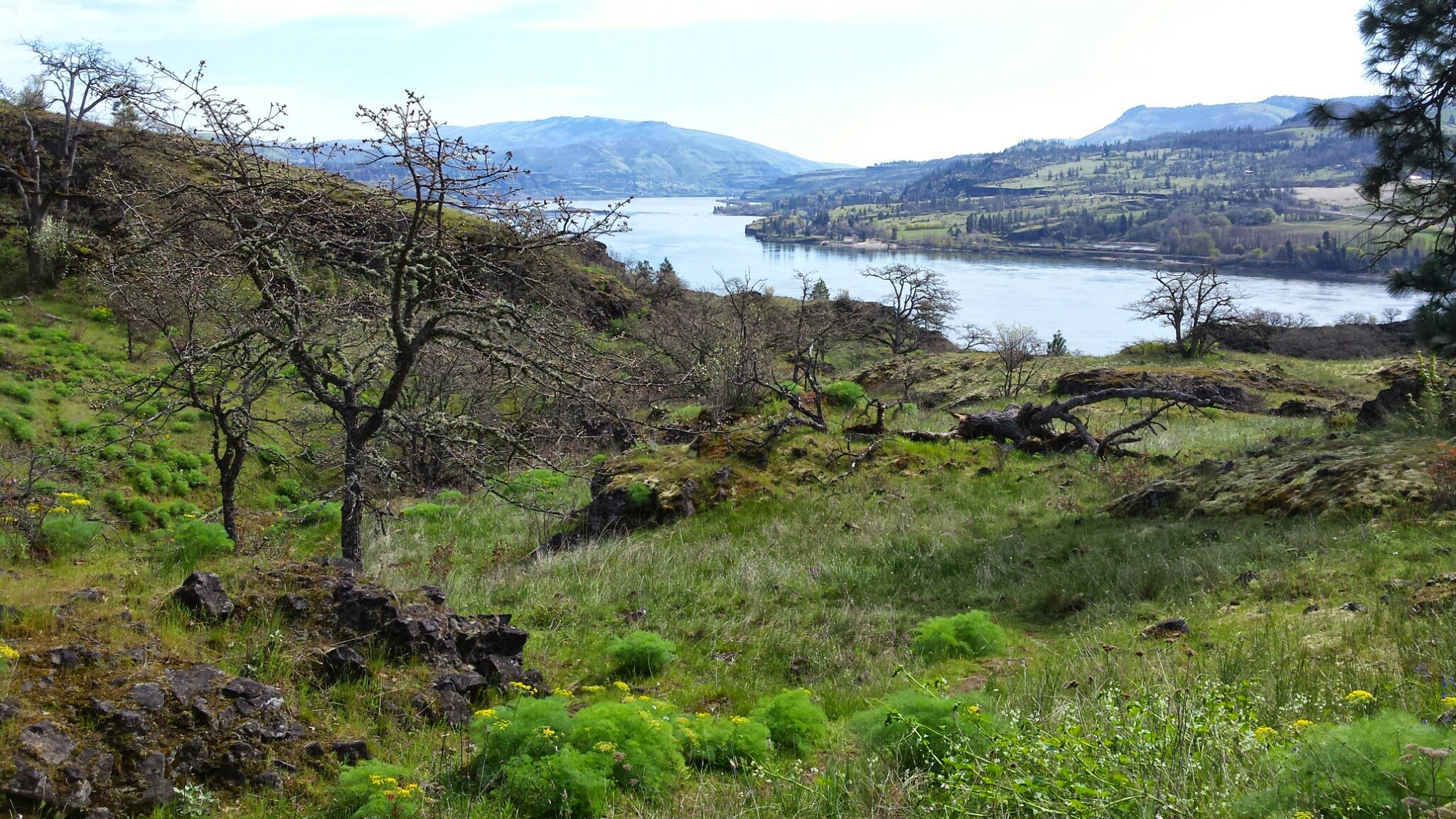
Have you ever looked at the dramatic cliffs and unusual rock formations of the Columbia River Gorge and wondered how they came to be? This May, during the White Salmon Wildflower Festival, you’re invited to step into “deep time” on a guided geology walk with professional geologist Lloyd DeKay. This is more than a hike—it’s a journey through millions of years of volcanic eruptions, massive floods, and the relentless shaping power of water and time. A Walk Through Ancient Landscapes Set against the stunning backdrop of Coyote Wall, this experience explores the interconnected terrain of the Labyrinth and Syncline—some of the most geologically fascinating features in the Gorge. Participants will: Walk the scenic roadway and venture into the Labyrinth Observe unique rock formations and folded layers up close Learn how lava flows, Ice Age floods, and tectonic forces shaped the land Pause for a bring-your-own snack/lunch beside peaceful Labyrinth Creek Expect a moderately active outing of 2+ hours and 2+ miles round trip, with some light rock scrambling along the way. Where: Meet-up at the Mt Adams Visitor Info Ctr at Mile Post 65, Highway 14, Lot 1 Heritage Plaza Parking, White Salmon When: Meet by 7:45 Sharp | May 9 and May 16 | 2026 Cost: Free Sign Up: White Salmon Wildflower Week Events - Scroll down that page to sign up – each date will fill at 15 participants. See the Gorge Differently By the end of this walk, you won’t just see the Gorge—you’ll understand it. Layers of basalt, carved valleys, and scattered boulders will tell a story of fire, flood, and time on a scale that reshapes your perspective. Whether you’re a curious local or a visiting wildflower enthusiast, this is a rare opportunity to connect more deeply with the landscape that defines our region. Come ready to hike, learn, and never look at the Gorge the same way again. Meet Your Guide: Lloyd DeKay Lloyd DeKay brings a lifetime of geological expertise and local passion to this experience. BA in Earth Sciences – California State University, Northridge MS in Geological Oceanography – University of Rhode Island 27-year career in global exploration with Gulf/Chevron Since moving to the Gorge in 2007, Lloyd has become a cornerstone of the local naturalist and geology community. He serves as President of the Columbia River Gorge Chapter of the Ice Age Floods Institute and has led extensive efforts to expand educational resources, including interactive maps, field guides, and regional programming. Locally, he’s also a co-founder of community initiatives in White Salmon and Bingen and a frequent field trip leader for Oregon State University’s Gorge Naturalist Program.
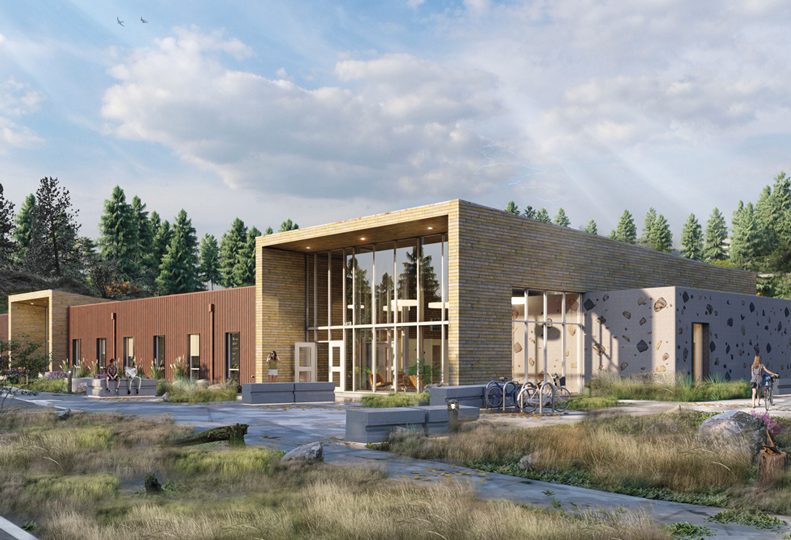
🪨 Explore 1.3 Billion Years in One Afternoon! Saturday, October 4 — Join the inimitable Michael Hamilton for a guided geology hike through Spokane Conservation District’s remarkable new headquarters, nestled in an ancient basalt quarry. This site is both brand new and unimaginably old. The Quarry reveals a stunning cross-section of Earth’s history—1.3 billion years of geologic drama exposed in a short, accessible hike. Along the way, you’ll see and learn about the effects of Ice Age floods, huge lava flows, tectonic shifts, and more, all woven into a developing geologic trail for the community. Don’t miss this rare chance to walk through deep time with expert insight and plenty of scenic stops. The new Scale House Market at the Quarry will be open with public bathrooms and the access gate will be open. We will meet up at 1 PM in front of the SCD office. Good walking shoes are recommended for this easy-moderate hike. Register for the hike using the button below. Each participant will need to have a signed liability waiver-click on the red button to download one for printing and bring it along. We will have more at the trailhead.