Skip to content

Sharing the Fascinating Ice Age Floods Story Since 1995

  • Explore!
    • Intro to the Ice Age Floods
    • Ice Age Floods National Geologic Trail
      • NPS Teacher’s Curriclum Guide
    • Places to Go! and Things to Do!
      • Montana
      • Idaho
      • Washington
      • Oregon
    • Ice Age Floods Interactive Map
    • Explore Ice Age Floods Videos
  • News & Events
    • IAFI News
    • IAFI Events
      • Activities
      • Presentations
      • Other Events
    • IAFI Archives
      • More News From Our Archives
  • Join/Renew/Donate
    • About IAFI
      • IAFI Board of Directors
    • Become a New/Renewing Member!
    • Donate to IAFI
  • IAFI Chapters
    • All Chapters Home Page
      • About IAFI
      • Explore the Ice Age Floods with IAFI Chapter Brochures
    • Cheney-Spokane
    • Coeur du Deluge
    • Columbia River Gorge
    • Ellensburg
    • Glacial Lake Missoula
    • Lake Lewis
    • Lower Columbia
    • Lower Grand Coulee
    • Palouse Falls
    • Puget Lobe
    • Wenatchee Valley Erratics
  • IAFI Store
    • IAFI Store Home Page
    • Books
    • Prints & Posters
    • Maps
    • Videos & DVDs
    • Apparel
    • General Merchandise
    • Cart
    • Checkout
  • Resources
    • Intro to the Ice Age Floods
    • Ice Age Floods Interactive Map
      • Explore Historical Field Research with Google Maps
    • IAFI Pleistocene Post Newsletters
    • Field Trips & Field Guides
      • Field Guides Collection
      • WSU Field Trips Last – Reidel
    • Ice Age Floods Videos
    • Science Corner
      • Science Corner Page
      • Science Corner Articles
    • General Resources
      • Educator Resources
      • Online Resources & Maps
      • Technical Articles
      • Geology Terms
    • IAFI Documents
      • IAFI Chapter Brochures
      • IAFI Board Minutes
      • IAFI Legal Records
      • IAFI Website Articles
  • Contact Us
    • Contact IAFI
    • IAFI Board of Directors
  • Explore!
    • Intro to the Ice Age Floods
    • Ice Age Floods National Geologic Trail
      • NPS Teacher’s Curriclum Guide
    • Places to Go! and Things to Do!
      • Montana
      • Idaho
      • Washington
      • Oregon
    • Ice Age Floods Interactive Map
    • Explore Ice Age Floods Videos
  • News & Events
    • IAFI News
    • IAFI Events
      • Activities
      • Presentations
      • Other Events
    • IAFI Archives
      • More News From Our Archives
  • Join/Renew/Donate
    • About IAFI
      • IAFI Board of Directors
    • Become a New/Renewing Member!
    • Donate to IAFI
  • IAFI Chapters
    • All Chapters Home Page
      • About IAFI
      • Explore the Ice Age Floods with IAFI Chapter Brochures
    • Cheney-Spokane
    • Coeur du Deluge
    • Columbia River Gorge
    • Ellensburg
    • Glacial Lake Missoula
    • Lake Lewis
    • Lower Columbia
    • Lower Grand Coulee
    • Palouse Falls
    • Puget Lobe
    • Wenatchee Valley Erratics
  • IAFI Store
    • IAFI Store Home Page
    • Books
    • Prints & Posters
    • Maps
    • Videos & DVDs
    • Apparel
    • General Merchandise
    • Cart
    • Checkout
  • Resources
    • Intro to the Ice Age Floods
    • Ice Age Floods Interactive Map
      • Explore Historical Field Research with Google Maps
    • IAFI Pleistocene Post Newsletters
    • Field Trips & Field Guides
      • Field Guides Collection
      • WSU Field Trips Last – Reidel
    • Ice Age Floods Videos
    • Science Corner
      • Science Corner Page
      • Science Corner Articles
    • General Resources
      • Educator Resources
      • Online Resources & Maps
      • Technical Articles
      • Geology Terms
    • IAFI Documents
      • IAFI Chapter Brochures
      • IAFI Board Minutes
      • IAFI Legal Records
      • IAFI Website Articles
  • Contact Us
    • Contact IAFI
    • IAFI Board of Directors
10 events found.

Events Search and Views Navigation

Event Views Navigation

  • List
  • Month
  • Day
Today
  • October 2025

  • Sat 11
    October 11 @ 9:00 am - 4:00 pm PDT

    Quincy Basin Field Trip

    Othello Lions Park 815 East Fir Street, Othello, Washington

    During the Missoula Floods the Quincy Basin was filled with flood waters mostly arriving through Grand Coulee and the Telford-Crab Creek Scabland Tract via Crab Creek. Some spillover from the Cheney-Palouse Scabland Tract also entered the basin through east-west coulees.  The flood water drained out of the basin in four places that will be visited on this car Caravan Tour - Crater/Lynch Coulee, Potholes Coulee, Frenchman Coulee, and Drumheller Channels. Stops are also planned for Moses Lake, the Ephrata Fan, Soap Lake, Lower Moses Coulee, West Bar, and Babcock Bench. FIELD TRIP REGISTRATION FORM   LIABILITY RELEASE FORM

    $25 – $30
  • Sat 11
    October 11 @ 11:00 am - 4:00 pm PDT

    Cheney-Spokane Members Meeting and Public Lecture

    Doris Morrison Learning Center (DMLC) 1330 S Henry Road, Greenacres, Washington

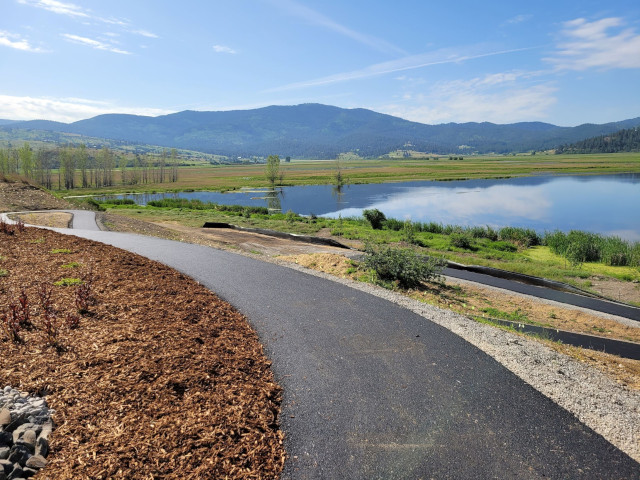
    This event is open to the public, but only IAFI Cheney-Spokane members can vote during the member meeting. It will be held at the beautiful new Doris Morrison Learning Center at 1330 S. Henry Road.  Exit the freeway south on Barker Road, turn left at the roundabout at Sprague Road, then right at the three-way junction on Henry Road. Saltese Uplands Conservation Area hike: 11:00 AM - 1:00 PM (Note: A completed liability form is required for this 3-mile hike. It is of moderate difficulty and consists of a dirt and rock trail with switchbacks, spanning about 700 vertical feet. Bring your own snacks & drinks, good hiking shoes, and dress appropriately for mid October weather conditions. Lunch is not provided. Meet the hike leader at the Saltese Flats Wetland trailhead at 11 AM.) Member meeting: 2:00-3:00 PM Speaker: USGS Geologist Jim O'Connor (beginning after the Member meeting) "A Century of Discovery: 102 Years of Studying the Ice Age Spokane Flood" Synopsis: For more than a century, geologists have investigated the massive Ice Age floods that swept through Spokane, reshaping the region’s terrain and sparking global scientific interest. USGS Geologist Jim O'Connor will review some of the discoveries made in our understanding of these cataclysmic events—from their origins and pathways to the dramatic landforms they left behind. He will also highlight some of the enduring questions that continue to drive new research, revealing how much there is still to learn about one of North America's most extraordinary geological phenomena. Note: At present, we have three openings on our chapter board.  Our board meets the third Tuesday of each month from 3-5 PM at the Wren-Pierson Building in Cheney.  Interested? Members with expertise in accounting or K-12 education or medical experience or any other expertise that would aid our chapter's mission should send a very brief vita to Dr. Linda McCollum, President, IAFI Cheney-Spokane Chapter, lmccollum@ewu.edu Please use the button below to sign up for the event and optional hike. Your registration helps us plan more smoothly and ensure a great experience for everyone.

  • Sat 11
    October 11 @ 4:00 pm - 5:00 pm PDT

    Northern Kittitas Valley Fault Trace Research – Postponed

    Hal Holmes Community Center 201 Ruby St, Ellensburg, WA, United States

    Stephen Angster, +one Our speaker, Steven Angster, scheduled for October 11th is going to have to be rescheduled as he is a federal employee with the USGS and is not allowed to do any work related activities during the shutdown.     We are tentatively looking at a new date in late June of 2026.  We are still working on the details of that. Stephen Angster, a research scientist at the Seattle Field Office of the U.S. Geological Survey’s Earthquake Science Center, focuses on characterizing and integrating upper-plate fault source parameters for probabilistic seismic hazard analysis in the Pacific Northwest. He employs a multidisciplinary approach—emphasizing paleoseismic trenching as a tool alongside geophysical and geological investigations—to better understand the spatial and temporal patterns of prehistoric large earthquakes. Doors will open at 3:30 pm with the presentations beginning at 4:00pm. This event will offer an opportunity to browse and purchase such Ice Age Floods items as books, maps, posters and baseball caps. All purchases must be with cash or check only please. Steve currently leads active research projects on both sides of the Cascades. On the west side, he has identified new fault scarps along the Seattle fault zone and the Canyon River fault. East of the Cascades, his work focuses on constraining the nature and extent of back-arc deformation. Understanding strain accommodation across the Kittitas Valley is a key component to that research. He will present new data from studying several strands of a fault trace that spans many kilometers of the northern Kittitas Valley. Stephen holds a B.S. from Western Illinois University, an M.S. from the Colorado School of Mines, and a Ph.D. from the University of Nevada, Reno.

    Free
  • Tue 14
    October 14 @ 7:00 pm - 8:30 pm PDT

    Expansion of Early Roads in the US West

    Wenatchee Valley Museum and Cultural Center 127 S. Mission, Wenatchee, WA, United States

    Building new roads, and connecting roads, was difficult and expensive. No entity wanted to do that. Not the Federal government, nor the states, not the counties. They got pushed into road-building. What happened?

    Free
  • Sat 18
    Williams Lake Cataract
    October 18 @ 9:00 am - 3:00 pm PDT

    🗺️ Cheney-Spokane Chapter Fall Field Trip

    Saturday, October 18, 9:00 AM – approx. 3:00 PM No cost • Car caravan format • BYO food & drinks After a summer of record heat, haze, and delay, cooler weather has finally arrived—and so has our rescheduled fall field trip! Join us on Saturday, October 18, just one week after our annual membership meeting, for a full-day exploration of the northern Cheney-Palouse scabland tract. This year’s trip will spotlight the landscape that first led J Harlen Bretz to propose a massive outwash flood beneath an ice cap—before he reluctantly considered Thomas Pardee’s theory of glacial Lake Missoula as the water source. We’ll trace their steps and interpretations across key sites, guided by: Dr. Linda B. McCollum, Professor Emeritus at EWU and current chapter president Glenn Cruickshank, who has meticulously mapped Bretz’s and Pardee’s field notes using Google Earth 🧭 Trip Overview We’ll meet at 9:00 AM at the Cheney-Spokane Chapter parking lot (1st Street & Cheney Plaza Road, south end of Cheney) for a quick briefing. From there, we’ll caravan to: Turnbull Wildlife Refuge HQ – hike and discussion of scabland channels Williams Lake Cataract – second only to Dry Falls in scale Amber Lake – loess island and classic scabland topography Lunch break in Cheney – bring your own food and drinks Fish Lake (Cheney-Spokane Road) – scour pools and rock blade formations Marshall – glacial outwash delta and broad flood channel features We expect to wrap up around 3:00 PM. All stops have ample parking, so there’s no limit on vehicles—everyone’s welcome! 📝 What to Bring Your own food and drinks A signed liability form (click on the red button below to download and print one that you can bring to the event) Curiosity, good shoes, and maybe a camera! This is a great chance to revisit foundational flood geology with fresh eyes and expert insight. We hope to see you there!  

  • November 2025

  • Sat 1
    November 1 @ 10:00 am - 5:00 pm PDT

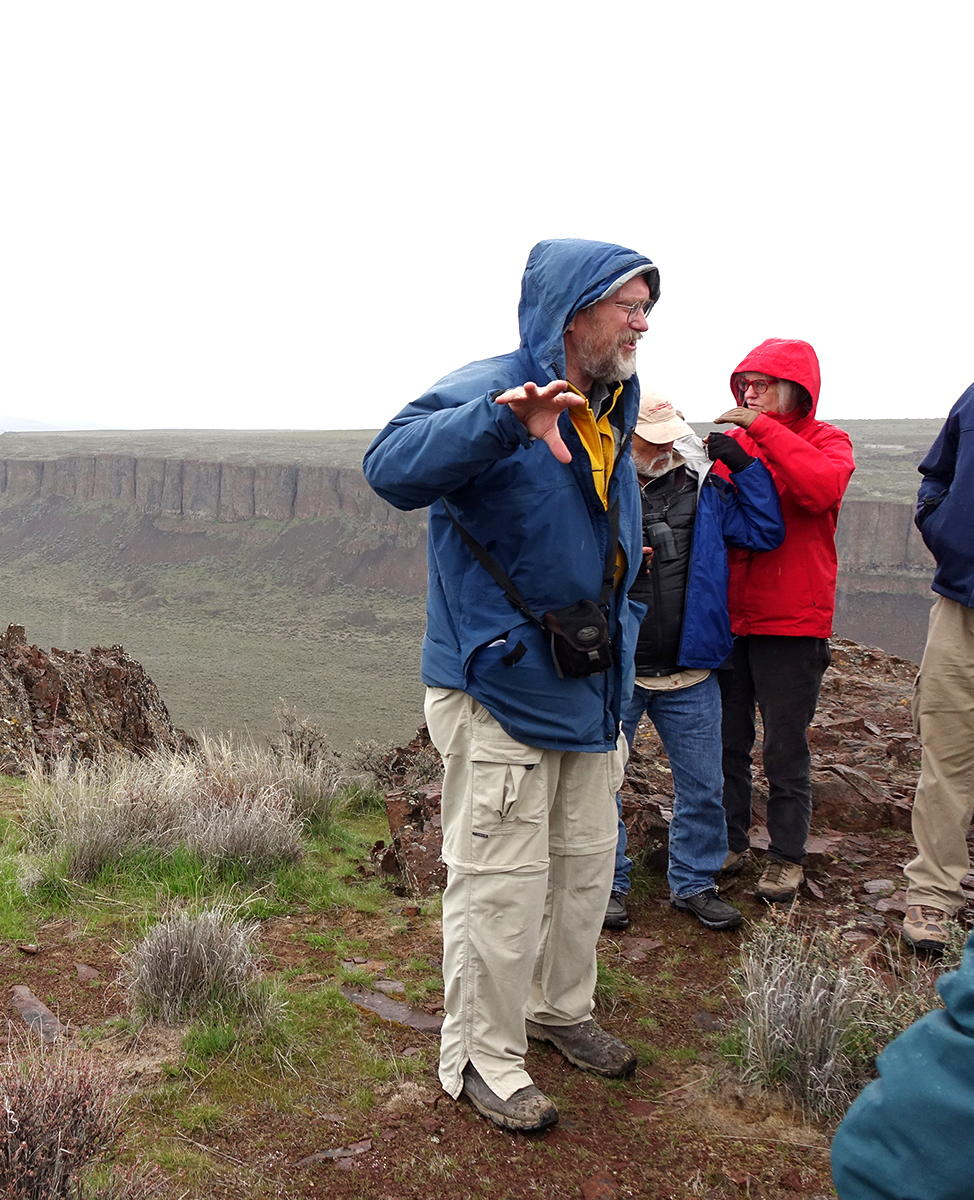
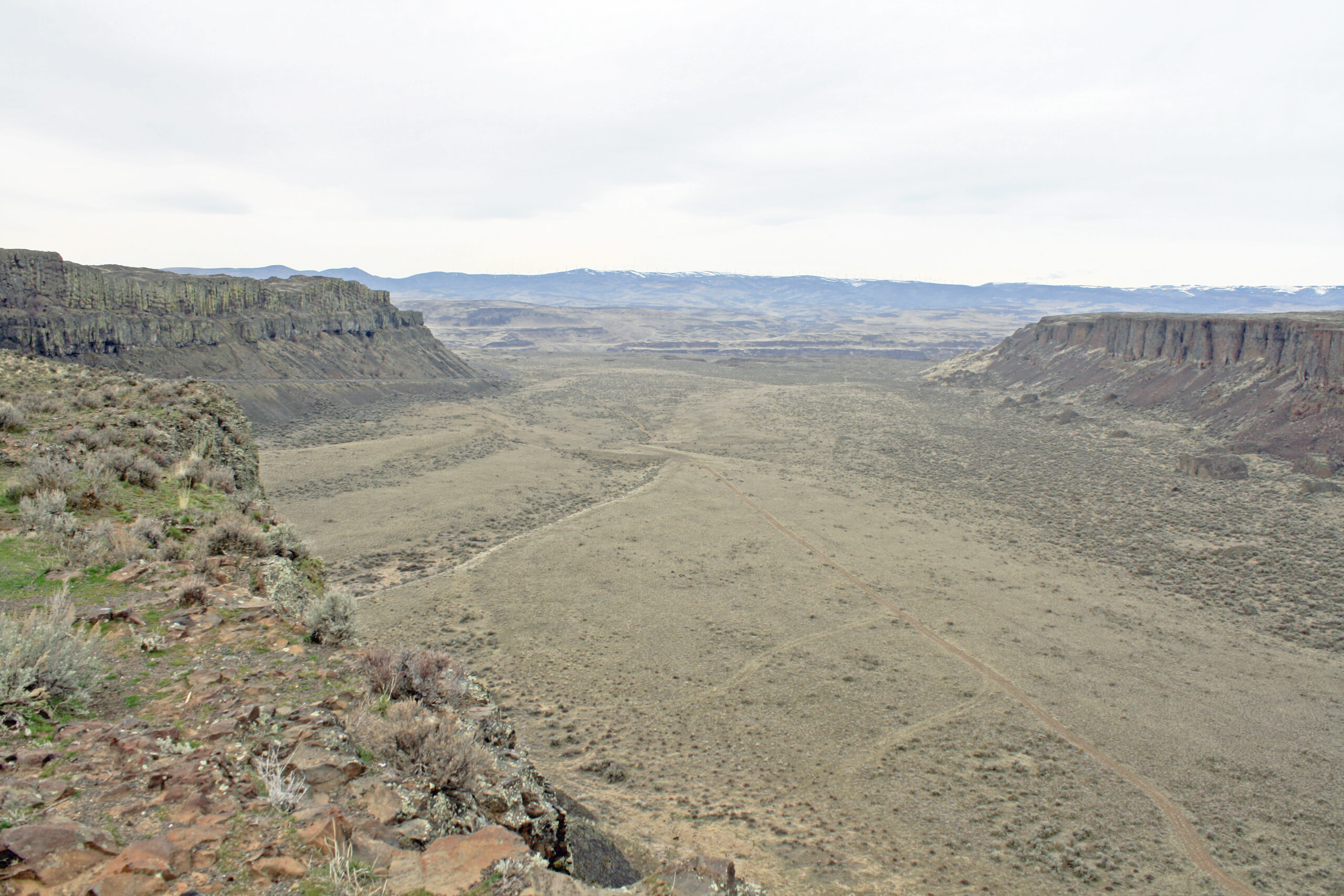
    Field Trip East of Coulee City, WA – Updated

    Karl Lillquist will lead "East of Coulee City" field trip on the day after Halloween. We will meet at the Coulee City Campground at 10am.  Stops will include: 1) Coulee monocline; 2) Hartline Basin expansion bar; 3) top of Hartline Hill; 4) mid-slope Hartline Hill; and 5) Hartline Basin scablands. Quick description:  Topics will center around Ice Age flooding associated with Glacial Lake Missoula in the area east of Coulee City.  Trip will begin on the peninsula on the north end of Coulee City Community Park.    Detailed schedule and the topics to be covered:  10:00  Stop 1—Coulee City Community Park—Topics: Bedrock & structural geology; weather & climate; General patterns of Glacial Lake Missoula floods and the Okanogan Lobe of the Cordilleran Icesheet; Banks Lake.    10:45  Depart 11:00  Stop 2—Coulee Monocline —Topics:  Monoclines & homoclines; Age of Coulee Monocline and its relationship to Ice Age floods & Hartline Basin; Historical orchards, highways & railroads. 11:45  Depart 12:00  Stop 3—Hartline Basin Expansion Bar—Topics: Bretz in the Hartline Basin; Expansion bars; Soils atop expansion bar. 12:45  Depart 1:00     Stop 4—Top of “Hartline Hill”—Topics: Maximum flood limit; Loess-based soil characteristics, origins & age; Water erosion & loess; 1:45     Depart 2:00     Stop 5—Mid-slope on “Hartline Hill”—Topics: Unnamed canyon & fan; Possible floodwaters over “Hartline Hill”. 2:45     Depart 3:00     Stop 6—Hartline Basin Scablands—Topics: Scablands & Bretz;  Floods, erosion & scablands; Giant pendant bars;  Other possible floodwater sources in Hartline Basin 4:00     Depart for home Logistics: This trip is free and open to the public.  There is no need to register. After Stop 1, we will drive on a mix of paved and good quality gravel roads.  Passenger cars should be fine on these roads. I encourage you to consider carpooling.  This will reduce the time it takes to get us all together at each stop plus will reduce our carbon footprint.    We will take short walks at Stops 2, 3 and 6.  By short, I mean 0.25 mi or less at each stop.  There will be a bit of somewhat steep, uneven terrain at each of the stops.  We will also need to cross a barbed wire fence at Stops 2 and 6. No restroom or picnic facilities are available along our field trip route after Stop 1.  Therefore, you will need to use the great outdoors if you need to go.  Plan on eating lunch/snacks on the road or at the stops.  There will not be a formal lunch stop. Dogs and kids are fine to bring as long as they are well-behaved. Dress for the weather.  November weather here can be sunny and mild to rainy, windy & chilly.  Our first two stops will be especially exposed to a possible north wind.  A field guide is posted on my CWU website at https://www.cwu.edu/academics/geography/_documents/karl-lillquist.php.  Scroll down the page to “Field Guides”.  You will find it under “East of Coulee City”.  Feel free to download and bring it on the field trip in digital format or print it out. The Ellensburg Chapter of the Ice Age Floods Institute will also provide ~40 hard copies of the field guide for the trip.  There is no cost for the field guides.  However, if you are not a member of the Ellensburg Chapter, please consider making a donation to the chapter to help cover the costs of the field guides (each cost ~$15/each).  Field Trip Liability Form Please print and fill out the attached field trip liability release form, and give it to one of the Ellensburg Chapter IAFI officers at the field trip.  We will also have hardcopies of the liability release form if you need them.  Thank you! Questions? Email me at lillquis@cwu.edu or leave a phone message at 509 963-1184.  Emails are best as I only check that phone a couple of times each week.  A heads up: I may be away from phone  & email between 29 October to 1 November.    I hope to see you Saturday 1 November! Karl L.

    Free
  • Tue 4
    November 4 @ 6:30 pm - 8:00 pm PST

    EVOLUTION OF THE COLUMBIA RIVER SYSTEM

    The Reach Museum 1943 Columbia Park Trl , WA, Richland, WA, United States

    We have always assumed that the Columbia River and its tributaries have been the same for many millions of years. The Earth is constantly fooling us like that.  In reality most river systems are dynamic, and the Columbia River is no exception. We will explore how it has changed over the past 16 million years.  We’ll see how in earlier times locations such as like Yakima, Prosser and Benton City would have been on the Columbia River, while the Tri-Cities would have been left high and dry. The Columbia River system is one of the great river systems of North America, draining much of the Pacific Northwest, as well as parts of the western United States and British Columbia. The river system has had a long and complex history, slowly evolving over the past 17MY The Columbia River and its tributaries have been shaped by flood basalt volcanism, Cascade volcanism, regional tectonism, and finally outburst floods from Glacial Lake Missoula. The most complex part of river development has been in the northern part, the Columbia Basin, where the Columbia River and its tributaries were controlled by a subsiding Columbia Basin with subtle anticlinal ridges and synclinal valleys superimposed on a flood basalt landscape. After negotiating this landscape, the course to the Pacific Ocean led through the Cascade Range via the Columbia Trans-Arc Lowland, an ancient crustal weakness zone that separates Washington and Oregon. The peak of flood basalt volcanism obliterated the river paths, but as flood basalt volcanism waned, the rivers were able to establish courses within the growing fold belt. As the folds grew larger, the major pathways of the rivers moved toward the center of the Columbia Basin where subsidence was greatest. The finishing touches to the river system, however, were added during the Pleistocene by the Missoula floods, which caused local repositioning of river channels.
  • Sat 15
    November 15 @ 9:30 am - 3:00 pm PST

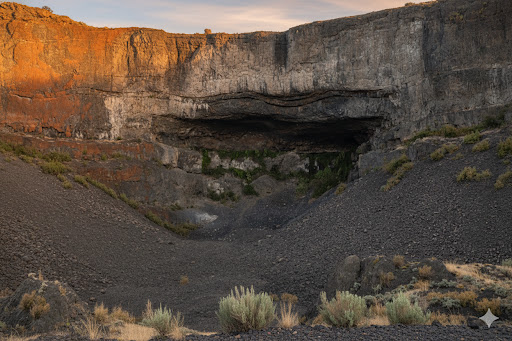
    Barker Canyon Giant Cave Arch Rockshelter Field Trip – Sat. Nov. 15th

    Dry Falls Visitor Center 35661 HWY 17 North, Coulee City, WA, United States

    Join Outing Coordinators Mark Amara, Geologist and Gene Wing of the Lower Grand Coulee Chapter on Saturday November 15th for a 3-mile hike to visit the Barker Canyon Giant Cave Arch Rock Shelter Ice Age Floods Feature in the Upper Grand Coulee   Date: Saturday November 15th, 2025 Start time: 9:30 am Meeting Place: We will meet at the Dry Falls Visitors Center parking lot at 35661 Hwy 17 North, Coulee City, 99115 and plan to leave at 9:30 AM sharp and drive to Barker Canyon DRIVING DIRECTIONS:        Please see the attached map or coordinates of the Rock Shelter are: 119.193029 degrees Latitude - 47.89900 degrees Longitude  Fees: A Discover Pass is required What to bring: Lunch, drinks, snacks, appropriate clothing and footwear, camera, etc.

  • Mon 17
    November 17 @ 7:00 pm - 8:30 pm PST

    Puget Lobe Lecture: Jeff Tepper on the Initiation of the Cascade Arc

    Bellevue College Building T Room 127 3000 Landerholm Cir SE, Bellevue, WA, United States

                    Dr. Jeff Tepper The Cascade volcanic chain, the world’s youngest continental arc, was “born” shortly after accretion of the  Siletzia oceanic terrane ~50 My ago.   That collision, which led to formation of the Olympics, terminated the  earlier subduction system and caused a portion of the subducting Farallon slab to break off.  When Cascade  magmatism began less than 5 My later, there was a new trench located outboard of Siletzia.  In this talk I will  present a new model, based on petrology, geochronology, plate motion reconstructions, and mantle tomography,  that explains how subduction was initiated so quickly and in a setting where the slab was young and hot and in  theory too buoyant to subduct.   

  • December 2025

  • Tue 9
    December 9 @ 7:00 pm - 8:30 pm PST

    Foster Creek and Foster Coulee: Insights on Ice Age Floods, Glaciers, and Lakes on the Waterville Plateau, WA

    Wenatchee Valley Museum and Cultural Center 127 S. Mission, Wenatchee, WA, United States

    The Wenatchee Valley Erratics Chapter of the Ice Age Floods Institute will meet Tuesday, December 9 at 7:00 PM, at the Wenatchee Valley Museum and Cultural Center, 127 S. Mission, Wenatchee. Or via Zoom link: https://us02web.zoom.us/j/81855547958  Meeting ID: 818 5554 7958 Karl Lillquist will give our final live, and Zoom, presentation for 2025. Karl is a physical geographer, who taught at Central Washington University until his retirement in summer of 2024. He will talk about “Foster Creek and Foster Coulee: Insights on Ice Age Floods, Glaciers, and Lakes on the Waterville Plateau, WA.” Please note! The Wenatchee Valley Erratics now has its own website: https://wverratics.org/ !

    Free
  • Previous Events
  • Today
  • Next Events
  • Google Calendar
  • iCalendar
  • Outlook 365
  • Outlook Live
  • Export .ics file
  • Export Outlook .ics file

Ice Age Floods Institute is a registered non-profit educational organization devoted to publicly sharing the ice age floods story. 
All article images on this website are used under Creative Commons license for educational purposes only and no profit is derived.

Members

  • Home
  • Store
  • Chapters
  • Join - Renew
  • Admin Log-In

Happenings

  • Events
  • Field Trips
  • Presentations
  • ~Places To Go~
  • ~Things To Do~
Facebook-f Mastodon Youtube Envelope

Visit us at Facebook, Mastodon and our YouTube Channel.

IAFI Copyright © 2002-2025 – All rights Reserved

Ice Age Floods Institute is a 501(c)(3) tax-exempt non-profit EIN 91-1658221
Donations and member fees may be tax deductible

Refund and Returns Policy     Privacy Policy     Terms and Conditions

About

  • Ice Age Floods Intro
  • IAFI News
  • About Us
  • Contact IAFI
  • Board Of Directors

Resources

  • ~National Geologic Trail~
  • Field Guides
  • Geology Corner
  • YouTube Video Playlists
  • Geology Terminology