ESA Maps a Lava Tube for Moon and Mars Expeditions
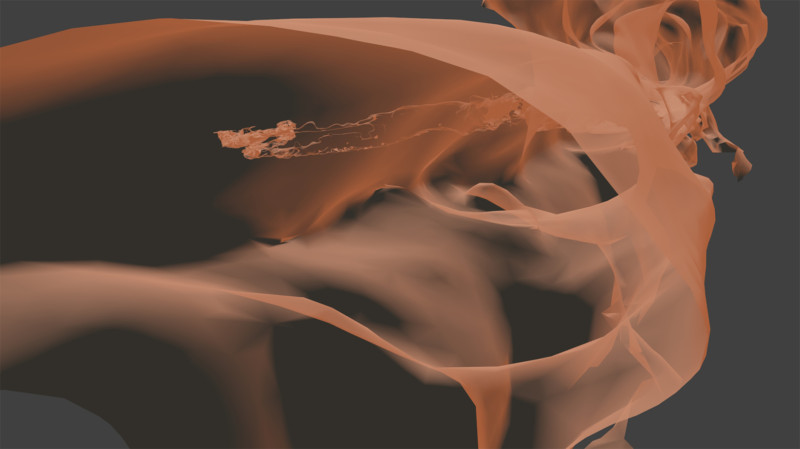
With all deference to the book and movie “The Martian”, wouldn’t you, as part of an interplanetary expedition, prefer to be protected from the radiation, micro-meteorites and extreme temperature fluctuations of the Moon or Martian surface? Though some of the hazards depicted in “The Martian” are way over-dramatized (the thin Martian atmosphere wouldn’t sustain the depicted raging storms), there are still hazards aplenty on the surface. So why not site your habitat in a cozy lava tube, protected from many of those surface nasties. At least that’s some of the reasoning behind a European Space Agency (ESA) effort to map a portion of Spanish lava tube in centimeter-scale detail as part of the ESA’s 2017 Pangaea-X campaign. Some chambers in the 8 km long La Cueva de los Verdes lava tube are large enough to hold residential streets and houses (or a prototype Martian research station/habitat). In less than 3 hours the cave research team mapped the lava tube using the smallest and lightest imaging scanner on the market and a wearable backpack mapper that collects geometric data without a satellite and synchronizes images collected by five cameras and two 3D imaging laser profilers. While the data is still being analyzed, ESA has released this ghostly fly-thru of a 1.3 km portion of the lava tube. Click the play button and prepare to take a pseudo-trip to Mars. So, the next time you visit a cave or lava tube, especially a large one, imagine yourself in a spacesuit on the Moon or Mars and realize that you’re actually an inner-space explorer. But don’t be too surprised at the creatures you may run into, they’re just other inner-space explorers too.
If You Have A Story, We Want to Hear It!
Our members come from varied and interesting walks of life, yet one bond that we share is our interest in the Ice Age Floods. Whether we’re captivated by the compelling stories of the floods, or the magnificent landscapes they helped create, or wanting to understand what’s behind the land we live in, we all share this common bond. And we all have experiences, insights and passions that would also interest others who share this bond. The IAFI website and newsletter are always on the lookout for short articles and captivating images related to these experiences, insights and passions that can, and probably should be shared with others. We encourage you to occasionally take a moment to share a short ‘floods’ story about your favorite place, or something you’ve done, or even what the floods places and stories have meant to you. We also want to share news, information and stories from all our widespread chapter areas, so your contributions can help others find, experience or think about something or some place they might have not been aware of before. We’re interested in short articles, longer than a Facebook post but generally shorter than a magazine article (100-500 words), that even loosely relate to the Ice Age Floods. For example, we’ve featured articles about field excursions, special places to be visited, shared experiences, technical notes, even stories about love found through the IAFI. And don’t worry if you’re not a ‘writer’, our editors will gently mold your story to enhance and fit it to our formats. Also, since images are often worth a thousand words, we strongly encourage you to include a compelling image or two that help tell the story. Just email the story and mages to Newsletter@IAFI.org, and thank you for sharing.
What’s Beneath Our Feet?
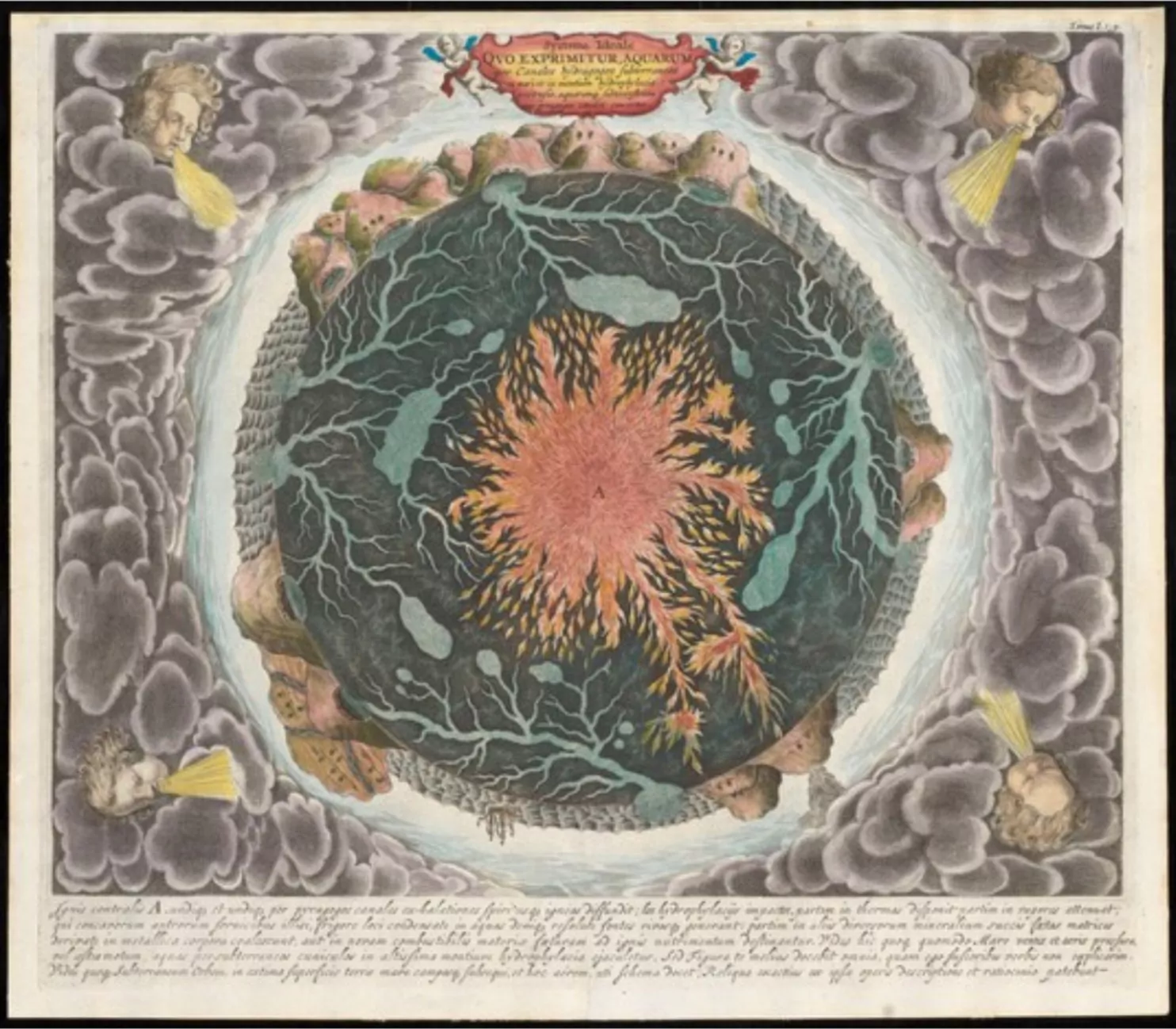
“Beneath Our Feet: Mapping the World Below” plumbs the depths of the question, “What’s beneath our feet?” through maps, images and archaeological artifacts. The exhibition explores nearly 400 years of maps and objects in an attempt to find out why and how humans imagine subterranean landscapes including caves, mines and water tables. Colorful and complicated images reflect the biases of long past and recent days and the concerns of their authors, including the United States’ desire to appropriate the natural resources of Native American lands and a 17th-century Jesuit priest’s attempt to use Scripture to create a framework for Earth’s geology. Catch the exhibition online, including a bibliography, reading lists and a 3-D tour of the Boston Public Library’s Norman B. Leventhal Map Center gallery itself. As you explore nearly 400 years of maps and images of the world below, you can compare the historical viewpoint with the modern, and see how we have advanced our perception and depiction of what lies beneath.
Indigenous Flood Stories from 14,000 Years Ago
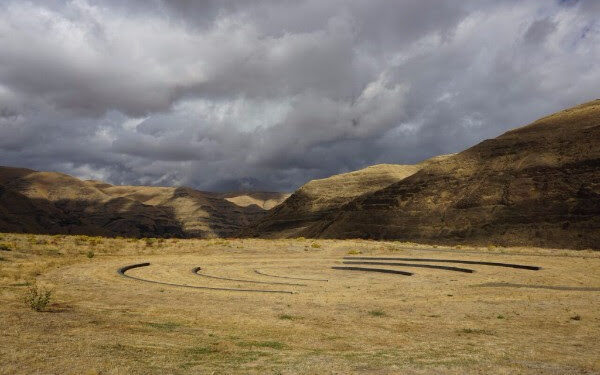
On October 7th at Chief Timothy Park near Clarkston, WA at the latest Confluence Story Gathering, Thomas Morning Owl (Umatilla tribe) noted there are indigenous people’s stories of massive floods going back to 14,000 years ago. While he didn’t elaborate, it would be very interesting to have these stories shared as first-hand accounts of the Ice Age and/or Bonneville Floods. Confluence Story Gatherings are designed to elevate native voices in our understanding of the Columbia River system. This Confluence Story Gathering explored stories and perspectives from Nez Perce homelands, where a panel of indigenous thinkers and storytellers — Allen Pinkham, Sr. (Nez Perce), Thomas Morning Owl (Umatilla) and Jefferson Greene (Warm Springs) — shared their observations. Despite the strong winds, rain and even hail, the stories prevailed. Confluence Project is a community supported nonprofit that connects people to place through art and education. We work in collaboration with Northwest communities, tribes and celebrated artist Maya Lin to create reflective moments that can shape the future of the Columbia River system. We share stories of this river through six public art installations, educational programs, community engagement and a rich digital experience. The six projects span 438 miles from the mouth of the Columbia River to the gateway to Hell’s Canyon, with sites in both Oregon and Washington. These are “teachable places,” transformed and reimagined to explore the confluence of history, culture and ecology in our region. Each work references a passage from the Lewis and Clark journals as a snapshot in time, while comparing it with the deeper story.
Share the Floods News That’s Fit to Print
Do you write and/or edit well? Do you like knowing what’s going on in your IAFI chapter? Do you think that news should be shared with others? Then we have a SMALL job for you that can be a BIG help for your chapter and for the Ice Age Floods Institute in general. Every IAFI chapter has news and events that should be shared with other chapter members and maybe other chapters. We have an active website, social media, and a newsletter to share them on. But sometimes the news and events can get skipped over when the chapter leaders get overloaded or may not be particularly comfortable with writing to inform and interest others. If you write well and can find a little time each month we will show you how you can easily help us get the word out about important news and events. As a result you’ll help your chapter grow and become more active, and you’ll be one of the first to know about news and events that are happening. If this sounds like something you can do to help your chapter, please contact your chapter president (if you’re not sure who that is, visit https://iafi.org/about-iafi/board-directory/) and we’ll get you plugged in.
Columbia Gorge Master Naturalists Explore the Ice Age Floods
Ice Age Floods and geology were significant parts of a recently completed Oregon Master Naturalist program for the Columbia Gorge. This region ranges through a tremendous variety of ecosystems, environments and ecologies within only a 50-mile radius. Major dammed rivers and free-flowing wild and scenic tributaries host a wide variety of indigenous to migratory fish stocks and river ecologies. Boreal rainforests transition to oak woodlands, high desert grasslands, and sub-alpine to alpine environments, all within that 50-mile radius. Woven through all these are compelling geologic, cultural, and historical elements. All those stories were interwoven through multiple field days spent exploring the ecosystems of the Columbia Gorge region and the factors that influence them. Geologic stories of the peaceful Columbia River Gorge range over 50+ million cataclysmic years of arc volcanism, massive flood basalts, massive ice age floods, river-damming lahars, catastrophic landslides and earthquakes. It’s amazing to witness people’s intense interest in geology, especially in their own ‘backyards’, and that’s especially true for these students as they become certified master naturalists. These folks have committed to many hours of online coursework, multiple days of field experiences, and to sharing the knowledge they’ve garnered in 40 hours/year of volunteer hours. On behalf of the Ice Age Floods Institute, I’m honored to be one of the group of ‘experts’ helping to feed the curiosity of these budding master naturalists, and in the process expand my own knowledge of this amazing region. Find out more about the Oregon Master Naturalist program at http://oregonmasternaturalist.org/. Lloyd DeKay – President, Columbia River Gorge Chapter
Grand Coulee Area Hikes Report

Gene Kiver and Bruce Bjornstad led two hikes in the Grand Coulee area. A group of ~30 hikers joined in a moderately difficult hike into the Castle Lake Basin, part of a 4-mile wide cataract complex that extends all the way to Dry Falls. The hike started out near Coulee City by following the Main Canal, which delivers all water from the Columbia Basin Irrigation Project into two siphons that cross Don Paul Draw at the head of Deep Lake. From here the water disappears before flowing two miles, underground, through a pair of tunnels to Trail Lake Coulee. The hike continued by crossing a berm of basalt boulders, dug out for the Main Canal, into the Castle Lake Basin. A descent to the floor of the basin was possible via two steel ladders that crossed the cataract above the Castle Lake plunge pool. From there hikers traversed out to a potholed bench to a spectacular view above Deep Lake Coulee. The next day ~20 hikers joined a ~3 mile roundtrip hike to Giant Cave Arch, near Barker Canyon, along the west side of Upper Grand Coulee. For anyone interested, both these hikes are featured in “On the Trail of the Ice Age Floods: The Northern Reaches” a geologic guidebook published by Bjornstad and Kiver in 2012.
Killer Floods – A New Nova Video on PBS
Discover how colossal floods transformed the ancient landscape. All over the world, scientists are discovering traces of ancient floods on a scale that dwarfs even the most severe flood disasters of recent times. What triggered these cataclysmic floods, and could they strike again? In the Channeled Scablands of Washington State, the level prairie gives way to bizarre, gargantuan rock formations: house-sized boulders seemingly dropped from the sky, a cliff carved by a waterfall twice the height of Niagara, and potholes large enough to swallow cars. Like forensic detectives at a crime scene, geologists study these strange features and reconstruct catastrophic Ice Age floods more powerful than all the world’s top ten rivers combined.
New “Roadside Geology” Now In IAFI Store
The IAFI Store has added the newest editions of the widely acclaimed and very popular Roadside Geology books for both Oregon and Washington. Author, photographer, and geologist Marli Miller has written completely new second editions of these books based on the most up-to-date geologic understanding. Spectacular photographs showcase the states’ splendors while also helping readers understand geologic processes at work. These 2nd edition Roadside Geology books are a must-have for every Pacific NW resident, student, and rockhound. When the first edition of Roadside Geology of Oregon was published in 1978, it was revolutionary—the first book in a series designed to educate, inspire, and wow non-geologists. Back then, the implications of plate tectonic theory were only beginning to shape geologic research and discussion. Geologists hadn’t yet learned that Oregon’s Klamath and Blue Mountains were pieces of far-traveled island arcs and ocean basins that had been piled against the growing North American continent. Steaming volcanoes, ghost forests, recent landslides, and towns heated with geothermal energy attest to Oregon’s still-prominent position at the edge of an active tectonic plate. Since the first edition of Roadside Geology of Washington appeared on shelves in 1984, several generations of geologists and non-geologists have studied the wild assortment of rocks in the Evergreen State, from 45-million- year-old sandstone exposed in sea cliffs at Cape Flattery to 1.4-billion- year-old sandstone near Spokane. In between are the rugged granitic and metamorphic peaks of the North Cascades, the volcanic flows of Mt. Rainier and the other active volcanoes of the Cascade magmatic arc, and the 2-mile- thick flood basalts of the Columbia Basin. With the help of this completely revised second edition by Pacific Northwest geologists, you can appreciate the many spectacular geologic features along more than forty of Washington’s highways.
The Road Not Taken
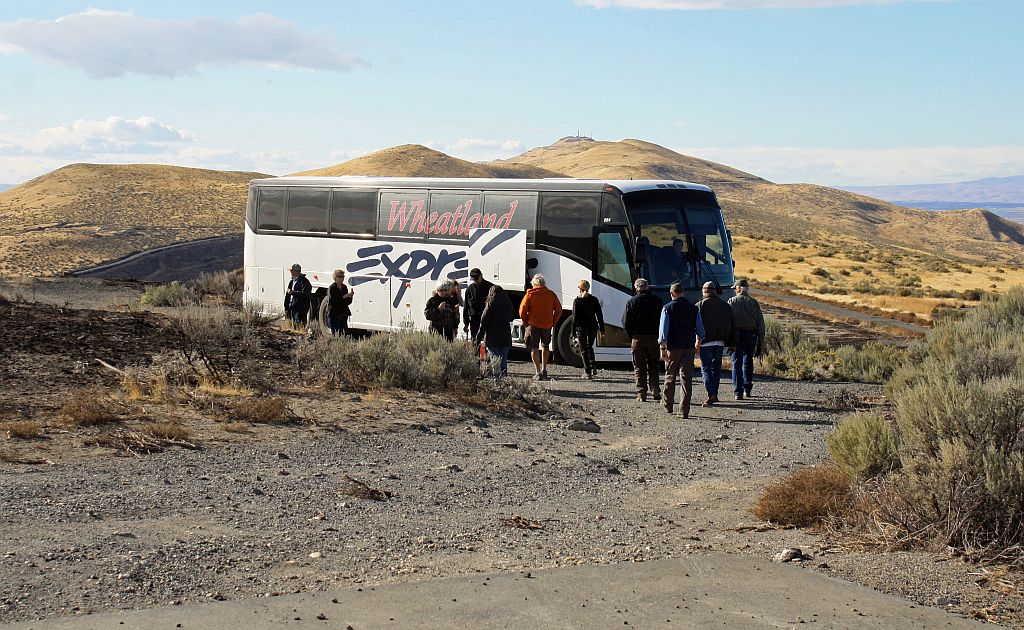
Robert Frost finished his poem “The Road Not Taken” with this verse: I shall be telling this with a sigh Somewhere ages and ages hence: Two roads diverged in a wood, and I— I took the one less traveled by, And that has made all the difference. As our President Gary Ford has stated before, one of the best things we do as chapters is bus tours. And what we get to do on our tours is take the road less traveled. On this year’s fall bus tour, our chapter took a loop around the asymmetrical anticline Saddle Mountains of the Yakima folds in central Washington. It began with a run on the Ice Age Floods Geologic Trail through the Drumheller Channels but much of the trip was on the road less traveled. This included a narrow gravel road that took us to the base of the Corfu landslide complex, the ghost town of Corfu and down a section of the diverted Ice Age Columbia River valley before we got back to the main highway to pass through Sentinel Gap for our lunch and tour at the Gingko Forest Winery. In the afternoon after passing around and on the Priest Rapid bar, viewing two more landslides on Umtanum Ridge, and a look at the historic “B” reactor on the Hanford Reservation, we once again took the wash boarded gravel road less traveled and climbed to the summit of the Saddle Mountains. This was the highlight of the trip for most of the forty adventurers as from there, we could look down upon most of the sights we had already traveled. On this tour, many of the “locals” were visiting areas in their backyard for the first time. Yes, traveling the road less taken makes all the difference. There are other great flood sites in our area that are on roads that tour buses can’t negotiate. Our chapter will soon be addressing this issue to see how we can take people on these roads. by Lloyd Stoess, President – Palouse Falls Chapter