Spokane’s Snowy Ice Age Floods Playground

Families continue to visit Spokane’s Riverfront Park Ice Age Floods-themed Playground on the north bank of the Spokane River even when there is snow and ice on a cold 22 degrees Saturday! It has been very popular since its opening in May, 2021. The playground, covering 40,000 square feet on the Riverfront’s North Bank, is designed to help people learn about the events that shaped our region while they play and enjoy a 3-story Columbian slide tower, Glacial Dam splash pad, a log jam climber, an alluvial deposit fossil dig, and more. In this video the architects describe their realization of the vision for the park, and it shows how people are using and enjoying the new playground.
Mammoth and Horse DNA Rewrite Ice Age Extinctions
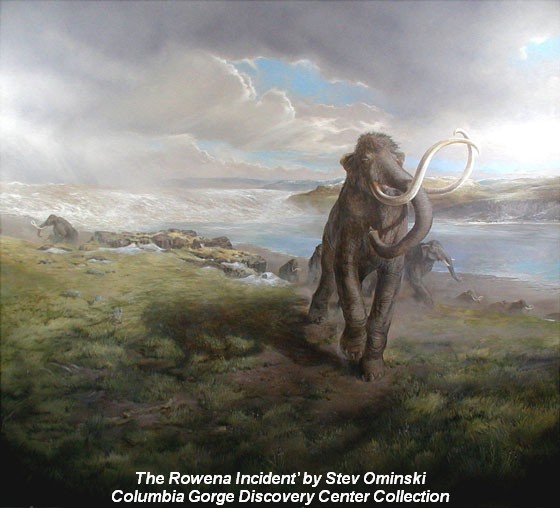
New research reveals the ancient animals survived some 8,000 years later than previously thought Frozen soil samples collected around a decade ago are rewriting our understanding of iconic Ice Age animals like the woolly mammoth. The soil samples were pulled from Canada’s permafrost in the early 2010s, but no work on them had been published until recently. A new analysis of the DNA samples reveals that woolly mammoths, wild horses and steppe bison were around as recently as 5,000 years ago—some 8,000 years later than previously thought, according to a study published this week in Nature Communications. Scientists reconstructed the ancient ecosystem using radiocarbon dating of plant material trapped in the soil in combination with microscopic genomic sequences from animal species. Their results showed something unexpected: Large mammals like mammoths and horses were already on the decline before the climate warmed. The scientists found evidence of woolly mammoth and North American horse DNA as recently as 5,000 years ago, which means the animals held out until the mid-Holocene. Excerpted from the Smithsonian Magazine article by Corryn Wetzel
Revered ‘Nick on the Rocks’ Program Collects Pair of Emmy Awards
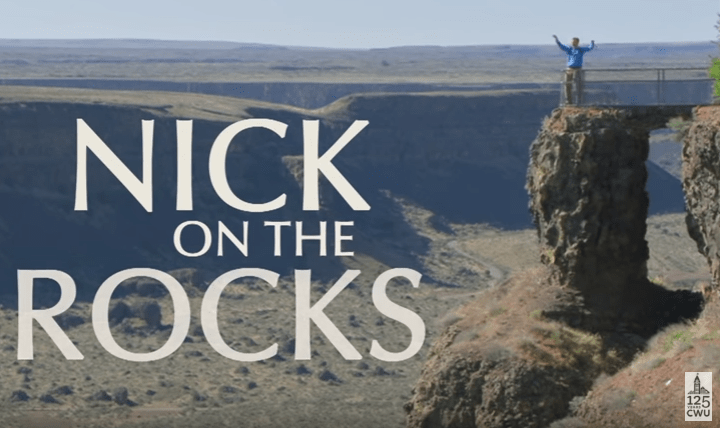
Central Washington University has won two Emmy Awards last summer from the Northwest Chapter of the National Association of Television Arts and Sciences for the popular geological sciences program Nick on the Rocks. The show—which aired on PBS through last year and is still available on YouTube—was recognized for the “Teanaway Tropics” episode in the category Environment/Science, and for the episode “Saddle Mountains Buried in Ash” in the category Informational/Instructional. The awards went to Chris Smart, Producer/Photographer/Editor; Linda Schactler, Executive Producer; and Nick Zentner, Host/Writer in recognition of excellence in broadcast for programs that aired in 2020. Nick on the Rocks highlights the geological history of the Pacific Northwest and presents it in accessible, evocative five-minute videos, hosted by Zentner with Smart providing videography and editing. Zentner has produced scores of short YouTube videos that showcase all aspects of Pacific Northwest geology. His vivid and funny story telling has brought the excitement of massive landslides, cataclysmic floods, and giant lava flows to live audiences throughout the West Coast. Schactler created the series concept at a time when public television stations were searching for short-form video for broadcast as well as online content. Zentner’s extensive experience with the short form, Smart’s video expertise, and the stunning geological formations of Washington created the formula for the popular series. “We wanted a way to reach more people about the wonder of our natural history and the rich quality of CWU’s teaching and learning,” said Schactler. Said Smart, “We’ve worked hard to create a focused concept for each show and to bring enhanced production approaches when needed,” who also noted that working with Nick while capturing video of the natural beauty of the Pacific Northwest has been an exhilarating experience. “Nick is an excellent educator. In just the quick five-minute episodes, he transports viewers millions of years to dramatic geological events that happened right here in our backyard,” he added. More information on the awards is available at www.natasnw.org. For more information or to donate to support Nick on the Rocks, visit cwu.edu/nick. See all episodes of Nick on the Rocks at https://www.kcts9.org/show/nick-rocks/episodes.
October 6th Set as UNESCO International Geodiversity Day

The International Geodiversity Day was established today by the 41st session of the UNESCO General Conference!! From now on, the 6th of October will be an annual worldwide celebration, raising awareness across society about the importance of non-living nature for the well-being and prosperity of all living beings on the planet! The winner of the competition for the International Geodiversity Day logo, Silas Samuel dos Santos Costa, is a student at Universidade Federal do Rio Grande do Norte (Natal, Brazil) and produced the attached logo that can be freely used in all initiatives related with the International Geodiversity Day. Congratulations Silas! The success of this initiative was in no small part due to the breadth of international and national organizations that endorsed the proposal. In particular the support of both IUGS and the Permanent Delegation to UNESCO from Portugal played an essential role in submitted the proposal. The website geodiversityday.org is the virtual focal point for all information regarding this International Day. New social media feeds were launched that you can use to stay updated with plans for International Geodiversity Day: facebook.com/GeodiversityDay twitter.com/GeodiversityDay Now, it is time to start the planning for the 1st celebration of the International Geodiversity Day on the 6th October 2022!
Exploring the Geology of the Gorge with Wildwood Academy

Wildwood Academy, a small alternate school in Hood River, Oregon, contacted the IAFI Columbia River Gorge Chapter with a request for a Gorge Geology presentation for their younger and older student groups. On a couple of days in November, as chapter president, I talked to the two groups from a slideshow covering the last 40+ million years of Columbia River Gorge geology, followed up by short field trips to local sites of geologic interest. As you might imagine, making an hour-long, semi-technical presentation to school kids can be a daunting experience. But these kids were tuned in, attentive, and incredibly responsive, with questions and comments that were right on target. Of course, their teachers had already touched on many elements of Gorge geology, so the kids said they felt the show’s progression through time helped bring it all together for them. And their energy in the classroom and in the field was a wonder to behold. The free-ranging atmosphere at this alternate school was eye-opening and exciting, especially for someone who grew up many years ago in a more structured public school atmosphere. But possibly more important is the feeling that the wonder and excitement of learning and experiencing the world around are alive and well in all the generations following my 75 years. Of special importance to me was a note from one of the parents, “My daughter was one of the kids you spoke to today and she has done nothing but talk about how amazing you were and how she wants to study the Columbia River Gorge area. I have heard nothing else since about 4 o’clock this afternoon!!” It’s a thrill and a real honor to have had that kind of impact.
Celebrate GIS Day with new lidar images of Washington’s geologic landforms!

In celebration of GIS Day, Nov. 16, 2021, the Washington Geological Survey is releasing ten new lidar images featuring geologic landforms from around the State. This exciting batch of images includes ice age floodscapes, volcanoes, earthquake-induced landslides, and winding rivers. Use the links below the images to view and download high-resolution versions of each one. You can find these and other lidar images and maps on the Washington State Geology website and Washington DNR’s Flickr page
Dinosaur Invades The UN
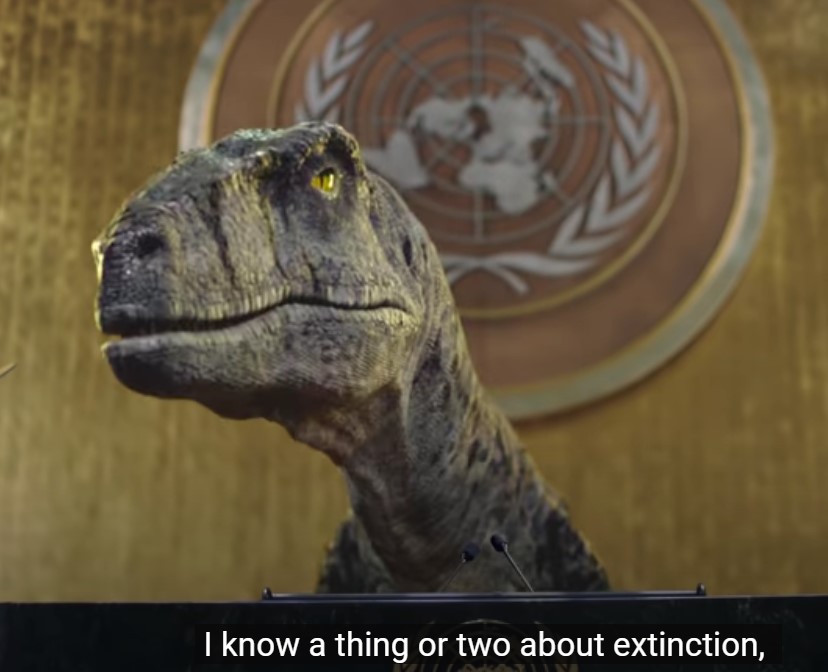
It is undoubtedly surreal and somewhat amusing to watch a celebrity-voiced CGI dinosaur talk about climate change. There is also something unusually enthralling and unexpectedly poignant about the idea of an extinct species warning about our own demise. Don’t know if “Enjoy!” is appropriate, but the video is definitely entertaining, and possibly motivating as well.
Ice Age Floods for Southside Elementary 4th Graders

For Coeur du Deluge Chapter President Tony Lewis, an opportunity to lead a Sandpoint 4th grade class in a learning unit on “how Idaho landforms were created” came up suddenly on Oct. 8th. Terese Luikens, the 4th Grade Teacher at Southside Elementary School had 19 students wanting “an actual field trip where you can show and tell us about how glaciers formed some of our lakes.” 3 days later Tony was in front of Mrs. Luikens’ 19 excited and exuberant students, struck by how 4th graders react to rocks and a guest presenter. Hands were up, even before his “Landforms of North Idaho: How They Were Formed and What Caused Them” presentation started. How can you NOT be swept up in their enthusiasm and amazed by their unending questions, some of which are actually related to the topic? They were more excited when he left their school than when he had arrived, and the field trip was happening two days later! Unfortunately, the weather didn’t cooperate. It was cold and windy with a chance of rain when they met at the Pavilion at City Beach in Sandpoint, ID at 10 AM. Were these 4th graders put-off by a “little” inclement weather? Of course not, but they did seem disappointed when told that they were not allowed to go swimming. Hands up again, asking questions, wanting to show where they lived, where we were and where we were going on the maps and images Tony had. After an hour reviewing what was talked about on Monday, with more information about David Thompson, the Ice Age Floods, glaciation and the Purcell Trench and how different lakes (Round, Cocolalla, Mirror and Pend Oreille) were formed, we all loaded up for a drive through the bottom of the Purcell Trench, the Pack River Delta and finally to the Geologic Overlook just one mile east of Hope, ID. Before leaving the bus, the students were given their boundaries and they abided. Although the clouds covered some of the scenes, we could see the steep-faced Green Monarch Mts. where the Purcell Trench Lobe glacier divided into four sub-lobes. One of the sub-lobes went up the Clark Fork River, plugging up the drainage basin and causing Glacial Lake Missoula. Another lobe moved southward, deepening the basin now occupied by Lake Pend Oreille. The students seemed to enjoy viewing the wide-expansive scene of ‘the place where the Ice Age Floods started’. The field trip ended when it started to rain, and the drive back to Sandpoint was uneventful, although I was admonished, in a nice but serious way, for walking up and down the aisle because it was dangerous and “I might break my back!” I agreed and took my seat. It was a fun learning experience for me, and I hope it was for them also.
Ice Age Floods Institute at GSA Convention

In August the Ice Age Floods Institute was offered an opportunity to share an exhibitor booth with the Tualatin Ice Age Floods Foundation (TIAFF) at a major geological conference, the October 10-13 Geological Society of America (GSA) Convention in Portland, OR. This gave IAFI an opportunity to present the Floods Story and educate a worldwide assemblage of geological professionals, researchers, and students, many of whom were not even aware of the Floods or their immense scope. The IAFI Board jumped at this opportunity, approving the registration cost and putting the booth development in the hands of the Columbia River Gorge Chapter President and IAFI Webmaster, Lloyd DeKay, aided by IAFI Membership Secretary, Sylvia Thompson, who also represented TIAFF along with Dr. Scott Burns of Portland State University. With Dr. Burns influence, we were able to acquire a corner booth space very near the main GSA area that ensured a good parade of participant traffic past our booth. We used 3D modeling software to design the booth to scale, then began assembling the materials for the booth. We used QGIS software, with assistance from Stacy Warren of Eastern Washington University, to develop a new map that highlighted the Floods paths, various glacial and temporary lakes along the floods path, as well as the final resting place of much of the sediment eroded by the Floods on the Astoria Submarine Fan. We then printed the map and other images, purchased, trimmed and covered 2” foam insulation boards for display walls, borrowed tables, made table covers, and gathered IAFI Store materials for sale. The day of reckoning came Oct. 8th, when we moved everything to the Oregon Convention Center and set it all up. The Exhibit Hall opened at 5:00pm and we began telling the story that would repeat many times over the next 4 days to people from around the world. We talked with relative locals (WA, OR, ID, MT, NV and CA), people from other parts of the US (at least AK, AZ, UT, CO, TX, AR, IA, KS, KY, IL, MN, WI, LA, GA, NC, SC, AL, FL, NJ, NY, MA, NH, VT, RI, CT), and several countries (including Canada, Finland, Holland, UK, Italy, Morocco, Zimbabwe, India, China, Australia, Columbia, Mexico, and Costa Rica). In all, there were 2,700 in-person participants this year. Our booth was one of the most popular and usually had 2-5 people at a time looking at the displays. Geologic luminaries such as Vic Baker, Richard Waitt, Scott Burns, Bruce Bjornstad and Nick Zentner also stopped by, attracting even more visitors to the booth. We gave away National Park Service, IAFI and TIAFF brochures and we sold books, maps, hats and t-shirts as well as our packets of chapter brochures. Though it involved a lot of time and work for the members and volunteers who manned the booth, we feel it was well worth the effort to educate and spread the Story of the Ice Age Floods. Many thanks to IAFI members Lloyd DeKay, Sylvia and Rick Thompson, and TIAFF volunteers Jerianne Thompson, Yvonne Addington and Linda Moholt for helping make this effort a stunning success. And we now have materials and experience that will serve well for future professional, educational and general public events like this.
America’s Geoheritage II
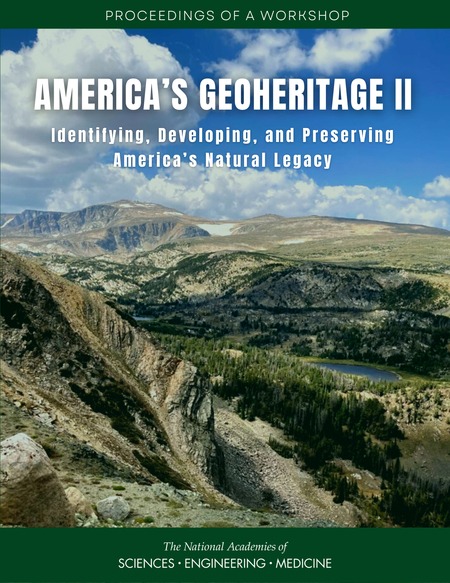
Identifying, Developing, and Preserving America’s Natural Legacy – America is endowed with places that embody a rich geoheritage, from sites where indigenous people subsisted for millennia, to mines that furnished the raw materials that built U.S. industry, to mountain ranges and river gorges with unparalleled recreational opportunities, to field sites where students can truly understand a geological process, to places of aesthetic or spiritual value, and many more across all states and territories. In order to assess the status of geoheritage and the activities of its practitioners in the United States in light of social, political, and environmental changes over the past ten years, the National Academies of Sciences Engineering and Medicine convened a series of virtual webinars and a workshop. From September to December 2020, a Distinguished Speakers Webinar Program composed of eight webinars provided an overview of geoheritage initiatives, as well as focused presentations on geoheritage related to federal and state lands, cultural heritage, education, research, and economic development and geotourism. In January 2021, 101 land managers, state geologists, educators, researchers, and members and staff of professional societies and nongovernmental organizations participated in a virtual writing workshop to aggregate and organize community input on strategies and best practices in developing geoheritage sites across the United States. The participants were divided into focus groups that roughly aligned with the topics explored in the fall 2020 workshops. The groups worked synchronously and asynchronously over the course of a week, then presented their ideas in a plenary session. This free publication summarizes the presentations and discussion of the webinars and workshop.