
Chinook Scenic Byway

The Chinook Scenic Byway is recognized as a premier driving tour in Washington State. The byway travels through the Mt. Baker-Snoqualmie National Forest and Mount Rainier National Park. Experience the diverse landscape of the Central Cascades, from Enumclaw and the glacier-fed White River Valley to the west, up and over 5,430′ Chinook Pass, to the fertile valley of Naches to the east.Visitors experiencing the byway can enjoy spectacular views of dense forests, towering peaks, rocky ridges and river canyons dominate this journey. On a clear day the view of Mount Rainier is breathtaking. Pass through basalt flows of the High Cascades and of the Columbia Plateau, old growth forests, lush subalpine meadows, a world-class ski area and numerous streams, lakes and waterfalls. Not only will you find exceptional scenery, but dozens of opportunities for outdoor fun and recreation await. Be sure to download your free copy of the new byway itinerary. The 25-page guide highlights the history, communities, and environment that make this such a unique drive. The new guide features a map and helps making trip planning easy by highlighting where to stay and play. https://www.youtube.com/watch?v=VakH74S6UyI
Remembering Jim Pritchard

We’re sad to report that James “Jim” William Pritchard of Ephrata, WA, passed away on August 3, 2022. Jim was 95 years of age (born: September 4, 1926), was deeply interested in the Ice Age Floods, and was devoted to and involved with the Ice Age Floods Institute. A fond remembrance: In the fall of 2000, Charlie Mason gathered together anyone from the greater Wenatchee Valley with an interest in the Great Missoula Floods. He had taught adult classes at the Community College and led field trips and had quite a following. At that meeting, Charlie being the perfectionist that he was, held elections, called for name suggestions, took votes for the name Wenatchee Valley Erratics, and subsequently filed for 501-C status, knowing these all would be needed to charter the first IAFI chapter. The following spring, he and I attended the IAFI spring meeting (there were 2 board meetings every year back then), held at the Moses Lake Chamber of Commerce. Charlie and I presented everything he knew was needed, and the then-IAFI President, Dale Middleton, put to a vote that we would become an interim chapter. Charlie argued there was nothing more our group needed to do to become an actual chapter. It was argued for 20 minutes that we had to be an interim chapter first. After much debate, Jim Pritchard had had enough, quite forcibly told everyone to ‘shut up’, pointed out that Wenatchee was the first to file to be a chapter so set precedent, and put it to a vote. No more argument, and the Wenatchee Valley Erratics Chapter was born. Those of us who worked with Charlie, Dale and Jim over the years, might know that this meeting was much more ‘spirited’ than what I’ve indicated here. When I later joined the board, it was refreshing that Jim, who was treasurer, didn’t mince words, kept the meetings going, and brought a perspective that was down to earth and always well thought out. The Erratics were so lucky when in later years, Jim, and his wife Eula, made the drive from Ephrata to join our chapter meetings.He always brought interesting questions, and wasn’t shy to ask them. Ken and I were lucky to have visited with him last year after the death of Eula. He was still as sharp as ever, and as devoted to the story of the great floods. He will be missed. (by Susan Lacy)
How Galactic Rhythms Helped Form Earth’s Continental Crust

“To see a world in a grain of sand”, the opening sentence of the poem by William Blake, is an oft-used phrase that also captures some of what geologists do. We observe the composition of mineral grains, smaller than the width of a human hair. Then, we extrapolate the chemical processes they suggest to ponder the construction of our planet itself. Now, we’ve taken that minute attention to new heights, connecting tiny grains to Earth’s place in the galactic environment. Looking out to the universe At an even larger scale, astrophysicists seek to understand the universe and our place in it. They use laws of physics to develop models that describe the orbits of astronomical objects. Although we may think of the planet’s surface as something shaped by processes entirely within Earth itself, our planet has undoubtedly felt the effects of its cosmic environment. This includes periodic changes in Earth’s orbit, variations in the Sun’s output, gamma ray bursts, and of course meteorite impacts. Just looking at the Moon and its pockmarked surface should remind us of that, given Earth is more than 80 times more massive than its gray satellite. In fact, recent work has pointed to the importance of meteorite impacts in the production of continental crust on Earth, helping to form buoyant “seeds” that floated on the outermost layer of our planet in its youth. We and our international team of colleagues have now identified a rhythm in the production of this early continental crust, and the tempo points to a truly grand driving mechanism. This work has just been published in the journal Geology. The rhythm of crust production on Earth Many rocks on Earth form from molten or semi-molten magma. This magma is derived either directly from the mantle – the predominantly solid but slowly flowing layer below the planet’s crust – or from recooking even older bits of pre-existing crust. As liquid magma cools, it eventually freezes into solid rock. Through this cooling process of magma crystallization, mineral grains grow and can trap elements such as uranium that decay over time and produce a sort of stopwatch, recording their age. Not only that, but crystals can also trap other elements that track the composition of their parental magma, like how a surname might track a person’s family. With these two pieces of information – age and composition – we can then reconstruct a timeline of crust production. Then, we can decode its main frequencies, using the mathematical wizardry of the Fourier transform. This tool basically decodes the frequency of events, much like unscrambling ingredients that have gone into the blender for a cake. Our results from this approach suggest an approximate 200-million-year rhythm to crust production on the early Earth. Our place in the cosmos But there is another process with a similar rhythm. Our Solar System and the four spiral arms of the Milky Way are both spinning around the supermassive black hole at the galaxy’s center, yet they are moving at different speeds. The spiral arms orbit at 210 kilometers per second, while the Sun is speeding along at 240km per second, meaning our Solar System is surfing into and out of the galaxy’s arms. You can think of the spiral arms as dense regions that slow the passage of stars much like a traffic jam, which only clears further down the road (or through the arm). This model results in approximately 200 million years between each entry our Solar System makes into a spiral arm of the galaxy. So, there seems to be a possible connection between the timing of crust production on Earth and the length of time it takes to orbit the galactic spiral arms – but why? Strikes from the cloud In the distant reaches of our Solar System, a cloud of icy rocky debris named the Oort cloud is thought to orbit our Sun. As the Solar System periodically moves into a spiral arm, interaction between it and the Oort cloud is proposed to dislodge material from the cloud, sending it closer to the inner Solar System. Some of this material may even strike Earth. Earth experiences relatively frequent impacts from the rocky bodies of the asteroid belt, which on average arrive at speeds of 15km per second. But comets ejected from the Oort cloud arrive much faster, on average 52km per second. We argue it is these periodic high-energy impacts that are tracked by the record of crust production preserved in tiny mineral grains. Comet impacts excavate huge volumes of Earth’s surface, leading to decompression melting of the mantle, not too dissimilar from popping a cork on a bottle of fizz. This molten rock, enriched in light elements such as silicon, aluminum, sodium, and potassium, effectively floats on the denser mantle. While there are many other ways to generate continental crust, it’s likely that impacting on our early planet formed buoyant seeds of crust. Magma produced from later geological processes would adhere to those early seeds. Harbingers of doom, or gardeners for terrestrial life? Continental crust is vital in most of Earth’s natural cycles – it interacts with water and oxygen, forming new weathered products, hosting most metals and biological carbon. Large meteorite impacts are cataclysmic events that can obliterate life. Yet, impacts may very well have been key to the development of the continental crust we live on. With the recent passage of interstellar asteroids through the Solar System, some have even gone so far as to suggest they ferried life across the cosmos. However we came to be here, it is awe-inspiring on a clear night to look up at the sky and see the stars and the structure they trace, and then look down at your feet and feel the mineral grains, rock, and continental crust below – all linked through a very grand rhythm indeed. By Chris Kirkland and Phil Sutton, THE CONVERSATION – from Science Alert
Kummakivi, Finland’s Balancing Rock, Seems to Defy the Laws of Physics

Our brains are pretty good at physics. For instance, you can watch somebody kick a soccer ball in front of you, and you can run to the spot where you and that soccer ball will intersect, taking into consideration the speed of both you and the ball — so smart! Not only that, we can look at one object balancing on another and tell how sturdy it is without so much as touching it. But sometimes our brains make uneducated mathematical guesses, and one of these is Kummakivi, the balancing rock in Ruokolahti, Finland. If it was up to your brain, Kummakivi — which means “strange rock” in Finnish — wouldn’t exist. It’s a boulder resting on a lump of rock in a position that, to our monkey engineer brains, appears impossible, or at least dicey. Extremely slap-dash and temporary work, at best. And yet Kummakivi sits quietly in its Scandinavian forest, racking up the centuries. Millennia, even. Kummakivi is huge — about 23 feet (7 meters) long. It rests on the tiny, steeply pitched footprint of a smaller mound of rock that rises from the forest floor. The balancing boulder appears to be about to slide right off its perch, but it can’t be moved — at least by human muscles. The reason for this isn’t as mysterious as it might appear: Kummakivi is large, but large things aren’t necessarily more likely to be affected by gravity than small ones. Kummakivi is very rough, which helps it stick in place, and it’s not the same density throughout. The center of gravity looks off when you inspect the balancing rock with your eyes, but it’s actually doing exactly what physics would have it do. But the real question is, how did it get there? People have probably always wondered that, but we’ll never know because it has been there approximately 12,000 years — way before we started recording anything. However, Finnish folklore says that some giants or trolls carried the rock to the forest and balanced it on its plinth. These days geologists say it was deposited by a retreating glacier at the end of the last ice age — and as we know, a glacier is basically the only thing as strong as a giant or a troll. By: Jesslyn Shields | Aug 24, 2022 reprinted from How Stuff Works
Dinosaur-Killing Asteroid May Have Had a Companion

A newly discovered crater suggests a second impact that would have triggered underwater landslides and tsunamis On its own, the dinosaur-killing asteroid had a staggering impact: Wildfires raged across the continents, tsunamis pummeled coastlines and about three-quarters of Earth’s species went extinct. But now, new evidence suggests this massive chunk of rock may have had a partner: Scientists discovered what might be an impact crater off the coast of Guinea that they say dates to 66 million years ago—around the same time as the collision that wiped out the dinosaurs. This second asteroid may have broken off from the dinosaur-killer, known as Chicxulub, or it may have been part of a closely timed impact cluster, according to a new study published in Science Advances. “A lot of people have questioned: How could the Chicxulub impact—albeit a huge one—be so globally destructive?” Veronica Bray, a planetary scientist from the University of Arizona and paper co-author, tells National Geographic’s Maya Wei-Haas. “It might be that it had help.” Researchers discovered what they dubbed the Nadir crater—named after a nearby underwater volcano—in 2020, while examining seismic survey data. “We came across a highly unusual feature,” write Bray and co-authors Uisdean Nicholson and Sean Gulick for The Conversation. “Among the flat, layered sediments of the Guinea Plateau, west of Africa, was what appeared to be a large crater, a little under 10 km wide and several hundred meters deep, buried below several hundred meters of sediment.” Nicholson, a geoscientist from Heriot-Watt University in the United Kingdom, has been interpreting such surveys for about 20 years. But he has “never seen anything like this,” he tells BBC News’ Jonathan Amos. Though scientists haven’t confirmed it was caused by an asteroid, features of Nadir, including its scale, the ratio of height to width and the height of the crater rim, are consistent with an impact origin, write the authors in The Conversation. Additionally, deposits around Nadir look like materials ejected from a crater after a collision. Computer modeling showed that to cause this impact, an asteroid would likely have been about 0.25 miles across and hit an ocean that was more than 2,600 feet deep, per The Conversation. In comparison, the Chicxulub asteroid was likely around six miles wide. Still, this second impact would have been sizable. “The energy released would have been around 1,000 times greater than that from the January 2022 eruption and tsunami in Tonga,” Bray tells BBC News. The hit would have caused shock waves equivalent to a magnitude 6.5 or 7 earthquake, which would have triggered underwater landslides and a series of tsunamis, write the authors. “The discovery of a terrestrial impact crater is always significant, because they are very rare in the geologic record,” Mark Boslough, an earth and planetary scientist at the University of New Mexico, who was not involved in the research, tells CNN’s Katie Hunt. “There are fewer than 200 confirmed impact structures on Earth and quite a few likely candidates that haven’t yet been unequivocally confirmed.” To verify that Nadir was truly formed by an asteroid strike, as well as find a precise date for the collision and determine its connection to Chicxulub, scientists will need to drill into the formation and collect samples. The team has already applied for emergency funds for this additional research, per National Geographic. The drilling could also give scientists clues about how life on Earth responded to the impact. “Part of the Nadir drilling goal is to analyze the sediment that was deposited onto Nadir over time,” Bray tells Inverse’s Kiona Smith. “When did life recover? How?” Smithsonian Magazine article by Margaret Osborne
How Has Your Address Moved Over the Past 750 Million Years?

Some 240 million years ago, an enormous supercontinent known as Pangea encompassed nearly all of Earth’s extant land mass, Pangea bore little resemblance to our contemporary planet, but thanks to a recently released interactive map interested parties can now superimpose the political boundaries of today onto the geographic formations of yesteryear—at least dating back to 750 million years ago. Ancient Earth is an interactive Map tool that enables users to home in on a specific location and visualize how it has evolved between the Cryogenian Period and the present. The tool behind this millennia-spanning visualization, is the brainchild of Ian Webster, curator of the world’s largest digital dinosaur database. Webster drew on data from the PALEOMAP Project—spearheaded by paleogeographer Christopher Scotese, the initiative tracks the evolving “distribution of land and sea” over the past 1,100 million years—to build the map. Users can input a specific address or more generalized region, such as a state or country, and then choose a date ranging from zero to 750 million years ago. Currently, the map offers 26 timeline options, traveling back from the present to the Cryogenian Period at intervals of 15 to 150 million years. Ancient Earth includes an array of helpful navigational features, including toggle display options related to globe rotation, lighting and cloud coverage. Brief descriptions of chosen time periods pop up on the bottom left side of the screen, while a dropdown menu at the top right allows users to jump to specific milestones in history, from the arrival of Earth’s first multicellular organisms some 600 million years ago to early hominids’ relatively belated emergence around 20 million years ago. To switch from one time period to another, you can either manually choose from a dropdown menu or use your keyboard’s left and right arrow keys. Start at the very beginning of the map’s timeline and you’ll see the planet evolve from “unrecognizable blobs of land” to the massive supercontinent of Pangea and, finally, the seven continents we inhabit today. Edited from Smithsonian Magazine article by Meilan Solly, February 15, 2019
Continents Were Created on Ancient Earth by Giant Meteorite Impacts

To date, Earth is the only planet we know of that has continents. Exactly how they formed and evolved is unclear, but we do know – because the edges of continents thousands of miles apart match up – that, at one time long ago, Earth’s landmass was concentrated in one big supercontinent. Since that’s not what the planet looks like today, something must have triggered that supercontinent to break apart. Now, we have new evidence to suggest that giant meteorite impacts played a significant role. The smoking gun consists of crystals of the mineral zircon, excavated from a craton in Western Australia, a piece of Earth’s crust that has remained stable for over a billion years. Known as the Pilbara Craton, it is the best-preserved chunk of crust on the planet… and the zircon crystals within it contain evidence of ancient meteorite impacts before the continents broke apart. “Studying the composition of oxygen isotopes in these zircon crystals revealed a ‘top-down’ process starting with the melting of rocks near the surface and progressing deeper, consistent with the geological effect of giant meteorite impacts,” explained geologist Tim Johnson of Curtin University in Australia. Our research provides the first solid evidence that the processes that ultimately formed the continents began with giant meteorite impacts, similar to those responsible for the extinction of the dinosaurs, but which occurred billions of years earlier.” The work was conducted on 26 rock samples containing fragments of zircon, dating between 3.6 and 2.9 billion years old. The research team carefully analyzed isotopes of oxygen; specifically, the ratios of oxygen-18 and oxygen-16, which have 10 and 8 neutrons, respectively. These ratios are used in paleogeology to determine the formation temperature of the rock in which the isotopes are found. Based on these ratios, the team was able to distinguish three distinct and fundamental stages in the formation and evolution of the Pilbara Craton. The first stage is the formation of a large proportion of zircons consistent with partial melting of the crust. This partial melting, the researchers show, was likely the result of bombardment by meteorites, which heated the planetary crust on impact. The oldest cluster of these zircons, according to the team’s interpretation, was the result of a single giant impact that led to the formation of the craton. The second stage was a period of reworking and stabilization of the crustal nucleus, followed by the third stage – a period of melting and granite formation. This stabilized nucleus would then, much later, evolve to become today’s continents, as did the cratons found on other continents around the world. Many meteorites have pelted Earth in eons past, in numbers much higher than the number of continents. It’s only the largest impacts that could generate enough heat to create the cratons, which appear to be twice as thick as their surrounding lithosphere. These findings are consistent with previously proposed models for the formation of cratons around the world – but constitute, the researchers said, the strongest evidence yet for the theory. However, it’s just one craton, out of around 35 known. To make the evidence even stronger still, the team will need to compare their results with more samples from other cratons, to see if their model is consistent globally. “Data related to other areas of ancient continental crust on Earth appears to show patterns similar to those recognized in Western Australia,” Johnson said. “We would like to test our findings on these ancient rocks to see if, as we suspect, our model is more widely applicable.” Article by MICHELLE STARR, Science Alert,10 August 2022 – The research has been published in Nature.
37,000-year-old mammoth butchering site may be oldest evidence of humans in North America
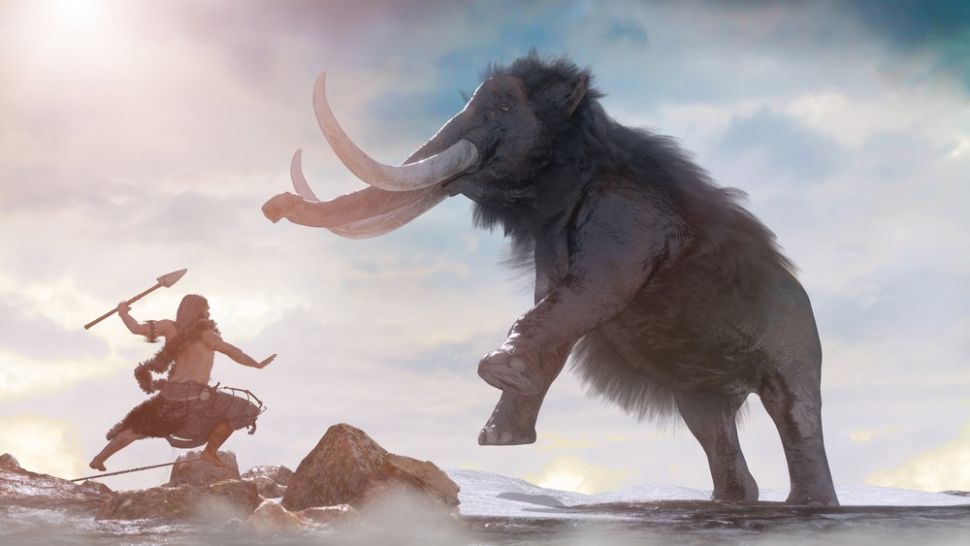
A 37,000-year-old mammoth butchering site, uncovered in New Mexico, might be the earliest evidence of humans in North America, controversial research finds. Some of the bones at the site show signs of being handled by humans or even being used as tools, which is “some of the most conclusive evidence” yet that humans settled in North America much earlier than experts previously thought, according to the new study. If the team is correct about human activity at the site, it would almost double the amount of time humans have occupied North America. However, determining the exact date that people first appeared in North America has been a controversial subject over the past few decades, and similar studies have been dismissed as inconclusive. Some experts are similarly skeptical of the conclusions the team has drawn from the mammoths’ remains. The new site was discovered on the Colorado Plateau in northern New Mexico, after hiker Gary Hartley spotted a chunk of tusk protruding from the surface. Researchers named the site the “Hartley mammoth locality” in his honor. An excavation of the Hartley site revealed the incomplete remains of two mammoths, believed to be an adult female and a juvenile. Most of the bones were grouped in a large pile, with the adult female’s skull lying on top. By carbon-dating collagen in the bones, researchers estimated the remains could date to between 36,250 and 38,900 years ago. Some of the bones appeared to have been crafted into makeshift knives, possibly used to butcher the mammoths, the researchers said. Other bones showed signs of being broken by blunt-force trauma, possibly from using rocks, which were also found in the pile of bones. There were also puncture marks in some of the mammoths’ ribs, possibly resulting from humans’ attempts to glean at the valuable nutrients inside. Tiny particles found in the sediment surrounding the bones also included crystallized ash from what researchers suspect was a fire, possibly used to cook the mammoth meat as well as other small animals. “What we’ve got is amazing,” said lead study author Timothy Rowe, a paleontologist at The University of Texas at Austin. When did the first Americans arrive? Until the early 2000s, archaeological evidence had suggested that the Clovis people — a group of early humans who can be identified through distinctively shaped weapons — were the first humans in North America, arriving around 13,000 years ago. But more recent finds have revealed that there was likely a genetically separate group of humans, known as pre-Clovis people, living in North America before the Clovis people arrived. It is now firmly established that the pre-Clovis people were the first humans to live in North America, and they can be reliably traced back to around 16,000 years ago, Justin Tackney, an anthropologist at the University of Kansas who specializes in the human settlement of the Americas and was not involved in the study, told Live Science in an email. This time frame suggests that the pre-Clovis people arrived in North America after the end of the Last Glacial Maximum (LGM) — the most recent period when ice sheet coverage across Earth was at its greatest extent, between 26,500 and 20,000 years ago. The melting ice sheets likely provided the pre-Clovis people with an opportunity to cross the Bering Land Bridge, a piece of land that once connected North America and Asia. However, a number of recent contentious studies have claimed that the pre-Clovis people may have dated even further back, potentially to before the LGM. But this idea has been “a much bigger pill to swallow” for most experts because the evidence from these studies is inconclusive, Tackney said. A 2017 study investigating a similar pile of mammoth bones at a site near San Diego revealed that the bones may have been handled by humans and could date back to around 130,000 years ago, suggesting humans may have been around more than 10 times longer than previously believed. However, critics argued that the bones’ unusual orientation and “wear and tear” could also be explained by natural processes and were not definitively human-caused. In 2020, another group of researchers claimed to have found unusually shaped rocks in a Mexican cave that may have been used as stone tools and date to around 30,000 years ago. But another study(opens in new tab), published in 2021, cast serious doubt over whether the shape of the rocks indicated they were human-made. These types of studies can be problematic because the evidence does not definitively point to humans. Instead, humans are just one possible explanation. This means researchers are often creating a narrative to fit the evidence, rather than the evidence clearly pointing to what really happened. “People in our field usually err on the side of caution, and the simplest explanations are preferred,” Tackney said. “In that sense, I am always extremely skeptical of reports from sites like these.” Until now, the most conclusive evidence of a pre-LGM settlement for pre-Clovis people comes from a 2021 study, which revealed a set of 60 bare human footprints uncovered at White Sands National Park in New Mexico. The fossilized tracks date to between 21,000 and 23,000 years ago based on organic material trapped inside the footprints, which suggests pre-Clovis people may have moved into North America before or during the LGM. But this discovery has not been enough to settle the debate. New evidence In the new study, researchers analyzed the bones found at the Hartley site using a number of techniques, including high-resolution CT scans and scanning electron microscopy. These analyses revealed that a handful of the bones displayed signs of being fractured by blunt-force trauma, including, most notably, the adult’s skull. Most of the ribs showed signs of being snapped off the vertebrae and some had puncture marks that the researchers think could have been made by humans to extract fatty marrow from inside the bone, according to the study. At least one rib bone also shows signs of cut-like marks that could have been left by humans. “There really are only
Steamboat Rock
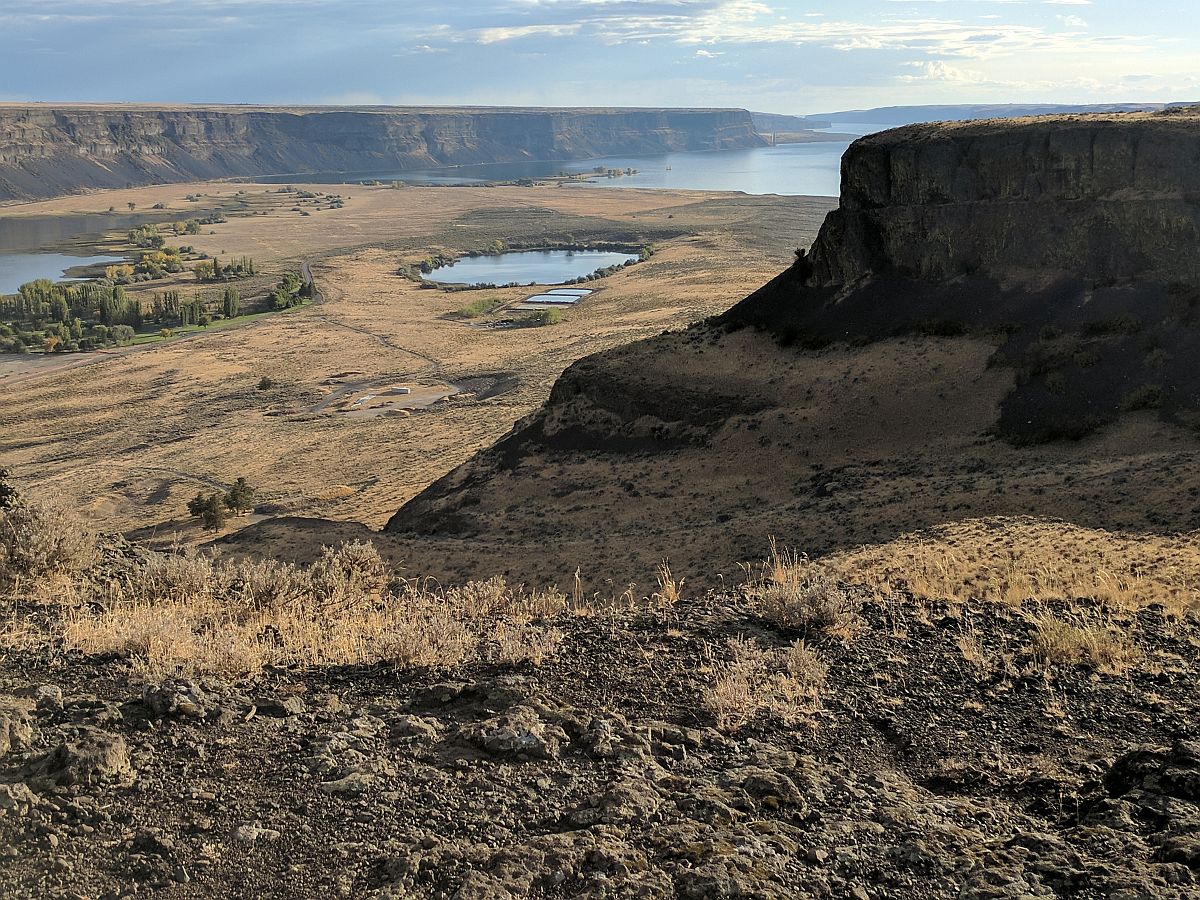
Steamboat Rock lies at the very northern end of the Grand Coulee. At over 1 mile long, ⅔ mile wide, and 800 feet high. The basalt-topped butte standing alone in the middle of the coulee, almost completely surrounded by the waters of Banks Lake is an incredible sight. It was left behind by erosion of both the Ice Age Floods that carved the Grand Coulee, and the Okanogan Lobe of the ice-age continental ice sheet. Because this area is near the thinning outer margin of the Columbia River Basalt extent, it’s easy to see Columbia River Basalt directly overlying older granitic basement from the trails around the base. A steep climb on a well constructed trail leads to the broad top of Steamboat Rock where the views are truly expansive, encompassing a full 360° panorama. It’s also easy to find granitic erratics and glacial till atop the butte that attest to the fact that the Okanagan Lobe overrode Steamboat Rock during the most recent Ice-Age glacial advance. The campgrounds at the State Park are spacious and well laid out. There is easy access to both the trails and to Banks Lake for fishing, boating and swimming. Most of the water in Banks Lake has been pumped up from the Columbia River’s Lake Roosevelt, and impounded by a dam 20 miles south at Coulee City. Banks Lake is a key element in the Columbia Basin Project that supplies water for the verdant agricultural areas to the south in an otherwise quite dry, high desert environment. Some other interesting places to explore in the area include Northrup Canyon, Grand Coulee Dam, and the quixotic Gehrke Windmill Garden just north of Electric City.
Frenchman Coulee
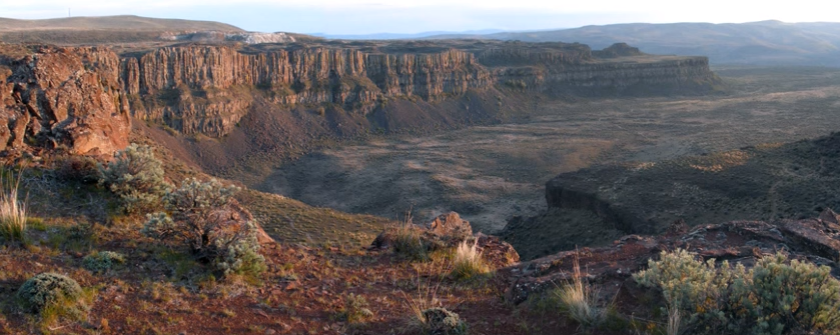
Frenchman Coulee Ice Age Floods National Geologic Trail Frenchman Coulee is a short drive north and west from the Silica Road exit 123 off US-90, along the Old Vantage Road. It is one of the most beautiful features left behind by the great Ice Age Floods. Several of those massive floods, up to 700 ft (213 m) deep, created Frenchman Coulee, its Potholes Coulee neighbor to the north, and scoured the bizarrely eroded surface of Babcock Bench, preferentially eroding weaker rock out of the top of the Grand Ronde Member of Columbia River Basalt. Frenchman Coulee is actually a dual coulee and cataract system, Frenchman Coulee and Echo Basin, separated by a remnant rock blade that sports tall basalt columns attracting rock climbers like bees to flowers. The Feathers is probably the most popular climbing area in the region. Hiking trails, some barely discernible, lead along and atop the rock blade, affording spectacular views of both coulees. Frenchman Coulee also has a waterfall in the eastern section of the Coulee that is accessible by foot. Other hiking and biking trails explore the floor of the coulee and continue over 15 miles north along Babcock Bench, perched high above and adjacent to the Columbia River, past Potholes Coulee and on to Crescent Bar. Quick Facts Location: Old Vantage Highway, Quincy, WA 98848 A primarily destination for hikers, mountain bikers and rock climbers with the fascinating rock formations of the Gorge making for a great challenge