
Stunning Fossil Site Reveals Life Rebounding After Major Extinction Event
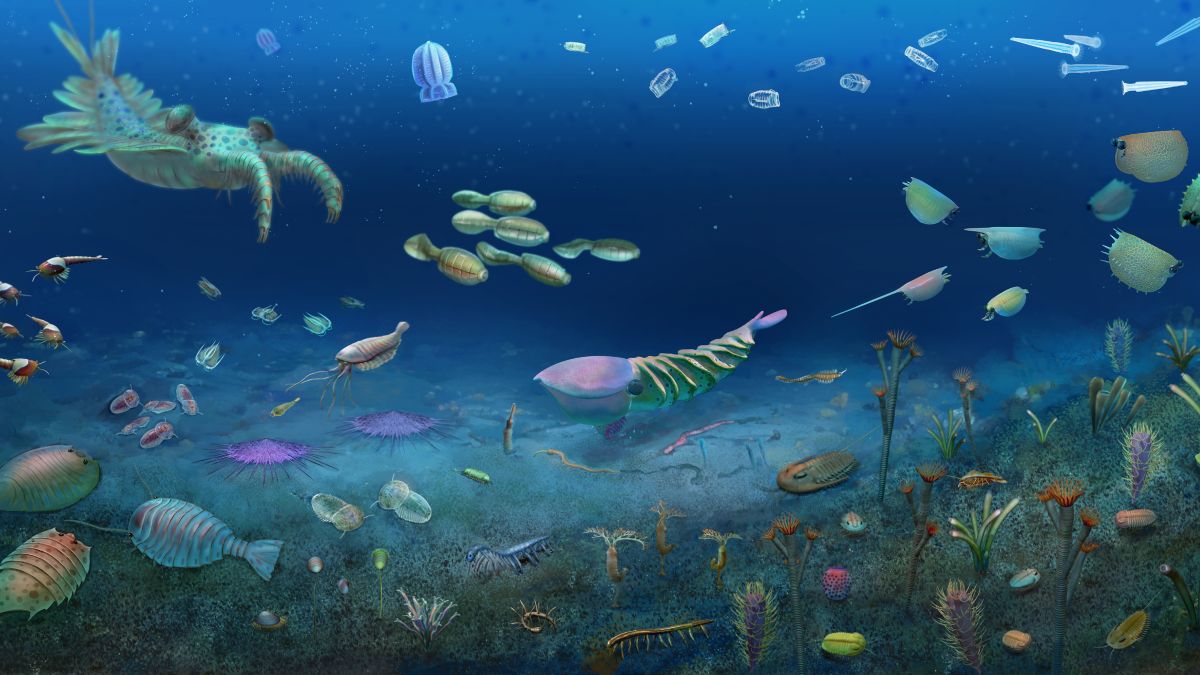
Just over half a billion years ago, Earth was rocked by a global mass extinction event, a dramatic interruption of the Cambrian explosion of life on Earth. It wiped out an estimated 50% to over 90% of animal species, particularly in marine environments. What happened next, in the direct aftermath of this event, has mostly been a mystery – until now. A newly discovered fossil site in Hunan, South China, has captured an entire ecosystem in recovery, in extraordinary detail, including soft tissues and internal structures. Nearly 60 percent of the species found within are previously unknown to science. Named the Huayuan biota, the collection boasts 153 animal species spanning 16 major groups, for a grand total of 8,681 fossil specimens recovered from a single site – and it was all recorded around 512 million years ago, hot on the heels of the Sinsk extinction around 513.5 million years ago. The richness of species and level of preservation rivals Canada’s famous Burgess Shale. Earth’s Cambrian Period, which lasted from around 540 to 485 million years ago, was a time of great change for our planet. It was during this time that the first major diversification of animal life took place – the Cambrian explosion. But the tree of life was trimmed shortly after with the Sinsk extinction event, which may have been triggered by tectonic activity. Thanks to a handful of BST Lagerstätten from around the Sinsk event, paleontologists have managed to reconstruct some of the effects it had on life on Earth. The Burgess Shale in the Canadian rockies is about 508 million years old; the Qingjiang biota and the Chengjiang biota, both in China, are about 518 million years old. These sites helped scientists discover that, while many shallow-water species were killed off in the Sinsk event, life managed to rebound within a few million years. Dated to around 513 million years old, the Huayuan biota is a direct window into the immediate aftermath of the extinction event. It shows that at least some ecosystems – namely, deeper waters – served as safe refuges. The fossils themselves reveal a rich and diverse ecosystem, filled with predators and prey alike. Their preservation includes far more than just their external shapes and textures – in many cases, internal organs and soft tissues were captured in exquisite detail, including nervous systems and even cellular structures. Other structures preserved include gut diverticula and optic neuropils, offering rare glimpses into ancient digestive systems and nervous tissue. The site will keep scientists busy for many years to come. Earth has quite a few tricks up its sleeve for fossilization, but the Huayuan biota is truly a shining rarity. It belongs to an elite class of fossil deposits known as Lagerstätten – fossil beds that have both exceptional richness and exceptional preservation. But it’s not just any Lagerstätte; a team led by paleontologist Maoyan Zhu of the Chinese Academy of Sciences has classified the Huayuan biota as a Burgess Shale-type (BST) Lagerstätte – the very rarest and finest type of fossil bed, where soft-bodied animals and delicate internal tissues are preserved as a rule, not an exception. The biota contains arthropods such as trilobites and apex-predator radiodonts, and invertebrates like sponges, comb jellies, and sea anemones. What makes this special is that many of these animals appear to have been preserved where they lived, rather than being swept in from elsewhere. This means that researchers can make inferences about their behavior; for example, a number of vetulicolians were preserved in groups, suggesting that they shoaled together in life. Perhaps the most surprising discovery is that of the world’s oldest known pelagic tunicate, a group of filter feeders that today play a major role in the ocean’s carbon cycle. The presence of free-swimming tunicates in the biota suggests that surprisingly modern-style ocean ecosystems were already taking shape soon after the Sinsk extinction. The other really exciting part is that the researchers compared their biota with other Cambrian Lagerstätten. They found that the Huayuan biota bears some striking similarities to the Burgess Shale fossil site. Several iconic animals once thought to be unique to the Burgess Shale, such as Helmetia and Surusicaris, appear in the Huayuan assemblage as well, even though the two sites are separated by thousands of kilometers and millions of years. It’s an absolutely magnificent find, and one that’s likely going to become crucial for understanding the Cambrian Earth. “The extraordinary biodiversity of the Huayuan biota provides a unique window into the Sinsk event by revealing the post-extinction recovery or radiation in the outer shelf environment,” the researchers write. “It indicates that the deep-water environment might have played a crucial role for structuring the global marine animal diversification and distribution since the early Cambrian.” The research has been published in Nature. This article is taken from a Science Alert article by Michelle Starr
Telling the Story of the Missoula Floods

Developing an Ice Age Floods Animation Through Science, Partnership, and Interpretation Explaining the Missoula Floods has never been simple. The floods reshaped landscapes across much of the Pacific Northwest, yet they occurred thousands of years ago, unfolded repeatedly rather than once, and operated on a scale that is difficult to grasp from any single viewpoint. While physical evidence of flooding is visible in coulees, erratics, and sediment deposits across the region, understanding how those features formed requires connecting processes that span vast distances and long periods of time. For the Ice Age Floods National Geologic Trail, this challenge sits at the center of its mission. The Trail links flood-related sites across four states and relies on partnerships with parks, museums, educational institutions, Tribes, and communities to interpret a story that is regional in scale and national in significance. Developing a shared, accurate way to tell that story has been a long-standing goal. One important step toward that goal is the release of a new Ice Age Floods animation, now publicly available through the Pleistocene Post for the first time ever through the National Park Service and the Ice Age Floods Institute. Understanding the Missoula Floods—and Why Animation Was Essential The Missoula Floods were not a single catastrophic event. They occurred dozens of times as an ice dam repeatedly formed and failed during the last ice age. Each flood released immense volumes of water, carving the Channeled Scablands, transporting massive boulders, and depositing thick layers of sediment across the Columbia Basin, the Willamette Valley, and beyond. These repeated events reshaped landscapes on a scale that is difficult to grasp from any single location or landform. This combination of repetition, scale, and process presents a fundamental interpretive challenge. Static maps, photographs, or diagrams can show where flooding occurred, but they struggle to convey where ice dams formed and failed, why floods happened repeatedly, and how those repeated events shaped the landforms we see today. Visitors often encounter individual features—such as coulees, erratics, or sediment deposits—without an intuitive sense of how those features connect to a larger, system-wide story. Animation offers a way to bridge that gap by showing movement, change, and sequence over time. It makes it possible to illustrate how ice dams failed, how floodwaters moved across vast landscapes, and how erosion, transport, and deposition shaped the region over thousands of years. By showing sequence and scale together, the animation provides context that static interpretation often cannot. At the same time, animation carries risks. Visual storytelling can unintentionally oversimplify complex processes or imply certainty where scientific understanding includes ranges and ongoing inquiry. Addressing those risks required careful collaboration and review to ensure the final product communicates current scientific understanding clearly, accurately, and responsibly. A Trail Built on Partnership The Ice Age Floods National Geologic Trail is a partnership-based unit of the National Park Service. Unlike traditional national parks, the Trail does not center on a single land base. Instead, it connects a network of sites, organizations, and communities that collectively interpret the Missoula Floods story across four states. From its earliest days, scientific research and public education about the floods have been advanced by regional partners, particularly the Ice Age Floods Institute, along with academic researchers, museums, educators, and land managers. Federal agencies with expertise in geology, hydrology, and landscape science have also contributed to the evolving understanding of flood processes and landforms. Together, these partners built the scientific foundation and public awareness that ultimately made the Trail possible. That shared foundation shaped how the Ice Age Floods animation was conceived. The project was not approached as a standalone National Park Service product, but as a collaborative effort intended to reflect current scientific understanding while respecting decades of research, publication, and public engagement. Partner involvement helped ensure the animation was grounded in credible science and responsive to the needs of educators, interpreters, and institutions working across the region. Just as important, partners helped shape how the animation would be used. From the outset, it was understood that no single product could replace place-based interpretation. Instead, the animation needed to complement local stories, support diverse interpretive goals, and function as a shared framework rather than a prescriptive narrative. The result is an animation designed to be flexible, modular, and broadly applicable. A Collaborative Development Process Developing the animation was an iterative process involving scientists, interpreters, educators, and media specialists. Expertise in glacial dynamics, flood hydraulics, geomorphology, and interpretation informed each stage of development, ensuring that both scientific rigor and interpretive clarity remained central throughout the project. Drafts were reviewed not only for technical accuracy, but for how audiences might reasonably interpret what they were seeing. Revisions focused on clarity and defensibility—refining pacing so that scale was conveyed without exaggerating velocity, ensuring viewers could distinguish between process and outcome, and reinforcing that the floods occurred repeatedly rather than as a single event. In many cases, refinements were not about correcting facts, but about improving how those facts were communicated visually. The goal was not to resolve every scientific nuance, but to present a version of the story that is accurate, carefully framed, and useful across many interpretive settings. This collaborative approach helped ensure the animation could serve as a reliable interpretive tool while remaining accessible to broad public audiences. What the Animation Is—and Is Not The Ice Age Floods animation is intended to provide a system-scale overview of how the floods worked, support education and interpretation across diverse settings, and serve as a shared visual reference for partners and educators. It is not intended to replace place-based interpretation, resolve all scientific debates, or function as a comprehensive instructional resource on its own. In many cases, individual segments of the animation may be more useful than the full piece. Short sections can illustrate specific topics—such as basalt erosion, flow through constricted valleys, or the cumulative effects of repeated flooding—while local interpreters focus on the features and stories most relevant to their sites. Supporting Education and Public Understanding Now that the animation is publicly available, it
The Pulse of Rocks

“All creatures, objects, places, and elements have a spirit.” Patrick Saltonstall, Sugpiag (Aleut) Are rocks alive? Hmm. You might be visualizing a small stone or large boulder just sitting there…doing nothing. If life has to originate from a cell, then a no vote seems reasonable. Let’s give the Mineral Kingdom a few minutes to speak on behalf of its constituents: “Our rocky friends react to temperature, expand and contract; they can absorb moisture, and they can transform their makeup entirely, like petrified wood changing into stone. Taxonomy – In the 19th . century, rocks and minerals were first classified based on their chemical make-up. As with animals and plants, new members are added yearly to the mineral kingdom’s nearly 10,000 species. Movement – Rocks sure move around, from riding glacier waves, to being catapulted for miles out of fiery volcanoes to being gently tumbled downstream by…streams, and through time, broken down into sandy beaches. Or, if you’re pumice, you can simply float downstream at your leisure. Any pebble has placed many travel stickers on its luggage finding itself in many lands during its long life. Stalagmites and stalactites check off another life form requisite by respectively growing up and down in caves with the help of slowly dripping water. Rock serves us well in concrete, road building materials, sculptures, and stone homes, all making us Salt of the Earth. Reproduction and Growth – Kidney stones are minerals and salts formed in urine. They form and grow in the bladder and kidneys. The imbalance of too many minerals in the urine and not enough liquid causes the minerals to reproduce and grow. Cooperation – Practically all living things rise out of soil, which is a mixture of organic and inorganic magic. Plants need both. Animals need minerals too. Salty seas cover a major chunk of our planet providing a swimming pool habitat to countless known and still to be known species Awe Inspiring – Rocks are the basis for our most beloved national, natural treasures, from the timeless Grand Canyon, to Yosemite’s granite walls, towering Mt. Rainier, the sandstone Arches, and the Grand Tetons, among many others. We are moved to witness sunrise and sunset light beaming red, and filtered white on mountain peaks. We climb boulders; we summit mighty bare rock and snow-covered mountains for the view, for the peace, perhaps for the love, too. The Fine Line – Everything that is living on our precious planet originated with and within the rocky world, making it a challenge to separate the line between non-life and existence. We are made of stars. We are made of star spirit. A wildlife biologist/naturalist reflects on lithologic ‘life’, Bill Weiler, January 2026
Why Are Basalt Columns Mostly Hexagonal “Bestagons”
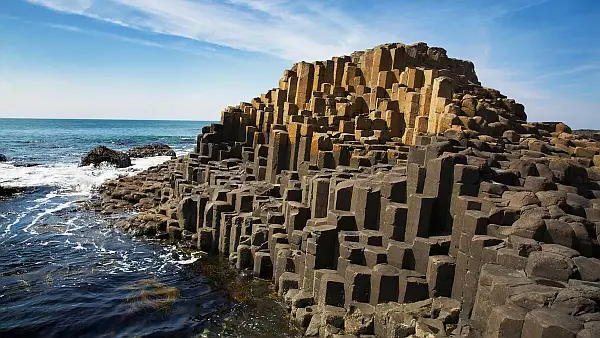
The Giant’s Causeway is a rock formation that is so otherworldly that it seems like it was made by supernatural beings. But these incredible hexagonal columns of rock aren’t the result of giant masons. They formed through a quirk of volcanic activity that shows that hexagons really are the bestagons! Cooling lava naturally creates hexagonal cracks to evenly relieve stress When lava cools and turns into rock, it contracts and builds up tension, particularly when held in place by the surrounding landscape. Just as drying mud cracks, initial cracks in the rock are random, but quickly organize into a hexagonal pattern, which scientists consider the most space-efficient shape. Note: the presentation talks about lava cooling from the top down, but it also cools upward from the bottom where it flowed onto a cooler land surface. In our area we typically see columns underlying a more chaotically fractured “entablature”. It is generally thought that because the entablature section is exposed to the air and precipitation, that results in rapid cooling that produces chaotic fracturing. The columnar section which is cooling upward from the base, would experience a much slower and more even rate of cooling, allowing it to better organize into an optimal, space-efficient “bestagonal” shape. Found via SciShow, hosted by: Niba @NotesbyNiba
There IS such a thing as ‘settled science’

How bad-faith arguments sow doubt by weaponizing scientific humility Good advice to consider when either claiming or questioning scientific (and geologic) theories and hypotheses “Science is never settled” has become a go-to slogan for populists seeking to legitimize fringe scientific positions. In 2020, Representative Nancy Mace was asked whether she agreed that climate change is the result of humanmade greenhouse emissions. She responded: “My opponent has said that the science is settled on this. Well, the science is never settled. Scientists will tell you that.” In February, Senator Roger Marshall argued more money should be spent on investigating widely debunked links between autism and vaccines, saying “I’m a physician. Science is never settled. That’s what makes us scientists.” When U.K. Reform party leader Nigel Farage was pressed on whether he would “side with medical experts who say ‘a link between Tylenol use in pregnancy and autism’ is dangerous nonsense,” he responded, “When it comes to science, I don’t side with anybody… because science is never settled.” The issue is, of course, that in many areas, from the theory of evolution to the theory of gravity, science is very much settled. To pretend otherwise is to misrepresent the position of the scientific community. That doesn’t mean that scientific positions are eternally fixed and can’t be updated in light of new evidence. It means that our current best explanations have been tested enough for us to be confident that they are good descriptions of the way things work. Myth of overturned consensus A favorite trope of climate denialists is that scientists in the 1970s predicted “global cooling” — an imminent ice age. It’s a smart argument, because if you can suggest that the exact opposite of global warming was once the prevailing view, surely you throw the current consensus on climate science into doubt? Despite media attention and much discussion of the idea, global cooling was never a consensus scientific position. Reviews of the literature at the time show that even 50 years ago, global warming dominated scientific thinking about the Earth’s short-term climate future. That climate change is the result of greenhouse gas emissions is now very much the consensus scientific position. There are, however, examples in science where consensus positions have been modified or updated. Gravity is a classic case. Galileo established that acceleration due to gravity is the same for all objects near Earth’s surface. But it wasn’t until Newton that we had a universal theory of gravitation. Newton’s theory unified the behavior of objects falling on earth with the motions of planets. For years, every measurement seemed to confirm it, and the theory became known as a “law” that nature was thought to obey without exception. But as experiments expanded and instruments improved, the edges of Newton’s “law” began to fray. When dealing with strong gravitational fields like those near a black hole, or when calculating to high precision or over short astronomical distances, Newton’s law wasn’t sufficient. In the 20th century, Einstein’s general relativity filled many gaps — resolving a range of seeming astronomical anomalies and describing how light bends near a black hole. Yet even the relativistic interpretation of gravity is not perfect. We know, for example, that it must break down inside a black hole. First Galileo’s and then Newton’s theories were superseded, and we know Einstein’s isn’t correct in every situation. Does that mean these earlier theories are useless and not examples of settled science? Definitely not. In contexts where these theories have been rigorously tested and shown to give the correct answers (to a given degree of precision), they remain valid. They aren’t wrong — just special cases of the more general theories, valid within a given domain of legitimacy in which they were originally postulated and tested. In the same way, whatever supersedes Einstein’s theory will have to include it as a special case. The example of gravity shows that scientific knowledge can evolve yet still be considered settled within its domain of legitimacy. We can point to other consensuses, like evolution or germ theory, as settled science that has been expanded and generalized over time. Scientific ‘facts’ There are also questions that most would call definitively settled. That Earth is round, not flat, is perhaps the most obvious. But whether we choose to call this a “fact” or not depends on how we define the word. If we demand 100% certainty, science can’t provide it. If you want certainty, you need to look to mathematics, where knowledge is built through deduction from axioms (a fundamental set of premises), independent of the world. Science, in contrast, built on evidence and induction, can only ever offer increasing confidence. A key premise of the scientific method is openness to new evidence. If you consider yourself 100% certain, then no new evidence, however convincing, can change your mind. That is not good science. However, if you accept that science provides evidence for hypotheses, it can offer what we might call indisputable evidence — so robust that disputing it isn’t a tenable position. Overturning the not-flat worldview would require such a massive reconsideration of what we understand about reality as to make it practically impossible. So, “settled science” does not mean we know something with absolute certainty, but that the weight of evidence is heavily in favor of this interpretation. Perhaps more importantly, if someone wants to change the currently held conception, the burden of proof is on them. All scientific knowledge comes with uncertainty. That is the hallmark of good science. But uncertainty doesn’t mean we cannot confidently assert that entropy always increases (the second law of thermodynamics) or that Earth orbits the sun. Science embraces uncertainty and is open to revision when new information appears, but that does not mean we shouldn’t take a position when the evidence stacks up on one side of the balance. Issues that have been rigorously tested can still be considered settled. Not being 100% certain isn’t the same as being 50-50. Admitting doubt isn’t the same as both-siding a one-sided issue. The fact that scientists acknowledge uncertainty isn’t a reason for championing false balance. But these are the fallacious positions populists are taking when
The first people in the Americas
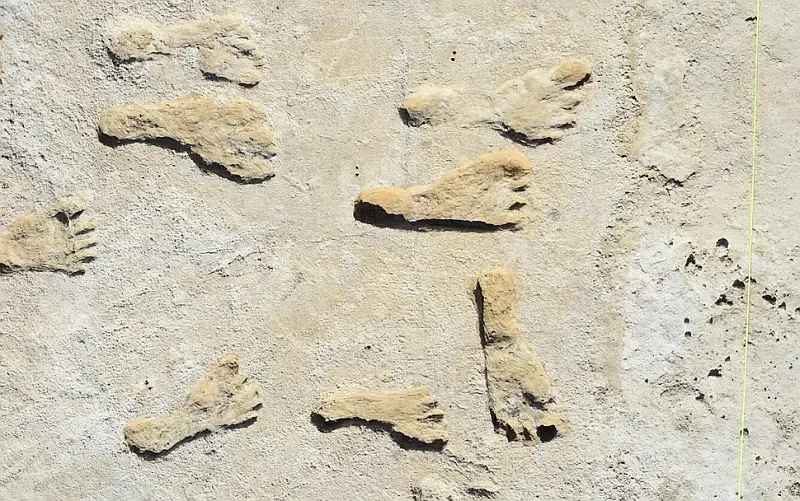
The first people to arrive in the Western Hemisphere were Indigenous Americans, who were descended from an ancestral group of Ancient North Siberians and East Asians. They likely traveled along the Bering Land Bridge by land or sea. When the first Americans arrived is a source of ongoing debate. Several studies suggest that a series of fossilized human footprints found at White Sands National Park in New Mexico date to sometime between 21,000 and 23,000 years ago. That dates them to the coldest part of the last ice age, the last glacial maximum (which lasted from around 26,500 to 19,000 years ago), when the northern part of the continent was covered in glaciers and ice sheets. Other controversial studies suggest even earlier dates. For example, dated stone artifacts in Chiquihuite Cave, in Mexico, to more than 30,000 years ago. However, it’s unclear if humans actually crafted these rocks or if they formed naturally that way, making the finding uncertain. Other studies go back much further. In 2017, a controversial study in the journal Nature reported mastodon bones in California that may have been modified by humans around 130,000 years ago. However, other archaeologists have expressed concerns about the excavation of this finding and noted that other natural events or animals could have modified the bones. To put the 130,000-year-old date into context, the earliest evidence for Homo sapiens dates to around 300,000 years ago in Morocco, while the earliest evidence for a successful migration of humans into Asia was more than 100,000 years ago and the earliest evidence of successful human migration into Europe was around 55,000 years ago. Excerpted from Who discovered America? By Owen Jarus in LiveScience
Amazing Forensics Solve 150-Million-Year Pterosaur Mystery
Two tiny pterosaur fossils, each smaller than a mouse, have finally solved a puzzle that has mystified paleontologists for decades. The perfectly preserved hatchlings, nicknamed “Lucky I” and “Lucky II,” were discovered in Germany’s famous Solnhofen limestone formations and reveal both how they died and why juvenile flying reptiles dominate this fossil record. The Tragic Discovery Both Pterodactylus hatchlings, just one to two weeks old when they perished, share a telling characteristic: broken wing bones with identical fracture patterns. The clean, slanted breaks to their humerus bones suggest the same type of twisting force killed them both 150 million years ago. University of Leicester paleontologist Rab Smyth and his team reconstructed their final moments through careful forensic analysis. The evidence points to a violent Late Jurassic storm that battered the tiny pterosaurs with winds so powerful their fragile wing bones snapped under pressure. The same storm then hurled their bodies into a saltwater lagoon, where churning waters quickly carried them to the bottom for rapid burial and exceptional preservation. Solving the Solnhofen Paradox The discovery resolves a long-standing mystery about the Solnhofen formations, which contain hundreds of pterosaur specimens but are dominated by juveniles. This seemed counterintuitive since young pterosaurs had more fragile bones and should be less likely to fossilize than adults. The research reveals this apparent contradiction actually makes perfect sense. The same catastrophic storms that killed vulnerable hatchlings created ideal conditions for their preservation. Adult pterosaurs, being stronger and more experienced, could survive the violent weather that proved fatal to their offspring. When adults eventually died under calm conditions, their remains would float and decompose before sinking, making fossilization unlikely. “For centuries, scientists believed that the Solnhofen lagoon ecosystems were dominated by small pterosaurs,” Smyth explains. “But we now know this view is deeply biased. Many of these pterosaurs weren’t native to the lagoon at all – they were inexperienced juveniles caught up in powerful storms.” Broader Implications This discovery transforms our understanding of pterosaur ecology and fossil preservation. Rather than reflecting true population dynamics, the juvenile-heavy fossil record represents a preservation bias created by extreme weather events. The findings also provide rare insight into Late Jurassic climate patterns, suggesting violent storms regularly impacted ancient ecosystems. The research exemplifies how modern paleontology combines traditional fossil analysis with environmental reconstruction. By examining preservation circumstances alongside the bones themselves, scientists can extract far more information from specimens and avoid misinterpreting ancient ecosystems. Published in Current Biology, this work offers a new framework for understanding how environmental factors influence fossil records – reminding us that every preserved specimen tells a story not just about the creature’s life, but about the dramatic events that led to its preservation across deep time. AI adapted from Original reporting by Michelle Starr, ScienceAlert about research by Rab Smyth and colleagues, University of Leicester..
DNR Releases Stunning Dry Falls Visualization

DNR’s Daniel Coe collaborating with Joel Gombiner has produced a stunning arial oblique visualization and poster showing incredible detail of the Dry Falls geologic complex. The DNR webpage announcing the release also shows additional materials like sliders illustrating differences in image capture resolution and grayscale vs. color representation, as well as Bretz’s scaled line drawing sketch comparing the Dry Falls Complex to Niagara Falls.
“The Next Big One” – NOVA|PBS Short Video

NOVA|PBS is sharing a short 5:16 min) video, THE NEXT “BIG ONE” – The Next Big Earthquake Could Sink Parts of the Pacific Northwest. It contains a brief explanation of the potential timing, causes, and some effects of the impending and widely-feared next Cascadia Earthquake Zone rupture. It’s worth a watch for most anyone in the PacNW.
Greenland’s Subglacial Surprises: How Subglacial Breakouts Might Have Shaped Ice Age Landscapes

Recent discoveries in Greenland are reshaping our understanding of massive flood events beneath ice sheets, offering compelling new perspectives on the formation of some Ice Age Floods-related features. Two recent studies highlight an unprecedented sub-glacial flood in 2014, where a staggering 90 billion liters of meltwater unexpectedly burst through nearly 91 meters (300 feet) of solid ice. This previously undocumented phenomenon in Greenland involved a massive volume of water punching upwards, fracturing the surface, and creating a 2-square-kilometer (0.77 square-mile) crater 85 meters (279 feet) deep. Satellite data revealed that the ice surface dropped dramatically after having bulged from water pressure. Evidence downstream showed a heavily fractured area with large ice boulders and a scoured ice surface, indicative of immense erosive power. This event challenges previous assumptions that the base of ice sheets is always frozen solid and provides critical insights into the destructive potential of sub-glacial meltwater. While the iconic Missoula Floods are well-established as a result of glacial lake outbursts, this Greenland discovery suggests that other, perhaps more localized or intermittent, sub-glacial flood breakouts could have played a significant role in shaping the landscape during past ice ages. Such events could explain certain geomorphological features that don’t neatly fit the Missoula Flood narrative, such as Moses Coulee and possibly much of the Upper Grand Coulee, opening new avenues for research into the diverse origins of Ice Age Floods-related landforms. AI-condensed from articles in LiveScience by Ben Turner and ScienceAlert by Michelle Starr