6 New ‘Nick On The Rocks’ Episodes
6 new short episodes of ’Nick On The Rocks’ aired on PBS this past winter! Each of these gems are short enough to be taken in by even the busiest of us, and yet have enough information to whet the appetite of even the most intensive of us. Nick is masterful in his presentations and who he draws in to help. Watch them all, you won’t be disappointed. Lake Chelan – Battle of the Ice Sheets (w/ Chris Mattinson) Click HERE to watch. 5 minutes. Chasing Ancient Rivers (w/ Steve Reidel) Click HERE to watch. 5 minutes. Seattle Fault (w/ Sandi Doughton) Click HERE to watch. 5 minutes. Bridge of the Gods Landslide (w/ Jim O’Connor) Click HERE to watch. 5 minutes. Columns of Basalt Lava Click HERE to watch. 5 minutes. Ancient Volcanoes in the Cascades (w/ Daryl Gusey) Click HERE to watch. 5 minutes.
13,000 Year-Old Human Footprints Found on BC Island
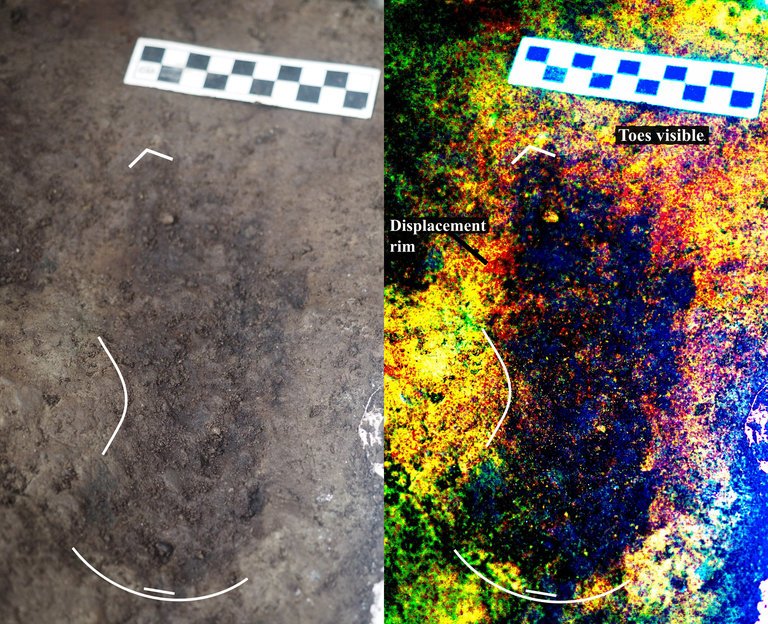
Big feet. Little feet. A heel here. A toe there. A digitally enhanced photo of a footprint found at Calvert Island, British Columbia that researchers dated to 13,000 years old. Credit Duncan McLaren Stamped across the shoreline of Calvert Island, British Columbia, are 13,000-year-old human footprints that archaeologists believe to be the earliest found so far in North America. The finding, which was published Wednesday in the journal PLOS One, adds support to the idea that some ancient humans from Asia ventured into North America by hugging the Pacific coastline, rather than by traveling through the interior. “This provides evidence that people were inhabiting the region at the end of the last ice age,” said Duncan McLaren, an anthropologist at the Hakai Institute and University of Victoria in British Columbia and lead author of the study. “It is possible that the coast was one of the means by which people entered the Americas at that time.” Dr. McLaren and his colleagues stumbled upon the footprints while digging for sediments beneath Calvert Island’s beach sands. Today, the area is covered with thick bogs and dense forests that the team, which included representatives from the Heiltsuk First Nation and Wuikinuxv First Nation, could only access by boat. At the close of the last ice age, from 11,000 to 14,000 years ago, the sea level was six to ten feet lower. The footprints were most likely left in an area that was just above the high tide line. “As this island would only have been accessible by watercraft 13,000 years ago,” Dr. McLaren said, “it implies that the people who left the footprints were seafarers who used boats to get around, gather and hunt for food and live and explore the islands.” They found their first footprint in 2014. While digging about two feet beneath the surface in a 20-square-inch hole, they saw an impression of something foot-shaped in the light brown clay. In 2015 and 2016, they returned and expanded the muddy pit. They discovered several more steps preserved in the sediment. The prints were of different sizes and pointed in different directions. Most were right feet. When the team was finished they had counted 29 in total, possibly belonging to two adults and a child. Each was barefoot. The researchers think that after the people left their footprints on the clay, their impressions were filled in by sand, thick gravel and then another layer of clay, which may have preserved them. Using radiocarbon dating on sediment from the base of some footprint impressions, as well as two pieces of preserved wood found in the first footprint, Dr. McLaren and his team found them to be 13,000 years old. That would make them the oldest preserved human footprints in North America. “It’s not only the footprints themselves that are spectacular and so rare in archaeological context, but also the age of the site,” said Michael Petraglia, an archaeologist from the Max Planck Institute for the Science of Human History in Germany who edited the paper for PLOS One but was not involved in the work. “It suggests an early entrance into the Americas.” Dr. Petraglia said the footprints also provided strong evidence for the coastal movement hypothesis and he added that they may have traveled the so-called “Kelp Highway,” a hypothesis that underwater kelp forests supported ecosystems down the North Pacific coast that helped ancient seafaring people hunt, develop and migrate. “The work is important because it shows the ‘real’ people, not just artifacts or skeletal remains,” said Steve Webb, a biological archaeologist at Bond University in Australia. “However, the footprints are limited in number and don’t shed light on activities or movement that tell us very much.” He added that future hunts for footprints should keep in mind that not everyone from this time period walked around barefoot. If anthropologists are too busy searching for soles, toes and arches, they might miss clues from those who wore animal skin shoes. Reprinted from New York Times – Earliest Known Human Footprints in North America Found on Canadian Island By NICHOLAS ST. FLEUR, March 28, 2018
ESA Maps a Lava Tube for Moon and Mars Expeditions
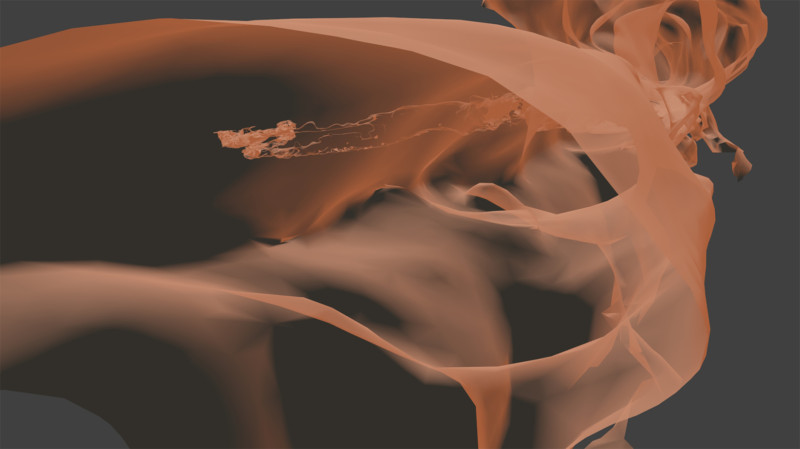
With all deference to the book and movie “The Martian”, wouldn’t you, as part of an interplanetary expedition, prefer to be protected from the radiation, micro-meteorites and extreme temperature fluctuations of the Moon or Martian surface? Though some of the hazards depicted in “The Martian” are way over-dramatized (the thin Martian atmosphere wouldn’t sustain the depicted raging storms), there are still hazards aplenty on the surface. So why not site your habitat in a cozy lava tube, protected from many of those surface nasties. At least that’s some of the reasoning behind a European Space Agency (ESA) effort to map a portion of Spanish lava tube in centimeter-scale detail as part of the ESA’s 2017 Pangaea-X campaign. Some chambers in the 8 km long La Cueva de los Verdes lava tube are large enough to hold residential streets and houses (or a prototype Martian research station/habitat). In less than 3 hours the cave research team mapped the lava tube using the smallest and lightest imaging scanner on the market and a wearable backpack mapper that collects geometric data without a satellite and synchronizes images collected by five cameras and two 3D imaging laser profilers. While the data is still being analyzed, ESA has released this ghostly fly-thru of a 1.3 km portion of the lava tube. Click the play button and prepare to take a pseudo-trip to Mars. So, the next time you visit a cave or lava tube, especially a large one, imagine yourself in a spacesuit on the Moon or Mars and realize that you’re actually an inner-space explorer. But don’t be too surprised at the creatures you may run into, they’re just other inner-space explorers too.
The Columbia River Gorge Eagle Creek Fire – Ruin or Renewal?
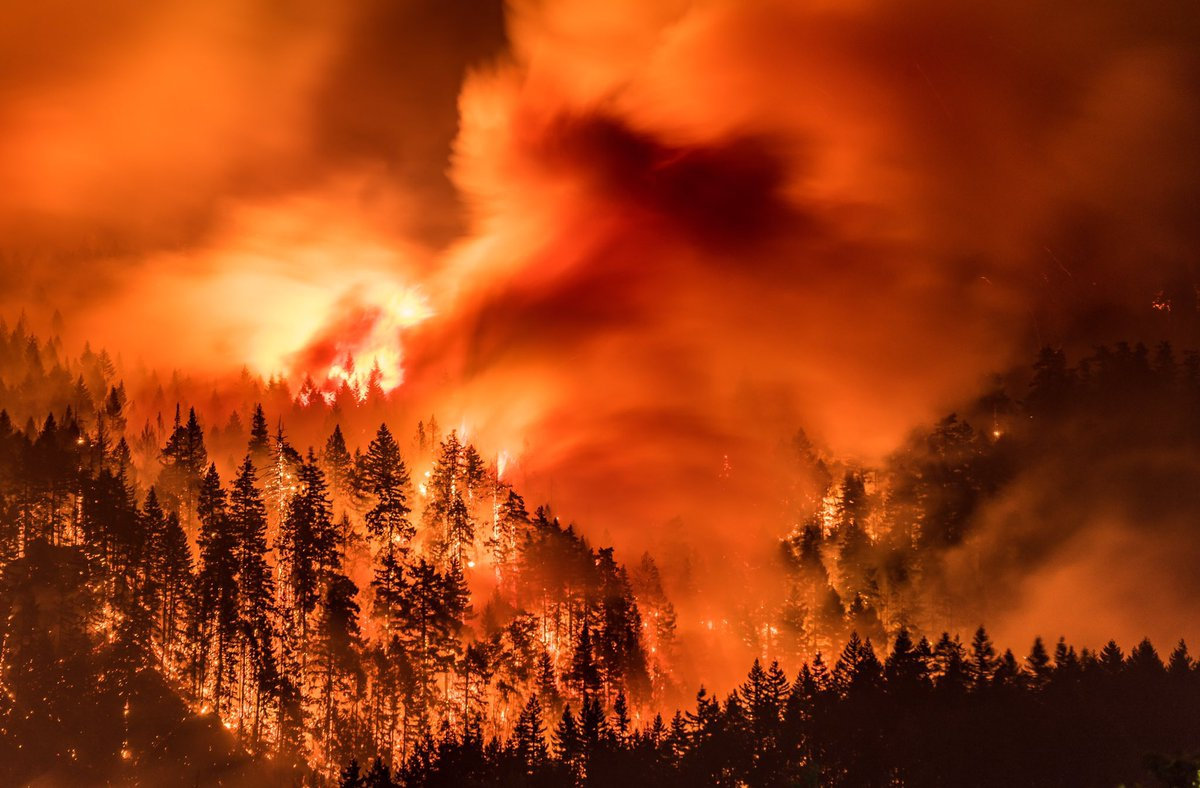
I’ve found there is huge public interest and concern about the catastrophic effects of the Eagle Creek Fire on the Columbia River Gorge. Pictures of ridgeline after ridgeline enveloped in bright orange fire, trees bursting into towering flames, and the choking smoke that filled valleys throughout the Pacific Northwest are truly a hellish image of Armageddon visited on the entire area. But, while the temporary loss of recreational trails and green forest aesthetics, and the increased potential for landslides and falling snags are inconvenient and even somewhat dangerous, the truth is that the recent fires have not ruined the natural areas of the West and the Gorge in particular, but instead have refreshed and renewed them. This past summer I’ve been interpreting geology for a new Columbia Gorge Master Naturalist Program, working beside forest ecology experts who are extremely optimistic regarding the effects of the Eagle Creek Fire. One of those experts, wildlife habitat expert Bill Weiler, writes, “Life will return to burned areas in short order. Fungi are already crawling around in the ashes of the fire, laying the foundation for soil that will support the plants that will constitute the early stage of the forest’s re-growth—a time when heat from the fire and sunlight newly reaching the ground in the absence of a canopy encourages a new crop of plants to firm up the soil structure that will allow gigantic trees to thrive. And ash is nature’s fertilizer. Plant blight, disease and insects are reduced or eliminated by burns. Mineral soil is the compost that Douglas fir seedling roots need to grow. “Dead trees” or snags are full of life.” In a typical forest fire a third of the trees will be scorched and dead, a third will be moderately to severely damaged, and a third will be essentially unscathed. Reports from the Eagle Creek Fire describe that fire as a discontinuous “mosaic burn” with much less devastation even than the typical forest fire burn. There is a broad consensus among scientists that we have considerably less fire of all intensities in our Western U.S. forests compared with natural, historical levels, when lightning-caused fires burned without humans trying to put them out. Early in the 20th century, before fire suppression became the norm, the average annual burn area in the western states was over 25 million acres, compared to a recent average of 4-6 million acres. According to Oregon State University Professor John Bailey, a century’s worth of suppressing wildfire in the United States has created conditions, especially in the West, that will ensure longer fire seasons because of longer, drier and hotter summers. Those conditions point to the need for “actively managed” forests which could include more deliberately set and managed prescribed fires. “Easily two-thirds or more of the Gorge fire is really good ecological fire,” Professor Bailey said, “the fire does some of the fuel management for us.” There is an equally strong consensus among scientists that fire is essential to maintain ecologically healthy forests and native biodiversity. This includes large fires and patches of intense fire, which create an abundance of biologically essential standing snags and naturally stimulate regeneration of vigorous new stands of forest. These areas of “snag forest habitat” are ecological treasures, not catastrophes, and many native wildlife species depend on this habitat to survive. More than 260 scientists wrote to Congress in 2015 noting that snag forests are “quite simply some of the best wildlife habitat in forests. ” Much of the Eagle Creek Fire burn area is closed to civilian activities due to the danger from flare-ups, rock slides and falling snags. The fire is less than 50% contained due to the ruggedness and inaccessibility of much of the area. Though it is still burning it is not expected to flare-up again until Winter rains and snow completely douse the embers.
Bretz and His Floods Story – National Geographic
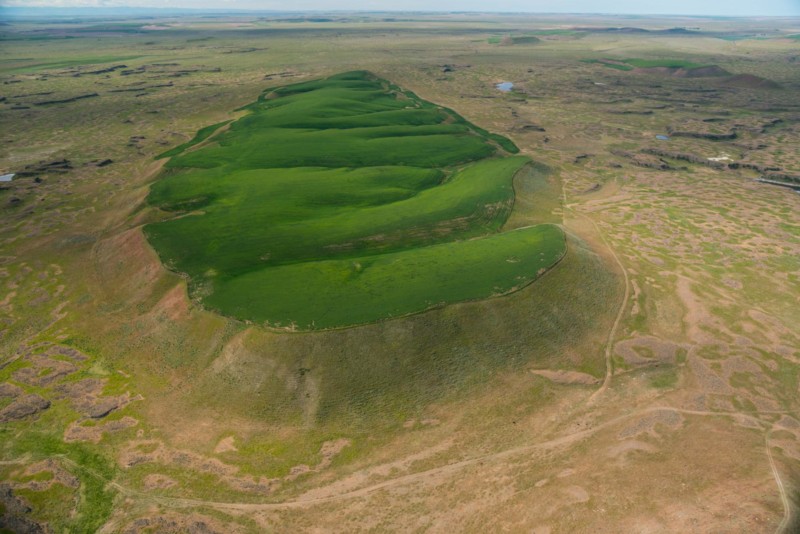
National Geographic has published an outstanding article, “Formed by Megafloods, This Place Fooled Scientists for Decades”, about J Harlan Bretz and his outrageous, fantastical theories of a landscape shaped by huge floods. Most Ice Age Floods aficionados are generally aware of the story, but this one is so detailed and well written it’s worth reading for the story-telling value alone. Please see: This National Geographic site:
German Marshall Fund Fellows Visit Gorge Floods
On May 6th a group of 6 German Marshall Fund (GMF) Fellows from Europe and Russia got a taste of the Ice Age Floods story as they toured the Gorge, shepherded by Krystyna Wolniakowski, the Executive Director of the Columbia River Gorge Commission and a past-fellow herself. This was their last day to do some sightseeing before heading home after three weeks of intensive presentations and meetings with experienced business and political leaders. After being wowed by the scenic beauty and amazing wines of the Gorge they came to Rowena Crest for a brief discussion about the Ice Age Floods at this incredible vantage point. IAFI Gorge Chapter leader, Lloyd DeKay, used maps and illustrations and pointed out several local Floods features to help tell our story of the 1000′ deep floods that roared across the landscape and through Rowena Gap, crashing against and over this promontory on their devastating path to the sea. These Fellows came away awed by the many wonders of the Gorge, and feeling like they had the crowning experience of all the GMF groups touring the States and Europe. The GMF-funded Fellowship Program is a leadership development program intended to help build networks and develop effective transatlantic relationships and engagement for future world leaders. Each year 70+ GMF Fellows are stringently chosen from hundreds of up-and-coming business and political leaders from both sides of the Atlantic. Each small “class” is supported for 6 months of focused distance learning and 24 days of first-hand travel and experiences as they meet and learn from high-level business and political leaders. It was humbling for us to have played a small part in contributing to the experiences of this dynamic group of future world leaders.
Washington’s Ice Age Floods – ESRI Story Map
The Washington Geological Survey (formerly the Division of Geology and Earth Resources) has just released an ESRI story map about the Ice Age Floods in Washington. The story map: “tells the story of cataclysmic outburst floods that shaped the landscape of the Pacific Northwest during the last ice age. With imagery, maps and video, this story map follows the devastating deluge of the Missoula floods as it tore across the landscape, from its origins in western Montana to its terminus at the Pacific Ocean. Sites along the Ice Age Floods National Geologic Trail are featured, with an emphasis on flood features in Washington State.” Entitled Washington’s Ice Age Floods, it is best viewed on a desktop or laptop computer. Mobile devices will not show all of the content. It is navigated by scrolling your mouse through the slides. There are a few animated sections that may take a second or two to load. [weaver_iframe src=’https://wadnr.maps.arcgis.com/apps/Cascade/index.html?appid=84ea4016ce124bd9a546c5cbc58f9e29′ height=600 percent=100]
Ice Age Floods Facebook Page
You may want to ‘Like‘ the Ice Age Floods Institute Facebook page to stay abreast of all the News and Shares coming out from the Institute. We’re sharing news and articles well beyond the Floods, including geology, natural history, general articles about the area, videoed talks, events, and any number of articles of general interest. Floods of water, floods of lava, rockin’ rocks, 2-Minute Geology, paleontology, and the mystical birth of the universe all get their 15+ seconds of fame. We’ll keep our eyes open to find and share items of interest to you, and of course you can share with us too.
Palagonite Maar Near Hood River
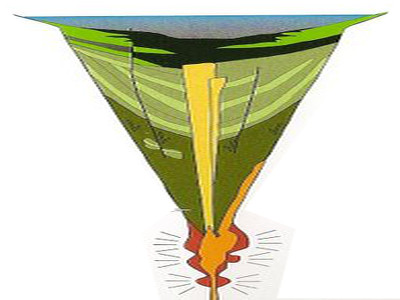
Palagonite Maar Just west of Hood River is a distinctive, short (<500 m) section of stratified orangeish oxidized volcanic tephra and highly fractured lava bombs. This mixture of oxidized volcanic particles ranging down to sub-micrometer sizes mixed with the larger lava bombs is a palagonite tuff. This deposit is the result of a “phreatic” eruption when lava erupted explosively from a volcanic vent through water, like a lake or groundwater. The rapid heating expansion of water to steam blew the rising lava out of the vent as tephra (volcanic rock fragments) ranging from ash-size to volcanic bombs (blobs of lava) up to several inches in diameter. Rapid oxidation of the water-quenched tephra turned the iron content to rust, producing the orangeish color of the tephra. The lava bombs were heavily fractured due to rapid cooling of the blob as it came in contact with the water and as it flew through the air. The tephra deposits dip inward on either side of a central gap toward the gap, with NE dips in the western section and NW dips in the eastern section, forming an inverted cone that converges downward toward the central gap. This feature is a “maar” deposit; an inverted cone of tephra and lava resulting from rapidly rising magma interacting with groundwater causing a steam-driven explosive eruption that builds the surrounding maar. The vent of this maar was in the area of the central gap.
IAFI at Gorge Tourism Studio
The Columbia River Gorge and Lower Columbia Chapters of the Ice Age Floods Institute recently participated in several Gorge Tourism Studio workshops and events intended to bring businesses, organizations, and individuals together to address Columbia River Gorge area tourism issues. The Columbia River Gorge is a unique tourism destination and scenic location. However, this destination is facing increasing challenges including congestion and overstressed infrastructure in many locations and extreme under-utilization and neglect in many others. Given the State and National significance of this destination, the Tourism Studio was designed to provide a unique opportunity for local stakeholders to develop creative solutions to the challenges facing this destination. The Studio was organized by Travel Oregon, and through a unique bi-state arrangement it included representatives from both sides of the Gorge. The Studio comprised 6 full-day workshops and 6 evening get-togethers addressing: Identifying major tourism issues and developing a vision for what Gorge tourism should look like Culinary & Agritourism – addressing farm-to-table issues of local farms, vineyards, orchards, and restaurants Cultural Heritage Tourism – addressing issues affecting the arts, culture, and heritage sectors Adventure Travel & Outdoor Recreation – addressing issues affecting the outdoor recreation and adventure sectors Tourism Marketing & Communications – learning how to create effective tourism marketing and communications Igniting Tourism Action Teams – developing Action Teams to push forward on solutions to the issues The ultimate intent is to establish a long-term sustainable balance in the utilization of the available resources and in the economic development of the area. There are likely to be many lessons and approaches developed out of these Action Teams that can have significance for addressing similar tourism issues throughout the widespread extent of the Ice Age Floods story. COLUMBIA RIVER GORGE What the Columbia River Gorge should look like in 15 Years – a Vision for Sustainable Tourism The Columbia River Gorge region including the nationally recognized Columbia River Gorge National Scenic Area and the majestic Cascades Range of Mt. Adams (12,281 ft.) and Mt. Hood (11,249 ft) within which it’s nestled, offers our target visitor a world-class adventure travel experience. While the mighty Columbia River is its defining feature, nationally designated Wild and Scenic Rivers are the life blood of the region. The Sandy and the Deschutes Rivers flank its east/west boundaries while the White Salmon, Klickitat and the Hood River carve pathways from the Cascades. Free flowing whitewater draws in the adventurous whitewater soul, skilled fishermen and most importantly, salmon. This transition zone from rainforest to desert creates nuclear winds making the Gorge one of the world’s most sought after destinations for windsurfing, kiteboarding and technical sailing. Access to snow sports abounds on the peaks including year-round skiing on the Palmer Glacier. The region’s paved, gravel, and single-track terrain provide bicyclists with a flight-like, captivating experience of the scenic landscape. Signature trails including Gorge Towns to Trails, the Historic Columbia River Highway State Trail and the Pacific Crest Trail are significant draws to the region. These trails that connect waterfalls, world-renowned wildflower meadows, basalt bluffs and the Gorge’s charming towns are frequented by hikers, cyclists and trail runners alike due to the world-class experience that they provide. [TRANSPORTATION] Our seamlessly integrated region-wide transportation system allows visitors to come, travel, explore and connect– all without needing a car. Public and private transit options combined with our bike routes and trail systems have created a multi-modal web knitting together our communities, attractions and outdoor recreation. The region is vibrant with visitation, and traffic congestion is a thing of the past. [CULINARY/AGRICULTRE] The Gorge with its concentration of locally-owned boutique vineyards and small farms boasts an abundant and rich local food scene. Locals and visitors alike can easily eat what’s grown and produced here and visitors are welcomed by growers to have meaningful, quality on-farm experiences. Restauranteurs are well-connected with local growers adding value to locally produced ingredients and offering memorable foodie experiences. The visitor industry has helped contribute to alleviating hunger in the region. [CULTURE] The ‘Gorge Experience’ is unparalleled due to its exposure to history and culture. Locals in the Gorge’s charming communities help travelers gain a deep understanding of peoples who have inhabited the Gorge in the past, of people who reside here now, and of the natural and human forces that have shaped and reshaped the landscape. Stories of this powerful place, both cultural and natural, are infused into every element of the traveler experience. Local guides help travelers personalize and deepen their own connection to the place and an unusual and rich array of classes and events to experience local culture exist. Trails of national historic significance including the Lewis & Clark National Historic Trail, the Ice Age Floods National Geologic Trail, Historic Columbia River Highway State Trail and the Oregon Trail also bring the region’s history to life. [SEASONALITY/CONGESTION] Our intuitive visitor information system has reduced congestion, and spread the benefits to all corners of our region. We have effectively targeted the high-value visitor who appreciates the outdoors and local culture, is sensitive to their surroundings and enjoys people-powered activities. Visitors are coming year-round and staying multiple days. [BALANCE] We have found balance and offer an unforgettable visitor experience while preserving our unique living ecosystem of people, culture and nature. Local residents live in a harmonious and symbiotic relationship with our environment and with the people who travel from around the world to experience a slice of life in the Gorge.