
The first people to arrive in the Western Hemisphere were Indigenous Americans, who were descended from an ancestral group of Ancient North Siberians and East Asians. They likely traveled along the Bering Land Bridge by land or sea.
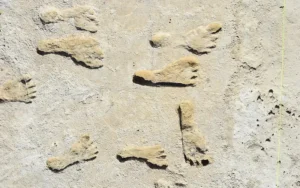 When the first Americans arrived is a source of ongoing debate. Several studies suggest that a series of fossilized human footprints found at White Sands National Park in New Mexico date to sometime between 21,000 and 23,000 years ago. That dates them to the coldest part of the last ice age, the last glacial maximum (which lasted from around 26,500 to 19,000 years ago), when the northern part of the continent was covered in glaciers and ice sheets.
Other controversial studies suggest even earlier dates. For example, dated stone artifacts in Chiquihuite Cave, in Mexico, to more than 30,000 years ago. However, it’s unclear if humans actually crafted these rocks or if they formed naturally that way, making the finding uncertain.
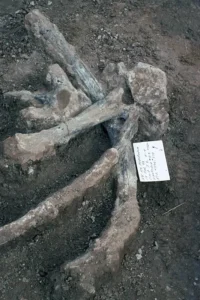
Other studies go back much further. In 2017, a controversial study in the journal Nature reported mastodon bones in California that may have been modified by humans around 130,000 years ago. However, other archaeologists have expressed concerns about the excavation of this finding and noted that other natural events or animals could have modified the bones. To put the 130,000-year-old date into context, the earliest evidence for Homo sapiens dates to around 300,000 years ago in Morocco, while the earliest evidence for a successful migration of humans into Asia was more than 100,000 years ago and the earliest evidence of successful human migration into Europe was around 55,000 years ago.
Excerpted from Who discovered America? By Owen Jarus in LiveScience