Skip to content

Sharing the Fascinating Ice Age Floods Story Since 1995

  • Explore!
    • Intro to the Ice Age Floods
    • Ice Age Floods National Geologic Trail
      • NPS Teacher’s Curriclum Guide
    • Places to Go! and Things to Do!
      • Montana
      • Idaho
      • Washington
      • Oregon
    • Ice Age Floods Interactive Map
    • Explore Ice Age Floods Videos
  • News & Events
    • IAFI News
    • IAFI Events
      • Activities
      • Presentations
      • Other Events
    • IAFI Archives
      • More News From Our Archives
  • Join/Renew/Donate
    • About IAFI
      • IAFI Board of Directors
    • Become a New/Renewing Member!
    • Donate to IAFI
  • IAFI Chapters
    • All Chapters Home Page
      • About IAFI
      • Explore the Ice Age Floods with IAFI Chapter Brochures
    • Cheney-Spokane
    • Coeur du Deluge
    • Columbia River Gorge
    • Ellensburg
    • Glacial Lake Missoula
    • Lake Lewis
    • Lower Columbia
    • Lower Grand Coulee
    • Palouse Falls
    • Puget Lobe
    • Wenatchee Valley Erratics
  • IAFI Store
    • IAFI Store Home Page
    • Books
    • Prints & Posters
    • Maps
    • Videos & DVDs
    • Apparel
    • General Merchandise
    • Cart
    • Checkout
  • Resources
    • Intro to the Ice Age Floods
    • Ice Age Floods Interactive Map
      • Explore Historical Field Research with Google Maps
    • IAFI Education Programs
      • IAFI Education Grant Programs
    • IAFI Pleistocene Post Newsletters
    • Field Trips & Field Guides
      • Field Guides Collection
      • WSU Field Trips Last – Reidel
    • Ice Age Floods Videos
    • Science Corner
      • Science Corner Page
      • Science Corner Articles
    • General Resources
      • Educator Resources
      • Online Resources & Maps
      • Technical Articles
      • Geology Terms
    • IAFI Documents
      • IAFI Chapter Brochures
      • IAFI Board Minutes
      • IAFI Legal Records
      • IAFI Website Articles
  • Contact Us
    • Contact IAFI
    • IAFI Board of Directors
  • Explore!
    • Intro to the Ice Age Floods
    • Ice Age Floods National Geologic Trail
      • NPS Teacher’s Curriclum Guide
    • Places to Go! and Things to Do!
      • Montana
      • Idaho
      • Washington
      • Oregon
    • Ice Age Floods Interactive Map
    • Explore Ice Age Floods Videos
  • News & Events
    • IAFI News
    • IAFI Events
      • Activities
      • Presentations
      • Other Events
    • IAFI Archives
      • More News From Our Archives
  • Join/Renew/Donate
    • About IAFI
      • IAFI Board of Directors
    • Become a New/Renewing Member!
    • Donate to IAFI
  • IAFI Chapters
    • All Chapters Home Page
      • About IAFI
      • Explore the Ice Age Floods with IAFI Chapter Brochures
    • Cheney-Spokane
    • Coeur du Deluge
    • Columbia River Gorge
    • Ellensburg
    • Glacial Lake Missoula
    • Lake Lewis
    • Lower Columbia
    • Lower Grand Coulee
    • Palouse Falls
    • Puget Lobe
    • Wenatchee Valley Erratics
  • IAFI Store
    • IAFI Store Home Page
    • Books
    • Prints & Posters
    • Maps
    • Videos & DVDs
    • Apparel
    • General Merchandise
    • Cart
    • Checkout
  • Resources
    • Intro to the Ice Age Floods
    • Ice Age Floods Interactive Map
      • Explore Historical Field Research with Google Maps
    • IAFI Education Programs
      • IAFI Education Grant Programs
    • IAFI Pleistocene Post Newsletters
    • Field Trips & Field Guides
      • Field Guides Collection
      • WSU Field Trips Last – Reidel
    • Ice Age Floods Videos
    • Science Corner
      • Science Corner Page
      • Science Corner Articles
    • General Resources
      • Educator Resources
      • Online Resources & Maps
      • Technical Articles
      • Geology Terms
    • IAFI Documents
      • IAFI Chapter Brochures
      • IAFI Board Minutes
      • IAFI Legal Records
      • IAFI Website Articles
  • Contact Us
    • Contact IAFI
    • IAFI Board of Directors
10 events found.

Events Search and Views Navigation

Event Views Navigation

  • List
  • Month
  • Day

Events

Today
  • February 2024

  • Wed 28

    Imagined History: Paddling Lake Missoula

    February 28, 2024 @ 6:00 pm - 7:30 pm PST
    North Spokane Library 44 E Hawthorne Rd, Spokane, WA

    Follow along on this imaginative look at the period when Lake Missoula was carving out our shrub-steppe scablands. Paul Lindholdt writes environmentally inflected nonfiction and journalism. His 10 books include In Earshot of Water, an ecological memoir that won the Washington State Book Award, The Spokane River, and Interrogating Travel.  Presented by Paul Lindholdt, of the Ice Age Floods Institute

  • March 2024

  • Sat 2

    HIKE: Sacajawea Gravel Bar

    March 2, 2024 @ 10:00 am - 3:00 pm PST
    Snake River Junction Trailhead

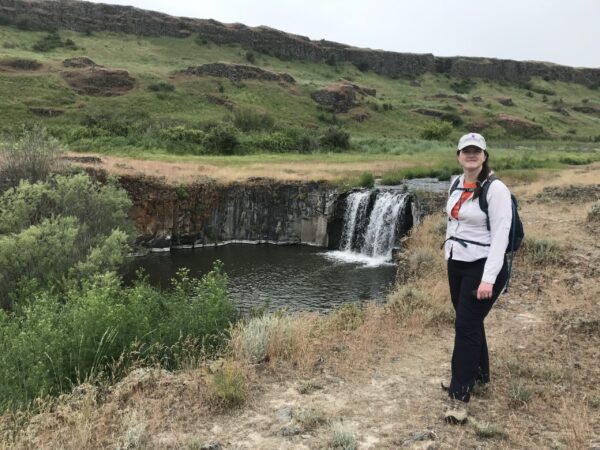
    Join the Palouse Falls Chapter for a leisurely, free 2-3 mile hike to visit Sacajawea Bar on the Snake River! Start time: 10:00a Meeting Place: Snake River Junction Trailhead (see Google Maps for further location information). Fees: This is a state park, so a Discovery Pass or a day pass is required for parking. What to bring: Lunch, drinks, snacks, appropriate clothing and footwear, camera, etc. Optional add-on: Juniper Dunes For those who want to carpool from Washtucna, meet at Java Bloom. We will leave at 9:00 am.

  • Sat 9

    Lower Grand Coulee Chapter Hike – Saturday 3/9 at 10AM – Columbia National Wildlife Refuge – Upper Goose Lake

    March 9, 2024 @ 10:00 am - 3:00 pm PST
    Upper Goose Lake, WA WA, United States

    Join Outing Coordinators Curt and Gene of the Lower Grand Coulee Chapter on March 9th for a leisurely, free 2-1/2-mile hike to visit Ice Age Floods Features in the Columbia National Wildlife Refuge at Upper Goose Lake! Date: Saturday March 9, 2024 Start time: 10:00 am Meeting Place: The GPS coordinates to the parking area at Upper Goose Lake are: 46.941040, -119.272415. DRIVING DIRECTIONS Traveling from the north, west or northwest, the entrance to the Columbia National Wildlife Refuge is off of Highway 262 East, at the far East end of the Potholes Reservoir Dam (GPS coordinates are: 46.981656, -119.254667). From the east or northeast, that same entrance to the wildlife refuge is also from Highway 262, but coming from the West on 262 W, which connects with Highway 17. From that entrance to the wildlife refuge, travel 2.1 miles to a fork in the road and keep right, from the fork travel another 0.7 miles to the turnoff to Upper Goose Lake Road. Turn right and then drive 0.9 miles to the parking area (GPS coordinates: 46.941040, -119.272415). Traveling from the South or southeast, go through Othello traveling north on N Broadway Ave. Go past all the potato processing plants and then turn left on McManamon Road. Drive 4.6 miles to turn off to Morgan Lake Road (GPS coordinates: 46.889449, -119.230164). Turn right onto Morgan Lake Road, and drive 4.5 miles to turn off for Upper Goose Lake Road. Turn left, and then drive 0.9 miles to the parking area (GPS coordinates: 46.941040, -119.272415). Fees: This Wildlife Refuge does not require a Pass or a day pass is required for parking. What to bring: Lunch, drinks, snacks, appropriate clothing and footwear, camera, etc.

  • Sat 9

    Palisades Park Hike led by Michael Hamilton

    March 9, 2024 @ 12:00 pm - 2:00 pm PST
    Palisades Park 2-198 S Rimrock Dr, Spokane, WA, United States

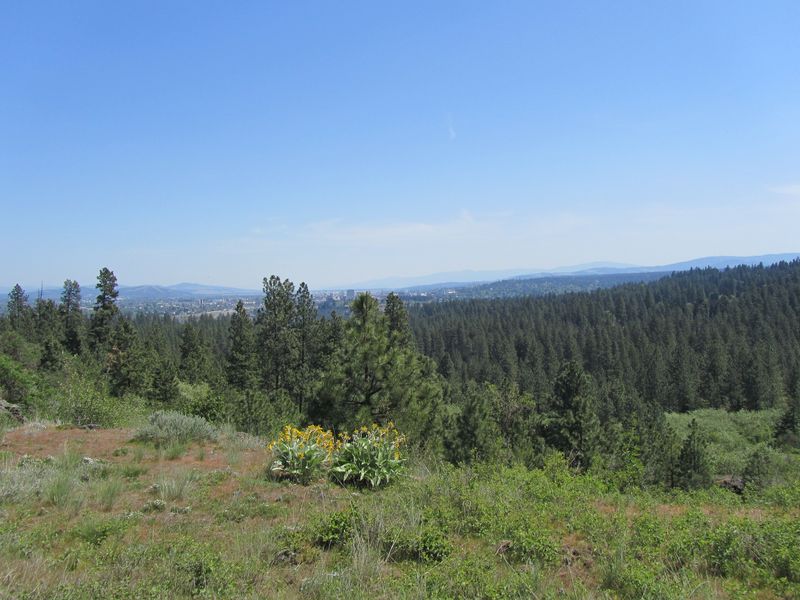
    The 3-mile hike will be led by IAFICS board member geologist Michael Hamilton. It will take place along Rimrock Drive, which has spectacular views of Spokane and the Spokane Valley. The Glacial Outburst Flood Story will include a lot of "arm-waving," pointing out flood features both along the trail and with views to the east. The geology discussion will include details of another kind of flood that hit the Spokane area 14 million years ago. The hike will then cut to the west along one of the park's trails to find mysterious Mima mounds, and then loop back to the parking area.  

  • Sat 16

    HIKE: Sacajawea Bar – SECOND CHANCE

    March 16, 2024 @ 10:00 am - 12:00 pm PDT
    Snake River Junction Trailhead

    Due to inclement weather and illnesses some missed out on the hike on the 2nd, so this is your second chance! Those who wish to carpool from northerly points can meet in the parking lot of Java Bloom for a 9AM departure time. Hike starts at the Snake River Junction Trailhead at 10AM. This is a state park, so a Discovery Pass is required (or you can pay for a day pass at the park site - $10 cash or check at their dropbox). Bring your own water, snacks, and lunch. Please have a waiver form filled out for each participant. If you have any questions or want to give Lloyd a heads up that you're coming, he can be reached at (509) 954-3927

  • Mon 18

    Wasting at the Southern Margins of the Cordilleran Ice Sheet

    March 18, 2024 @ 7:00 pm - 8:30 pm PDT

    (21Feb2024)  We have invited Ralph Haugerud, USGS to give a talk in "wasting of the Southern Margins of the Cordilleran Ice sheet" on March 18,2024.  Please note that this date has moved the Chapter Meeting to 18 March 2024.  Or the third week of March.  While we don't have the details yet, I bet it will be more than a review of the Mima Mounds.  Our new location is Bellevue College, Bldg R, Rm103, 3000 Landerholm Circle SE, Bellevue, WA 98007-6484.  See our website for directions/parking.  For this meeting only, there will be NO presentation by zoom, 

  • Sat 30

    Cheney-Spokane Chapter Hike – Saturday 3/30 at 10AM – Escure Ranch / Towell Falls

    March 30, 2024 @ 10:00 am - 2:00 pm PDT
    Escure Ranch Washington

    Come join us for a moderate 6-mile hike to explore the Ice Age floods features in the Escure Ranch area south of Sprague, WA. The round trip hike follows a gravel road along the Rock Creek drainage and climbs about 100 feet over a small divide and back down to Towell Falls. On the way there you will drive past sculpted Palouse 'islands' downstream of Rock Lake, and on the hike near Towell Falls is an Ice Age Floods gravel bar that has been incised by a stream to show its interior structure. The hike will be led by IAFICS board members, geologists Donald Chadbourne and Chris Sheeran. After confirming your registration we will send you the hike details and keep you up-to-date on any changes that happen before the hike.

  • April 2024

  • Thu 4

    3 New Nick Zentner “Downtown Lectures”

    April 4, 2024 @ 7:00 pm - April 6, 2024 @ 7:00 pm PDT
    Morgan Auditorium 400 E 1st Ave.  , Ellensburg, WA, United States

    Thursday, April 4, 2024.  7:00 pm. What Happened to the Spokane Ice Sheet?   Friday, April 5, 2024.  7:00 pm. The Missoula Floods versus Bretz's Spokane Flood   Saturday, April 6, 2024.  7:00 pm. Was Moses Coulee Carved by Subglacial Floods?   Doors open at 6:30 pm each night.  700 seats.  Open seating.  Free.  Will be filmed for YouTube. Morgan Auditorium.  400 E 1st Ave.  Ellensburg, Washington, USA.

  • Fri 5

    Special Meeting of the IAFI Ellensburg Chapter

    April 5, 2024 @ 4:30 pm - 6:00 pm PDT
    Central Washington University 400 E University Way, Ellensburg, WA, United States

    Dear Members, Former Members, and Friends, I trust this message finds you in good health and spirits. I'm Mike Doran, a fellow member of the Ellensburg Chapter of the Ice Age Floods Institute, and I'm reaching out to you with an important invitation. Our chapter has a storied past filled with enriching field trips, captivating lectures, and engaging speakers. However, it's time for us to refocus our efforts and ensure that we're set for continued growth and success in the future. To achieve this, a dedicated group of us has been actively discussing strategies and ideas. Now, we're eager to invite you to join us for a special meeting where we can gather your invaluable input, ideas, and concerns. Your participation, in any capacity you choose, is vital as we navigate our path forward. We're fortunate that Karl Lillquist has arranged for us to convene on Friday, April 5th, at 4:30 PM in a meeting room at Dean Hall on the Central campus. (Please note that parking restrictions on campus ease after 4:30 PM as there is no cost then. Use parking lot O-5. Just be sure to park in General Parking slots and not Staff slots. ) The meeting time aligns perfectly with Nick's Bretz lectures, providing an ideal opportunity for us to meet before attending his 7:00 PM talk. During our gathering, we'll create an open forum for discussion and have light refreshments available. Additionally, we will be conducting elections for the following officer positions: Secretary, Vice-President, and President. This is an excellent opportunity for members to get involved and help shape the future direction of our organization. Whether you're interested in taking an active role in the organization, standing for election, or simply wish to share your thoughts, your presence will be immensely valued. Together, we aim to bolster Karl and Nick's efforts and ensure the sustained success of our chapter. We're genuinely excited about the possibilities that lie ahead and eagerly anticipate seeing you there. Should you have any questions or concerns beforehand, please feel free to reach out to me at 253-278-3470. Warm regards, Mike Doran

  • Sun 7

    Geologist’s Day – 1st Sunday in April

    April 7, 2024

    Geologists Day, a day dedicated to an underappreciated science, takes place on the first Sunday in April every year. Without geologists, we would know nothing about the over 4.5 billion year history of the earth. Geology is a science that studies the materials, natural features, and processes found on earth, as well as the history of all life that’s ever lived. Geologists around the world have made an enormous contribution to our way of life by discovering and developing our natural resources of minerals, hydrocarbons and water, by understanding the evolution of our planet and our solar system, by defining the evolution of life on Earth, by identifying the risks associated with natural hazards such as earthquakes, tsunamis and volcanic eruptions, and by the technological and innovation spin-offs derived from many branches of geoscience such as geophysics and geochemistry. History of Geologists’ Day Geology, or the study of the composition of rocks, soil and other materials, has been around since the times of Ancient Greece. In their pursuit of understanding the world around them, Greek scientists, who wondered how the rocks were formed, began studying fossils and generating theories to go along with their ideas and research. Later, during the Middle Ages, when science was thought to have challenged the Catholic Church, more advances came (albeit sometimes subversively) in the field of geology. During this time, Leonardo da Vinci explored the functions of the human body but also, one of his lesser-known pursuits, is that he became a pioneer in geology. One of da Vinci’s interesting lines of research was related to fossils. He concluded that the fossils he and others had found embedded on mountain tops must have been from animals that swam on an ancient sea bed, though none of them were exactly sure how they could have gotten there. During the 17th-century, scientists began to make important links between certain sedimentary deposits in the oceans and the strata observable in rock formations. Much of the explanation as to how that happened, however, continued to remain a mystery until James Hutton and William ‘Strata’ Smith came along. These two well-known geologists helped find the explanation of the earth’s long and slow development over the course of thousands of years. Smith was also credited as the creator of the first, geologically detailed, national map of any country in the world. In this case, the country was England and he has since become known as the ‘Father of English Geology’. Geologists’ Day, itself, was actually the idea of a group of well-known Soviet geologists who established it in April, 1966. The day was chosen in the spring because it notes the end of winter and is a time that ramps up to the summer season field work when geologists are so active. While it continues to be a favorite day of the Russian Mineralogical Society, the day eventually made its way beyond the former Soviet Union and began to be celebrated by geologists, geophysicists and geochemists in various places in Europe, the United States and other countries around the world. How to Celebrate Geologists’ Day Held on the first Sunday in April, the celebration of Geologists’ Day can be fun for professional rock lovers and hobbyists alike! This day strives to help further the study of how the earth came to be. Geologists’ Day is all about learning the history of the earth, the geologists who studied the earth, and helping to inspire people out there to study geology. Learn More About Geology Give a nod to Geologists’ Day by learning a bit about what the discipline of geology is and how it works. Digging in rocks, observing maps, and studying how they all came to be is what a geologist’s job is all about. Make use of these online resources to learn more about geology: Ice Age Floods Institute website The Geological Society of America Society of Economic Geologists International Association for Promoting Geoethics Those who are even more interested might take the time to join a few online classes to further their studies. Take a look into the history of geologists, what they believed about the earth at the time they lived. If it turns out there’s an inner rock-lover in there, just waiting to get out, why not go for a degree while you’re at it?! Show Appreciation to a Geologist Geologists’ Day aims to show appreciation for the geologists that continue to study rocks and all their formations. In fact, this is the perfect day to gather with some friends or family to thank some of those favorite geologists, or even just a science teacher, who may have made a difference in the understanding of the world we live in. Listen to a Geology Themed Playlist Hop onto Spotify or another favorite music hosting site and enjoy these songs that are reminiscent of the study of the earth, rocks, landslides and all the beautiful things that go along with geology: We Will Rock You (1977) Queen The Geologists are Coming! (2017) The Amoeba People Landslide (1975) Fleetwood Mac The Petroleum Age (2011) Philip Gibbs Geology Rocks (2017) Los Beekeepers Uranium Rock (1973) Warren Smith Sweet Geology (aka The Mineral Song) (2007) The Akkademiks Share Geology Day with Friends Show appreciation for the studies of geologists by sharing this holiday with friends and family. Go big by throwing a geology party, or keep it small by simply gifting friends or coworkers with a small stone or rock as a token of the day. Whatever method is chosen, just the acknowledgment of this day is a step in the right direction toward appreciating the earth and its scientists! (credit https://www.daysoftheyear.com/days/geologists-day/)

  • Previous Events
  • Today
  • Next Events
  • Google Calendar
  • iCalendar
  • Outlook 365
  • Outlook Live
  • Export .ics file
  • Export Outlook .ics file

Ice Age Floods Institute is a registered non-profit educational organization devoted to publicly sharing the ice age floods story. 
All article images on this website are used under Creative Commons license for educational purposes only and no profit is derived.

Members

  • Home
  • Store
  • Chapters
  • Join - Renew
  • Admin Log-In

Happenings

  • Events
  • Field Trips
  • Presentations
  • ~Places To Go~
  • ~Things To Do~
Facebook-f Mastodon Youtube Envelope

Visit us at Facebook, Mastodon and our YouTube Channel.

IAFI Copyright © 2002-2026 – All rights Reserved

Ice Age Floods Institute is a 501(c)(3) tax-exempt non-profit EIN 91-1658221
Donations and member fees may be tax deductible

Refund and Returns Policy     Privacy Policy     Terms and Conditions

About

  • Ice Age Floods Intro
  • IAFI News
  • About Us
  • Contact IAFI
  • Board Of Directors

Resources

  • ~National Geologic Trail~
  • Field Guides
  • Geology Corner
  • YouTube Video Playlists
  • Geology Terminology