
June Jamboree in Spokane, WA
Save the date for a June Jamboree and membership meeting in Spokane! We will have a member appreciation barbecue and a variety of local hikes guided by geologists to view many Ice Age Floods related features in the area.
Save the date for a June Jamboree and membership meeting in Spokane! We will have a member appreciation barbecue and a variety of local hikes guided by geologists to view many Ice Age Floods related features in the area.

The Wenatchee Valley Erratics Chapter of the Ice Age Floods Institute will meet Tuesday, June 11 at 7:00 PM, at the Wenatchee Valley Museum and Cultural Center, 127 S. Mission, Wenatchee. Or via Zoom link https://us02web.zoom.us/j/84520197937 Our speaker will be Philip Long of the Lake Chelan Research Institute (LCRI). Phil will talk about “Exploration of Geomorphic Features in Lake Chelan with an Underwater Remotely Operated Vehicle (ROV)” Swath bathymetry, chirp sub-bottom reflection profiles, and sediment cores…. These were techniques recently used by the U.S. Geological Survey (June 2023) to collect data from Lake Chelan, WA, The resulting information has provided insights into late- and post-glacial history of Lake Chelan. In addition, LCRI’s ROV dives have distinguished bedrock from till on lake bottom sediment profiles, and have directly observed landslide scarps, debris aprons, and other geomorphic features of interest to many of us here. Some of the features on the bottom of Lake Chelan resemble surface glacial features we are familiar with on the Waterville Plateau! Moraines, kames, drumlins, kettles, underwater landslides…. Find out what’s going on at the bottom Lake Chelan! The program is free and open to the public. Contact information: Ken Lacy 1geospiracle2@gmail.com (509) 787-9755 Susan Freiberg Wenatchee Valley Erratics Publicity wenvalerratics@yahoo.com
Dust in the Cockpit: Volcanic Ash Aviation Hazards - The 50-Year Effort to Mitigate Them
The 1980 Mount St. Helens eruption was a watershed moment in our understanding of volcanic eruptions and their hazards. Among the lesser-known events during that summer was the first documented case of in-flight engine damage from volcanic ash on May 25,1980. Two years later, a 747 nearly crashed in Indonesia when it flew into an ash cloud from Galunggung Volcano and lost power to all four engines. A similar event in December, 1989 at Redoubt Volcano, Alaska finally convinced meteorologists, air traffic regulators, and volcanologists that we need a global infrastructure to detect volcanic ash clouds and communicate their trajectory to aviators.
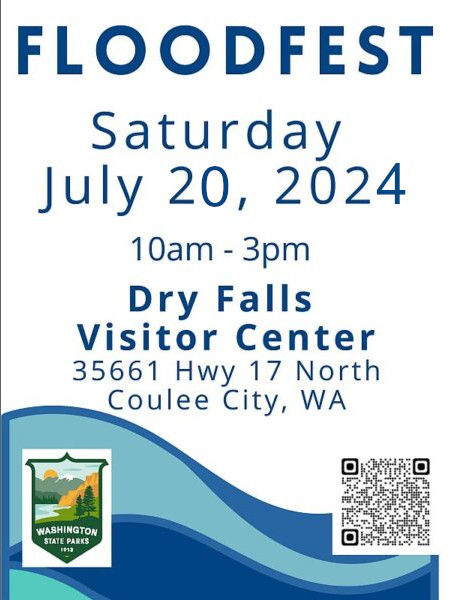
Presenters and Booths will share their knowledge and their appreciation of Ice Age Floods Geology, the Channeled Scablands, Shrub Steppe Ecosystems, Wildlife, Anthropology, Archeology, History, and Photography.
Where: Dry Falls Visitor Center – Sun Lakes Dry Falls State Park, 35661 HWY 17 North, Coulee City, WA
When: Saturday July 20th 10 AM – 3 PM on the campus of Dry Falls Visitor Center.
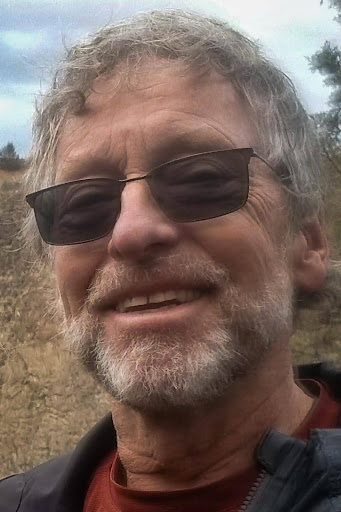
Bill Burgel, retired railroad geologist, will present a talk on "When Yellowstone was in Oregon", on Tuesday evening, July 30, beginning at 5:30 at the White Salmon Valley Community Library. Approximately 50 million years ago, an island the size of Iceland docked onto the west coast of North American. That island was formed similar to the formation of modern-day Iceland, which is being created by a relatively rare combination of mid-ocean ridge volcanism coinciding with a mantle plume. After colliding with the continent in the area of present-day Oregon, this Iceland-like land mass, now known as Siletzia (southern half) and Yakutat (northern half now in Alaska), was scraped off the subducting oceanic crust and imbedded on the west coast of the continent. As the North American continent continued moving westward the motion of now-attached Siletzia was reversed. But the motion of the mantle plume continued its relative motion in the eastward direction, creating volcanoes and calderas on the as the North American plate moved west over it. Bill will explain the circuitous path the plume took through Oregon, creating the Crooked River Caldera (including Smith Rock State Park), then into SE Oregon creating the voluminous Columbia River Flood Basalts before exiting Oregon around 16-million-years ago to form the McDermitt Volcanic area in Nevada, the home of one of the world’s largest lithium deposits. Afterward, the plume's relative path motion was directly through Idaho, forming the Snake River Plain, arriving at its current temporary location in Yellowstone. This saga, though geologically complex, is a fascinating one that will help you make sense of the new research into the 50 million year-long journey of the Yellowstone Hot Spot! Bill Burgel About Bill Burgel - Bill retired in 2010 after a successful 40-year career working for several railroads in both the engineering and operating departments. His work for Union Pacific encompassed the design of the first computer-aided dispatching office in the nation. This office was located in Portland and Bill was the Regional Chief Dispatcher for several years before the office was moved to Omaha. While working for the railroad, his interest and training in geology was often called upon to resolve landslide issues and rerouting studies, implement early earthquake warning strategies, and conduct numerous long railroad tunnel analyses. Bill has given numerous presentations on rail issues as well as earthquake preparedness and topics pertaining to regional geology to local audiences throughout the Pacific Northwest. After retiring from the railroad in 1989, he assisted the Surface Transportation Board as their rail operations manager for two major mergers, once in Washington DC and the second time in Chicago. Bill has managed many rail studies for both Oregon and Washington DOTs as well as for TriMet and Sound Transit in Seattle.
Cascades24 is a National Science Foundation sponsored meeting focused on magmatic, volcanic, and tectonic processes in the Cascades. It will be a small meeting environment, Monday August 5th through Friday August 9th at Oregon State University Cascades Campus in Bend. There are limited spots available, so you must register to attend.
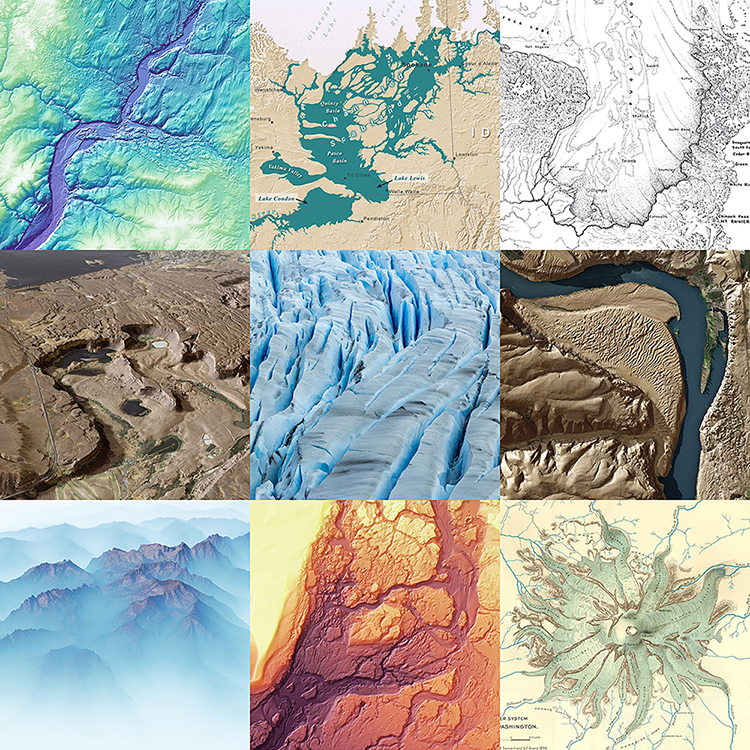
Glaciers have shaped much of the Pacific Northwest’s landscape over the past 15,000 years. Geologists and cartographers have been mapping and interpreting glacial landforms since the late 19th century. And now LIDAR helps create incredibly accurate, detailed, and stunning maps.
Thes relatively recent understanding of Ancient Mars was partly achieved because of geological studies of the ice age floods that created the Channeled Scablands landscape of eastern Washington. This talk will focus on some of Dr. Baker's personal experiences with the relevant geological investigations and discoveries of the past 55 years.
Lloyd Stoess will present a free lecture with information showing how the Columbia, Palouse, and Yakima Rivers all had course changes during the last glacial period of the Ice Age. All three were changed by different forces. One was temporary and the other two were permanent. This lecture is in partnership with the Mid-Columbia Libraries Connell branch.
The Ellensburg Chapter of the Ice Age Floods Institute (IAFI) will host a field trip that covers the western portion of the Swauk Watershed including Teanaway Ridge north of Ellensburg in the Wenatchee Range on Saturday 21 September. We will meet near the cabin on USFS road 9738 just off US 97 at 11:00am on the 21st. The trip will include stops at: along Blue Creek to examine Teanaway Formation dikes; the east side of Teanaway Ridge to explore recent landslides; Red Top Mountain atop Teanaway Ridge to examine Teanaway Formation flows, forests, fire, landscape change, and the Red Top fire lookout. The trip should conclude at about 4pm. Ellensburg IAFI field trips are free and open to the public. There’s no need to pre-register—just show up! We typically car pool on these trips. We will drive USFS roads 9738 and 9702 from US 97. USFS road 9702 is potholed and rough in places but very passable for passenger cars (as of July 2024). Several of the stops will include short (<0.5 mile hikes) over sometimes steep and uneven terrain. Pets are OK if leashed and well-behaved. If you have questions, feel free to contact Karl Lillquist at lillquis@cwu.edu. Click here for a pdf of the field trip guide. I will also provide a limited number of hard copies of the field guide at Stop 1. Lets hope for good weather and smoke-free skies for the trip! Hope you can join us!