
Skip to content

Sharing the Fascinating Ice Age Floods Story Since 1995

  • Explore!
    • Intro to the Ice Age Floods
    • Ice Age Floods National Geologic Trail
      • NPS Teacher’s Curriclum Guide
    • Places to Go! and Things to Do!
      • Montana
      • Idaho
      • Washington
      • Oregon
    • Ice Age Floods Interactive Map
    • Explore Ice Age Floods Videos
  • News & Events
    • IAFI News
    • IAFI Events
      • Activities
      • Presentations
      • Other Events
    • IAFI Archives
      • More News From Our Archives
  • Join/Renew/Donate
    • About IAFI
      • IAFI Board of Directors
    • Become a New/Renewing Member!
    • Donate to IAFI
  • IAFI Chapters
    • All Chapters Home Page
      • About IAFI
      • Explore the Ice Age Floods with IAFI Chapter Brochures
    • Cheney-Spokane
    • Coeur du Deluge
    • Columbia River Gorge
    • Ellensburg
    • Glacial Lake Missoula
    • Lake Lewis
    • Lower Columbia
    • Lower Grand Coulee
    • Palouse Falls
    • Puget Lobe
    • Wenatchee Valley Erratics
  • IAFI Store
    • IAFI Store Home Page
    • Books
    • Prints & Posters
    • Maps
    • Videos & DVDs
    • Apparel
    • General Merchandise
    • Cart
    • Checkout
  • Resources
    • Intro to the Ice Age Floods
    • Ice Age Floods Interactive Map
      • Explore Historical Field Research with Google Maps
    • IAFI Grant Programs
    • IAFI Pleistocene Post Newsletters
    • Field Trips & Field Guides
      • Field Guides Collection
      • WSU Field Trips Last – Reidel
    • Ice Age Floods Videos
    • Science Corner
      • Science Corner Page
      • Science Corner Articles
    • General Resources
      • Educator Resources
      • Online Resources & Maps
      • Technical Articles
      • Geology Terms
    • IAFI Documents
      • IAFI Chapter Brochures
      • IAFI Board Minutes
      • IAFI Legal Records
      • IAFI Website Articles
  • Contact Us
    • Contact IAFI
    • IAFI Board of Directors
  • Explore!
    • Intro to the Ice Age Floods
    • Ice Age Floods National Geologic Trail
      • NPS Teacher’s Curriclum Guide
    • Places to Go! and Things to Do!
      • Montana
      • Idaho
      • Washington
      • Oregon
    • Ice Age Floods Interactive Map
    • Explore Ice Age Floods Videos
  • News & Events
    • IAFI News
    • IAFI Events
      • Activities
      • Presentations
      • Other Events
    • IAFI Archives
      • More News From Our Archives
  • Join/Renew/Donate
    • About IAFI
      • IAFI Board of Directors
    • Become a New/Renewing Member!
    • Donate to IAFI
  • IAFI Chapters
    • All Chapters Home Page
      • About IAFI
      • Explore the Ice Age Floods with IAFI Chapter Brochures
    • Cheney-Spokane
    • Coeur du Deluge
    • Columbia River Gorge
    • Ellensburg
    • Glacial Lake Missoula
    • Lake Lewis
    • Lower Columbia
    • Lower Grand Coulee
    • Palouse Falls
    • Puget Lobe
    • Wenatchee Valley Erratics
  • IAFI Store
    • IAFI Store Home Page
    • Books
    • Prints & Posters
    • Maps
    • Videos & DVDs
    • Apparel
    • General Merchandise
    • Cart
    • Checkout
  • Resources
    • Intro to the Ice Age Floods
    • Ice Age Floods Interactive Map
      • Explore Historical Field Research with Google Maps
    • IAFI Grant Programs
    • IAFI Pleistocene Post Newsletters
    • Field Trips & Field Guides
      • Field Guides Collection
      • WSU Field Trips Last – Reidel
    • Ice Age Floods Videos
    • Science Corner
      • Science Corner Page
      • Science Corner Articles
    • General Resources
      • Educator Resources
      • Online Resources & Maps
      • Technical Articles
      • Geology Terms
    • IAFI Documents
      • IAFI Chapter Brochures
      • IAFI Board Minutes
      • IAFI Legal Records
      • IAFI Website Articles
  • Contact Us
    • Contact IAFI
    • IAFI Board of Directors
4 events found.

Other

  1. Events
  2. Other

Events Search and Views Navigation

Event Views Navigation

  • List
  • Month
  • Day
Today
  • April 2024

  • Sun 7
    April 7, 2024

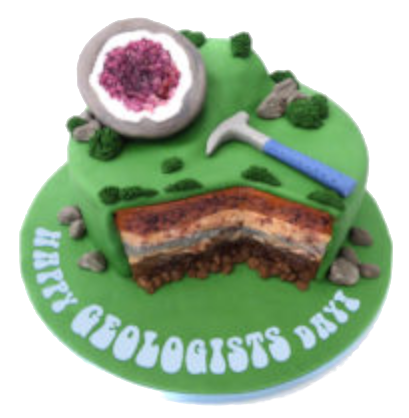
    Geologist’s Day – 1st Sunday in April

    Geologists Day, a day dedicated to an underappreciated science, takes place on the first Sunday in April every year. Without geologists, we would know nothing about the over 4.5 billion year history of the earth. Geology is a science that studies the materials, natural features, and processes found on earth, as well as the history of all life that’s ever lived. Geologists around the world have made an enormous contribution to our way of life by discovering and developing our natural resources of minerals, hydrocarbons and water, by understanding the evolution of our planet and our solar system, by defining the evolution of life on Earth, by identifying the risks associated with natural hazards such as earthquakes, tsunamis and volcanic eruptions, and by the technological and innovation spin-offs derived from many branches of geoscience such as geophysics and geochemistry. History of Geologists’ Day Geology, or the study of the composition of rocks, soil and other materials, has been around since the times of Ancient Greece. In their pursuit of understanding the world around them, Greek scientists, who wondered how the rocks were formed, began studying fossils and generating theories to go along with their ideas and research. Later, during the Middle Ages, when science was thought to have challenged the Catholic Church, more advances came (albeit sometimes subversively) in the field of geology. During this time, Leonardo da Vinci explored the functions of the human body but also, one of his lesser-known pursuits, is that he became a pioneer in geology. One of da Vinci’s interesting lines of research was related to fossils. He concluded that the fossils he and others had found embedded on mountain tops must have been from animals that swam on an ancient sea bed, though none of them were exactly sure how they could have gotten there. During the 17th-century, scientists began to make important links between certain sedimentary deposits in the oceans and the strata observable in rock formations. Much of the explanation as to how that happened, however, continued to remain a mystery until James Hutton and William ‘Strata’ Smith came along. These two well-known geologists helped find the explanation of the earth’s long and slow development over the course of thousands of years. Smith was also credited as the creator of the first, geologically detailed, national map of any country in the world. In this case, the country was England and he has since become known as the ‘Father of English Geology’. Geologists’ Day, itself, was actually the idea of a group of well-known Soviet geologists who established it in April, 1966. The day was chosen in the spring because it notes the end of winter and is a time that ramps up to the summer season field work when geologists are so active. While it continues to be a favorite day of the Russian Mineralogical Society, the day eventually made its way beyond the former Soviet Union and began to be celebrated by geologists, geophysicists and geochemists in various places in Europe, the United States and other countries around the world. How to Celebrate Geologists’ Day Held on the first Sunday in April, the celebration of Geologists’ Day can be fun for professional rock lovers and hobbyists alike! This day strives to help further the study of how the earth came to be. Geologists’ Day is all about learning the history of the earth, the geologists who studied the earth, and helping to inspire people out there to study geology. Learn More About Geology Give a nod to Geologists’ Day by learning a bit about what the discipline of geology is and how it works. Digging in rocks, observing maps, and studying how they all came to be is what a geologist’s job is all about. Make use of these online resources to learn more about geology: Ice Age Floods Institute website The Geological Society of America Society of Economic Geologists International Association for Promoting Geoethics Those who are even more interested might take the time to join a few online classes to further their studies. Take a look into the history of geologists, what they believed about the earth at the time they lived. If it turns out there’s an inner rock-lover in there, just waiting to get out, why not go for a degree while you’re at it?! Show Appreciation to a Geologist Geologists’ Day aims to show appreciation for the geologists that continue to study rocks and all their formations. In fact, this is the perfect day to gather with some friends or family to thank some of those favorite geologists, or even just a science teacher, who may have made a difference in the understanding of the world we live in. Listen to a Geology Themed Playlist Hop onto Spotify or another favorite music hosting site and enjoy these songs that are reminiscent of the study of the earth, rocks, landslides and all the beautiful things that go along with geology: We Will Rock You (1977) Queen The Geologists are Coming! (2017) The Amoeba People Landslide (1975) Fleetwood Mac The Petroleum Age (2011) Philip Gibbs Geology Rocks (2017) Los Beekeepers Uranium Rock (1973) Warren Smith Sweet Geology (aka The Mineral Song) (2007) The Akkademiks Share Geology Day with Friends Show appreciation for the studies of geologists by sharing this holiday with friends and family. Go big by throwing a geology party, or keep it small by simply gifting friends or coworkers with a small stone or rock as a token of the day. Whatever method is chosen, just the acknowledgment of this day is a step in the right direction toward appreciating the earth and its scientists! (credit https://www.daysoftheyear.com/days/geologists-day/)
  • July 2024

  • Sat 20
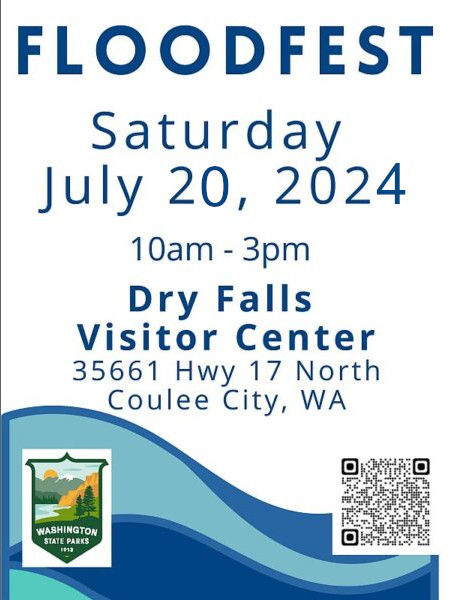
    July 20, 2024 @ 10:00 am - 3:00 pm PDT

    2024 Dry Falls Flood Fest

    Dry Falls Visitor Center 35661 HWY 17 North, Coulee City, WA, United States

    Presenters and Booths will share their knowledge and their appreciation of Ice Age Floods Geology, the Channeled Scablands, Shrub Steppe Ecosystems, Wildlife, Anthropology, Archeology, History, and Photography.  
    Where: Dry Falls Visitor Center – Sun Lakes Dry Falls State Park, 35661 HWY 17 North, Coulee City, WA
    When: Saturday July 20th 10 AM – 3 PM on the campus of Dry Falls Visitor Center.

  • October 2024

  • Sun 6
    October 6, 2024

    UNESCO International Geodiversity Day – Oct. 6th

    The International Geodiversity Day was established today by the 41st session of the UNESCO General Conference!! From now on, the 6th of October will be an annual worldwide celebration, raising awareness across society about the importance of non-living nature for the well-being and prosperity of all living beings on the planet! The winner of the competition for the International Geodiversity Day logo, Silas Samuel dos Santos Costa, is a student at Universidade Federal do Rio Grande do Norte (Natal, Brazil) and produced the attached logo that can be freely used in all initiatives related with the International Geodiversity Day. Congratulations Silas! The success of this initiative was in no small part due to the breadth of international and national organizations that endorsed the proposal. In particular the support of both IUGS and the Permanent Delegation to UNESCO from Portugal played an essential role in submitted the proposal. The website geodiversityday.org is the virtual focal point for all information regarding this International Day. New social media feeds were launched that you can use to stay updated with plans for International Geodiversity Day: facebook.com/GeodiversityDay twitter.com/GeodiversityDay

  • January 2025

  • Tue 7
    January 7

    International Old Rock Day – January 7

    International Old Rock Day - January 7 Celebrate Old Rock Day on January 7 every year. It's a day to remember the Earth’s incredible history and to pay tribute to the amazing geologists who help us understand it. We’ve been dependent on rocks since we first walked the Earth, and today it’s no different, with rocks forming the foundation of our daily lives. History of "Old Rock Day"The study of rocks was first introduced by the Ancient Greek Theophrastus in his work, “Peri Lithon” (“On Stones”), and became the cornerstone of geology for other interested scientists. The study was advanced by Pliny the Elder, who recorded numerous minerals and metals in great detail, with a particular focus on their practical use. Although working without the tools we use today, Pliny was able to correctly identify the origin of amber as fossilized tree resin.It wasn’t until 1603 when the word ‘geology’ was used for the first time by Italian naturalist Ulisse Aldrovandi. It took a further 150 years for the first geological maps to be drawn by British geologist William Smith, whose work began the process of ordering rock layers by examining the fossils contained in them.Then, in 1785, James Hutton wrote and presented a paper to the Royal Society of Edinburgh called ‘Theory of the Earth’, which outlined his belief that the world was far older than previously thought. His breakthroughs make him widely considered the first modern geologist.In 1809 William Maclure produced the first geological map of the USA, a task he completed thanks to two painstaking years spent personally traversing the country. With the invention of radiometric dating in the early 20th century, scientists could finally provide an accurate figure for the age of the earth by tracing the radioactive impurities found in rocks. It helped scientists to see that the Earth is one very old rock indeed!Rocks have been essential for human development, which is why we celebrate Old Rock Day and the wonder of the geological world. Why We Love "Old Rock Day" Geology is coolStudying the natural world helps us protect, preserve, and predict it so that we can live in harmony with natureRocks are usefulFrom the sturdy bricks of our homes to the sidewalk beneath our feet, rocks are essential for human existenceRocks are preciousSome of the most coveted things in the world today — gold, diamonds, and other gemstones — are old rocks (minerals)Reprinted from National Today - Old Rock Day

  • Today
  • Next Events
  • Google Calendar
  • iCalendar
  • Outlook 365
  • Outlook Live
  • Export .ics file
  • Export Outlook .ics file

Ice Age Floods Institute is a registered non-profit educational organization devoted to publicly sharing the ice age floods story. 
All article images on this website are used under Creative Commons license for educational purposes only and no profit is derived.

Members

  • Home
  • Store
  • Chapters
  • Join - Renew
  • Admin Log-In

Happenings

  • Events
  • Field Trips
  • Presentations
  • ~Places To Go~
  • ~Things To Do~
Facebook-f Mastodon Youtube Envelope

Visit us at Facebook, Mastodon and our YouTube Channel.

IAFI Copyright © 2002-2025 – All rights Reserved

Ice Age Floods Institute is a 501(c)(3) tax-exempt non-profit EIN 91-1658221
Donations and member fees may be tax deductible

Refund and Returns Policy     Privacy Policy     Terms and Conditions

About

  • Ice Age Floods Intro
  • IAFI News
  • About Us
  • Contact IAFI
  • Board Of Directors

Resources

  • ~National Geologic Trail~
  • Field Guides
  • Geology Corner
  • YouTube Video Playlists
  • Geology Terminology